Basement bathroom projects fail more often than any other remodel. Discover the licensing red flags, waterproofing shortcuts, and communication failures that separate professional contractors from costly mistakes.
Your basement could be a guest suite, home office, or rental income. But only if the bathroom actually works. Most basement bathroom projects in Nassau County fail within three years. Not because homeowners chose the wrong tile or fixtures. Because they hired contractors who didn’t understand below-grade plumbing, skipped waterproofing, or weren’t even licensed to do the work. The difference between a bathroom that adds value and one that grows mold behind the walls comes down to technical knowledge and proper licensing. Here’s what actually matters when you’re evaluating basement bathroom contractors.
Basement bathrooms aren’t just regular bathrooms installed downstairs. The technical requirements change completely when you’re working below grade. Water doesn’t flow uphill. Your basement sits lower than the main sewer line. That means gravity-based drainage doesn’t work.
Every fixture needs specialized plumbing. Toilets require ejector pumps or macerating systems to push waste up to the main drain. Showers need proper pitch and drainage that account for the concrete floor. Sinks connect to systems that handle below-grade waste removal. Contractors who treat basement bathrooms like standard installations create problems that show up fast.
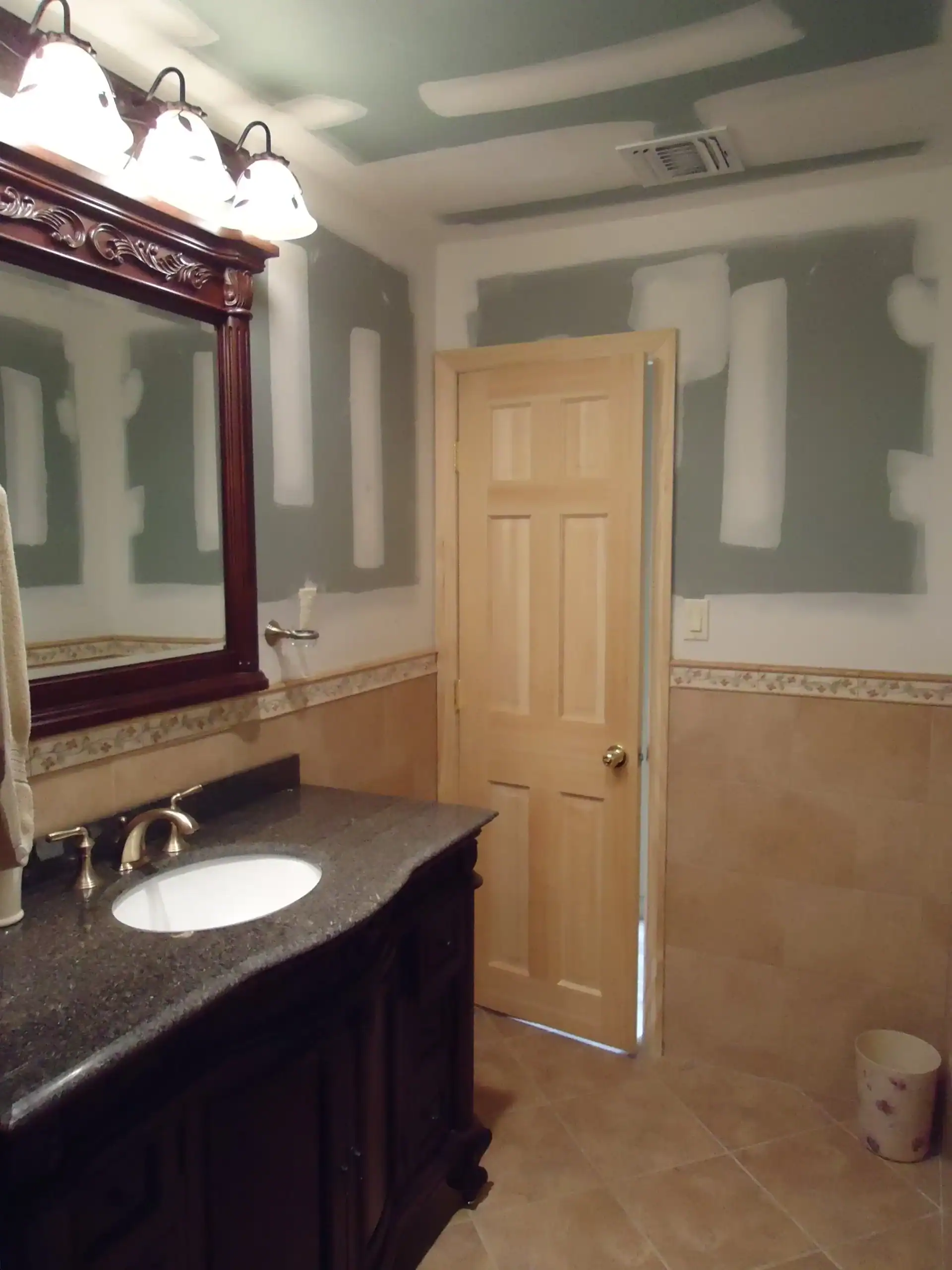
A general contractor handling basement bathroom work needs specific knowledge that goes beyond standard remodeling. We’re coordinating plumbing that fights gravity, electrical systems in moisture-prone environments, and waterproofing that prevents thousands in damage. Most contractors can frame walls and install tile. Far fewer understand ejector pump sizing, proper venting for below-grade fixtures, or moisture barrier installation.
Nassau County requires home improvement contractors to carry proper licensing through the Department of Consumer Affairs. That license costs $500-600 and requires fingerprinting, insurance verification, and background checks. The process takes 3-6 months. Contractors who skip this step aren’t just cutting corners on paperwork. They’re telling you they’ll cut corners on everything else.
Working with an unlicensed contractor creates legal problems you can’t fix later. New York law states clearly: unlicensed contractors cannot recover payment through contracts or liens. That sounds like your protection. But it also means they have zero incentive to finish your job properly. They can’t sue you for payment, so they simply disappear and start the next job. You’re left with half-finished plumbing and no legal recourse to force completion.
The technical requirements for basement bathrooms include ceiling height minimums of 7-8 feet, proper ventilation systems that vent outside (not into other interior spaces), and waterproofing that uses cement board instead of regular drywall. Contractors who suggest regular drywall are setting you up for mold remediation within 2-3 years. The humid environment of bathrooms destroys standard materials. Cement board, waterproof membranes, and proper vapor barriers aren’t optional upgrades. They’re the baseline for work that lasts.
Permit requirements exist for good reason. Basement bathroom installations require permits for plumbing, electrical, and structural work in most Nassau County municipalities. Contractors who suggest skipping permits to “save you money” are creating liability that falls entirely on you. When something goes wrong, your homeowner’s insurance won’t cover unpermitted work. When you sell, disclosure requirements force you to reveal unpermitted additions. The “savings” become expensive problems.
Waterproofing failures account for the majority of basement bathroom problems. Contractors use regular drywall instead of cement board. They apply single coats of waterproof membrane instead of the required three coats. They use standard drywall tape instead of fiberglass tape designed for moisture environments. These shortcuts save them maybe two hours of labor. They cost you years of functional bathroom use.
Professional waterproofing starts with cement board on all surfaces that will contact moisture. The shower area requires special attention. Cement board creates the base. Waterproof membrane (like RedGuard) gets applied in three coats until you can’t read through it. Corners get sealed with fiberglass tape and additional membrane. The tub surround receives the same treatment. This process takes time. Contractors who rush it or skip steps create invisible problems that become visible when water starts appearing in your finished basement ceiling.
Ventilation works with waterproofing to control moisture. Basement bathrooms need exhaust fans that vent directly outside, not into attic spaces or other interior areas. The fan needs proper sizing for the square footage. It needs to run during and after showers to remove steam before it condenses on surfaces. Contractors who install undersized fans or vent them incorrectly leave you with mold growth that starts behind walls where you can’t see it.
Moisture in basements comes from multiple sources. The bathroom creates humidity through shower use. The below-grade location means exterior moisture can penetrate through foundation walls. Proper waterproofing addresses both sources. Exterior waterproofing on foundation walls, interior vapor barriers, and active moisture removal through ventilation all work together. Contractors who only address one piece leave your basement vulnerable.
The cost difference between proper waterproofing and shortcuts is minimal. Maybe $500-1000 in materials and a few extra days of labor. The cost of waterproofing failure runs $10,000-20,000 for mold remediation, structural repairs, and complete bathroom reconstruction. Contractors who skip proper waterproofing aren’t saving you money. They’re transferring their labor costs to your future repair bills.
Want live answers?
Connect with a Ray Coleman expert for fast, friendly support.
<a href="https://www.raycolemanhomeimprovement.com/services/basement-remodeling/"Basement bathroom installation costs range from $8,000 to $25,000 in Nassau County. That’s not a vague estimate. That’s the actual range based on whether you need ejector pumps, how far you are from existing plumbing, and what level of finishes you choose. Contractors who quote significantly below $8,000 are either missing major components or planning to cut corners.
The plumbing alone runs $3,000-15,000 depending on your basement’s relationship to the main sewer line. If your basement sits below the sewer line, you need an ejector pump system. That’s $1,000-3,000 just for the pump and basin. Add drainage lines, vent pipes, and fixture connections, and plumbing becomes the largest single expense. Contractors who don’t break down these costs in their estimates don’t understand basement plumbing.
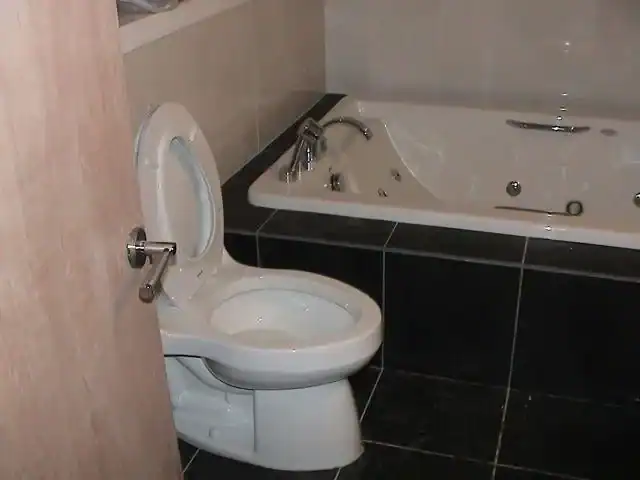
Electrical work adds $1,000-3,000 for lighting, GFCI outlets, ventilation fan circuits, and the dedicated circuit required for ejector pumps. Basement electrical requires special considerations. GFCI protection is mandatory. Circuits need proper capacity for pump systems that draw significant power. Contractors who run undersized circuits create safety hazards and code violations.
Concrete floor work costs vary based on whether you need to break through for drainage lines. Breaking and removing concrete, installing drainage pipes, and repouring runs $1,500-4,000. Contractors sometimes suggest macerating toilets or upflush systems to avoid this cost. Those systems work but require maintenance and have limitations. The conversation about which approach fits your situation tells you whether your contractor understands options or just knows one method.
Waterproofing materials and labor add $1,000-2,500. Cement board costs more than drywall. Waterproof membranes require multiple coats. Proper installation takes time. Contractors who include these costs transparently in estimates are planning to do the work correctly. Those who lump everything into “materials” are hiding where they’ll cut corners.
Fixtures, tile, flooring, and finishes create the visible cost range. Basic fixtures and standard tile keep you toward the $8,000 end. Premium materials and custom work push toward $25,000. But the functional components—plumbing, electrical, waterproofing, and proper installation—matter more than fixture finish. A correctly installed basement bathroom with basic fixtures works perfectly for decades. An improperly installed bathroom with luxury fixtures fails within years.
Permit costs in Nassau County run $100-500 depending on scope. Inspection schedules add time to projects. Contractors who build permit timelines into their project schedules are working professionally. Those who suggest avoiding permits are creating problems you’ll face during home sales or insurance claims.
The best bathroom remodel companies in Nassau County share specific characteristics. We carry current licenses through the Department of Consumer Affairs. We carry general liability insurance of at least $1 million and workers’ compensation coverage. We provide written estimates that break down costs by category. We discuss permit requirements upfront. We answer our phone.
That last point matters more than most homeowners realize. Communication failures sink more basement bathroom projects than technical incompetence. Contractors who don’t return calls, don’t show up when promised, or go silent for weeks between work sessions are telling you how they operate. Professional contractors maintain consistent communication because we understand that your bathroom project disrupts your home. We respect that disruption by keeping you informed.
Professional contractors also manage realistic timelines. Basement bathroom installations take 4-6 weeks for the actual work. Permit approval adds time. Material delivery can add delays. Contractors who promise completion in two weeks are either lying or planning to rush work that requires careful attention. The timeline tells you whether they understand the technical requirements.
The difference between contractors who specialize in basement work and those who treat it like standard remodeling shows up in our questions. Specialists ask about your basement’s relationship to the sewer line. We ask about existing moisture issues. We discuss ventilation requirements and waterproofing approaches. Generalists talk about tile patterns and fixture finishes. Both matter, but only one determines whether your bathroom functions.
Referral rates indicate contractor quality more reliably than online reviews. Companies that generate 60% or more of their business from referrals are delivering results that make customers comfortable recommending them to friends and family. That’s a higher standard than leaving a positive review. Contractors who build referral-based businesses can’t afford to cut corners or disappear mid-project.
Owner involvement varies by company size, but for basement bathroom projects, having the owner or senior team members personally involved ensures quality control. Large companies with multiple crews sometimes struggle to maintain standards across all projects. Smaller operations where the owner works on-site catch problems immediately and maintain consistent quality.
Most basement bathroom failures come from predictable problems. Unlicensed contractors who can’t legally enforce payment have no incentive to finish properly. Contractors who skip waterproofing steps create mold problems within years. Poor communication leads to abandoned projects. Understanding these patterns protects your investment.
Verify licensing through Nassau County Department of Consumer Affairs before any work begins. Confirm insurance coverage directly with the insurance company. Get written estimates that break down plumbing, electrical, waterproofing, and materials separately. Discuss permit requirements and inspection schedules. Ask about experience with below-grade plumbing and ejector pump systems. Pay attention to communication responsiveness.
The basement bathroom adds functional space and property value when installed correctly. It creates expensive problems when contractors cut corners. We’ve handled basement installations in Nassau County since 1972, with the licensing, insurance, and technical knowledge that separate functional bathrooms from future problems. The difference between contractors who finish projects and those who fail comes down to professional standards and proper technical execution.
Summary:
Share: