Bathroom remodel contractors in Nassau County charge $8,600 to $50,600 depending on project scope. Learn what drives costs and how to budget smartly.
You’ve called three contractors. One never called back. Another gave you a number that felt like a guess. The third showed up late and spent ten minutes glancing around before throwing out a range so wide it told you nothing.
Here’s what you actually need: real cost breakdowns for bathroom remodels in Nassau County, the factors that drive those numbers up or down, and how to avoid the hidden charges that show up once walls are open. This isn’t about finding the cheapest bid. It’s about understanding what you’re paying for so you can make decisions that actually fit your budget and get the bathroom you need.
Most full bathroom renovations in Nassau County run between $8,600 and $50,600. That’s not a typo—the range is wide because bathrooms vary drastically in size, age, and what needs fixing.
A small guest bath with basic fixtures and standard tile lands on the lower end. A primary bathroom with custom tile, new plumbing, upgraded electrical, and layout changes pushes you toward the higher end. The average sits around $18,500 for a complete renovation in Nassau County, slightly higher than neighboring Suffolk County at $16,500.
Cost per square foot typically ranges from $185 to $524, averaging around $370 in New York. That means a standard 40-square-foot full bathroom costs roughly $14,800 on average. But square footage alone doesn’t tell the whole story—what you’re changing matters more than how big the space is.
When bathroom remodel contractors give you a quote, that number breaks down into labor, materials, fixtures, permits, and the work itself. Labor typically eats up 40% to 65% of your total budget. In Nassau County, expect skilled tradespeople to charge premium rates compared to upstate New York.
Plumbers run $150 to $250 per hour. Electricians charge $125 to $200 per hour. Tile installers cost $75 to $150 per hour or $12 to $22 per square foot. These aren’t inflated numbers—they reflect the cost of living on Long Island and the expertise required to handle older homes built in the 1940s through 1960s.
Materials make up another major chunk. A basic toilet costs $200 to $500. Mid-range vanities run $1,000 to $3,000. Tile flooring averages $525 to $3,673 depending on quality and square footage. Fixtures like faucets, showerheads, and lighting add hundreds to thousands more depending on your choices.
Permits in Nassau County typically cost $500 to $3,000 for major bathroom work involving plumbing, electrical, or structural changes. Your contractor should handle pulling permits, but you’ll pay the fees. Demolition adds $1,000 to $2,500 to strip out the old bathroom before new work begins.
Then there are the costs you don’t see coming. Water damage repair averages $1,000 to $5,000 once walls are opened. Plumbing updates to bring old systems up to code can add $2,000 to $6,000. Electrical rewiring runs $1,500 to $4,000 if your home’s wiring is outdated. Subfloor replacement, structural reinforcement, mold remediation—these aren’t scare tactics. They’re common in homes that have been standing for decades.
Smart contractors build a contingency fund into estimates, usually 10% to 20% of the total project cost. That buffer keeps your project moving when surprises appear instead of grinding to a halt while you scramble for more money.
Contractors often quote bathroom remodels by square footage because it gives you a baseline to work from. In Nassau County, expect to pay $185 to $524 per square foot, with most projects averaging around $370 per square foot for mid-range work.
A 25-square-foot powder room costs roughly $4,625 to $13,100. A 40-square-foot full bathroom runs $7,400 to $20,960. A spacious 100-square-foot primary bathroom lands between $18,500 and $52,400. These ranges account for everything from budget-friendly updates to high-end finishes.
But here’s where square footage gets tricky. A small bathroom with custom tile, a walk-in shower, heated floors, and premium fixtures can cost more per square foot than a larger bathroom with standard materials and no layout changes. Size matters, but scope matters more.
Layout changes drive costs up fast. Moving a toilet, sink, or shower means rerouting plumbing and often triggers electrical work too. That adds labor hours, materials, and permit requirements. Keeping your existing layout and upgrading fixtures, tile, and finishes in place costs significantly less than reconfiguring the entire space.
The age of your home also impacts cost per square foot. Older Nassau County homes often hide outdated plumbing that doesn’t meet current code, wiring that can’t handle modern electrical loads, and structural issues that weren’t visible until demolition started. Homes built before 1990 frequently need plumbing and electrical upgrades, adding $1,500 to $3,500 or more to your budget.
Material choices swing your cost per square foot dramatically. Ceramic tile costs $2 to $5 per square foot. Natural stone runs $20+ per square foot. Luxury vinyl tile mimics the look of tile at $2,400 to $3,200 for a 10×10 bathroom, while actual tile flooring for the same space costs $5,400 to $6,300. Countertop materials range from $1 per square foot for basic ceramic tile to $100 per square foot for stainless steel or premium stone.
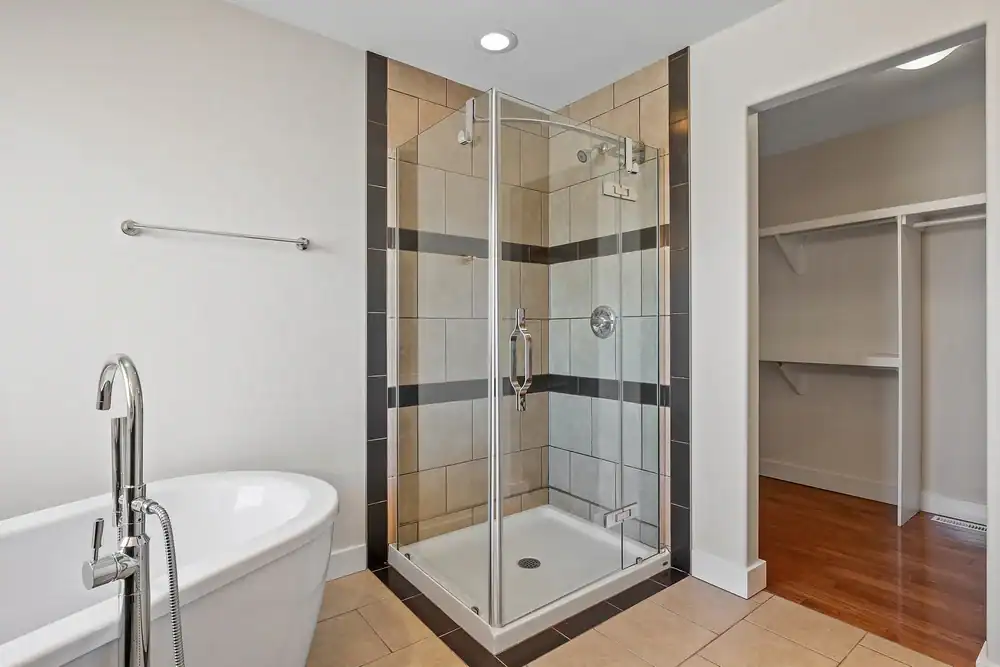
Fixture quality also plays a role. A basic vanity costs $500 to $1,000. Custom vanities run $3,000 to $10,000. A standard bathtub costs $400 to $1,500. A freestanding soaking tub costs $2,000 to $7,000. Multiply those differences across toilets, sinks, showers, faucets, and lighting, and you see how quickly costs escalate.
Want live answers?
Connect with a Ray Coleman expert for fast, friendly support.
Labor is the single largest expense in most bathroom remodels, typically consuming 40% to 65% of your total budget. In Nassau County, labor costs run higher than the national average due to the cost of living, demand for skilled tradespeople, and the complexity of working in older homes.
General contractors typically mark up total project costs by 15% to 25% to cover project management, coordination, overhead, and profit. That markup pays for scheduling subcontractors, handling permits, managing timelines, and dealing with problems that come up during construction.
Skilled trades command premium rates. Licensed plumbers charge $150 to $250 per hour. Electricians run $125 to $200 per hour. Tile installers cost $75 to $150 per hour or charge by square footage at $12 to $22 per square foot. These aren’t handyman rates—they reflect the expertise, licensing, insurance, and accountability that come with hiring professionals.
Nassau County labor costs sit 30% to 50% higher than the national average for bathroom remodels. That gap exists for specific reasons, and understanding them helps you budget accurately instead of getting sticker shock when quotes come in.
The cost of living on Long Island drives wages up. Skilled tradespeople need to earn enough to afford living in one of the most expensive housing markets in the country. That reality gets reflected in hourly rates and project bids.
Demand for contractors exceeds supply in Nassau County. The market is competitive, and good contractors stay busy. When demand is high, pricing power shifts to contractors who can pick and choose projects. Homeowners willing to pay for quality, reliability, and communication get priority over those chasing the lowest bid.
Older housing stock adds complexity. Homes built in the 1940s through 1960s dominate Nassau County. These homes often have outdated plumbing, knob-and-tube wiring, asbestos, lead paint, and structural quirks that require extra time and expertise to navigate. Contractors factor that complexity into labor estimates because they know surprises are likely once walls are opened.
Permit and code requirements in Nassau County add administrative work. Contractors need to pull permits, schedule inspections, and ensure work meets local building codes. That administrative burden takes time and gets built into labor costs.
Union labor in some areas of Long Island also drives costs higher. Union tradespeople earn higher wages and benefits, which get passed along to homeowners. While not all contractors use union labor, the prevailing wage rates in the area influence pricing across the board.
Cold winters and coastal weather create additional challenges. Frozen pipes are a common emergency in Nassau County winters. Contractors who offer emergency response—like answering calls at 3 AM when pipes burst—factor that availability into their pricing. The ability to reach someone when things go wrong has value, and homeowners pay for that peace of mind.
Not all labor costs are created equal. A low bid might look attractive until you realize it doesn’t include permits, demolition, cleanup, or handling unexpected issues. A higher bid might include all of that plus warranties, insurance, and a contractor who actually answers when you call.
Start by asking for itemized quotes. A detailed breakdown shows labor costs separated from materials, permits, and other expenses. That transparency lets you compare quotes accurately instead of just looking at bottom-line numbers.
Verify licensing and insurance before you hire anyone. In Nassau County, contractors should be licensed through Nassau County Consumer Affairs. You can look them up online or call to confirm. A contractor who’s licensed, insured, and bonded protects you legally and financially if something goes wrong.
Check how long they’ve been in business. A contractor who’s been around for decades has a track record you can verify. They’re doing something right if they’ve survived in a competitive market for 30, 40, or 50+ years. New contractors might offer lower rates, but they also carry more risk.
Ask about their process for handling surprises. Every bathroom remodel uncovers something unexpected—water damage, outdated wiring, structural issues. A good contractor explains how they handle those situations, how they communicate changes, and how they manage cost adjustments. Contractors who dodge this question or give vague answers are red flags.
Get references and actually call them. Ask previous customers about communication, timelines, cleanliness, and whether the final cost matched the estimate. Most homeowners are happy to share their experience, and you’ll learn more from a five-minute conversation than from reading generic online reviews.
Pay attention to communication before you hire them. If a contractor is hard to reach, slow to respond, or vague about pricing during the estimate phase, that’s how they’ll treat you during the project. Contractors who answer calls, respond to texts, and show up on time for estimates tend to maintain that standard throughout the job.
Avoid contractors who pressure you to sign immediately or who lowball estimates just to get the job. Contractors who underquote often hit you with constant change orders and upcharges once they’ve already torn your bathroom apart. You’re stuck at that point, and they know it.
Bathroom remodel contractors in Nassau County charge anywhere from $8,600 to $50,600 depending on the size of your bathroom, the scope of work, and the materials you choose. Labor typically consumes 40% to 65% of that budget, with skilled trades charging premium rates due to Long Island’s cost of living and the complexity of working in older homes.
Understanding these costs upfront helps you plan realistically instead of getting blindsided by expenses you didn’t see coming. Budget for contingencies—10% to 20% of your total project cost—because surprises are common once walls are opened in homes that have been standing for decades.
Choose contractors based on transparency, licensing, communication, and track record, not just the lowest bid. The cheapest quote often comes with hidden costs, poor communication, and headaches that cost you more in the long run. If you’re ready to move forward with a bathroom remodel and want a contractor who answers when you call, shows up on time, and keeps your project on track, reach out to us at Ray Coleman Home Improvement.
Summary:
Share: