National renovation averages don't apply on Long Island. Here's what whole house renovation actually costs in Nassau County — and what drives the final number.
You’ve probably seen the national averages — $50,000 to $100,000 for a whole house renovation. Then you started calling contractors in Nassau County and got quotes that looked nothing like that. The gap isn’t a mistake. Long Island is simply a different market, with older homes, higher labor costs, and a permit and licensing environment that adds real complexity to every project.
This guide is built around what renovation actually costs here — not in Phoenix, not in Ohio — and what you should realistically expect before you sign anything or commit to a budget.
The national figures you find on most cost guides reflect markets where labor is cheaper, homes are newer, and the permitting process is more straightforward. Nassau County is none of those things. Most homes here were built between the late 1940s and the 1970s — Cape Cods, split-levels, ranches, colonials — and they carry 50 to 80 years of aging systems behind the walls.
When you renovate a home in Wantagh, Baldwin, or West Hempstead, you’re often not just updating finishes. You’re dealing with galvanized plumbing, outdated electrical panels, and insulation that was installed before anyone had heard of an energy code. That reality changes the cost conversation entirely.
Nationally, whole house renovation costs are often quoted in the $15 to $60 per square foot range for cosmetic updates, and $60 to $150 per square foot for a full gut renovation. In Nassau County, those numbers shift significantly. Contractors working across the county consistently report costs in the $185 to $300 per square foot range for a comprehensive full home remodel — and mid-range to high-end projects can run $200 to $350 per square foot or beyond, depending on finishes, structural changes, and what gets discovered once the walls open.
For a 1,500 square foot home, that math puts a realistic full renovation somewhere between $275,000 and $450,000 at the mid-to-upper end of the market. For a more modest scope — cosmetic updates, new kitchen, updated bathrooms, refinished floors — you might land in a lower range, but even light renovation in Nassau County rarely plays out at the national averages you’ll see quoted online.
Why the premium? A few reasons converge at once. Labor costs in Nassau County reflect proximity to New York City — tradespeople here command wages that are simply higher than the national baseline. Material delivery and logistics on Long Island add cost. And the age of the housing stock means that what looks like a cosmetic project on day one frequently becomes a systems project by week two, once you’re inside the walls and can see what’s actually there.
That last point is worth sitting with for a moment. In a home built in 1958, opening a kitchen wall to reconfigure the layout might reveal knob-and-tube wiring that has to come out before anything else happens. Galvanized pipes corroded past the point of reuse. Framing that needs sistering before new load-bearing changes can happen. None of that was visible from the outside, and none of it was in the original quote — because it couldn’t have been.
This is the single most common reason renovation budgets in Nassau County run higher than homeowners expect. The honest answer to “what will this cost?” is that it depends on the scope, the condition of your home, and the decisions you make along the way. But going in with a realistic per-square-foot baseline — grounded in what Nassau County contractors are actually quoting — puts you in a far better position than anchoring to a national average that doesn’t apply here.
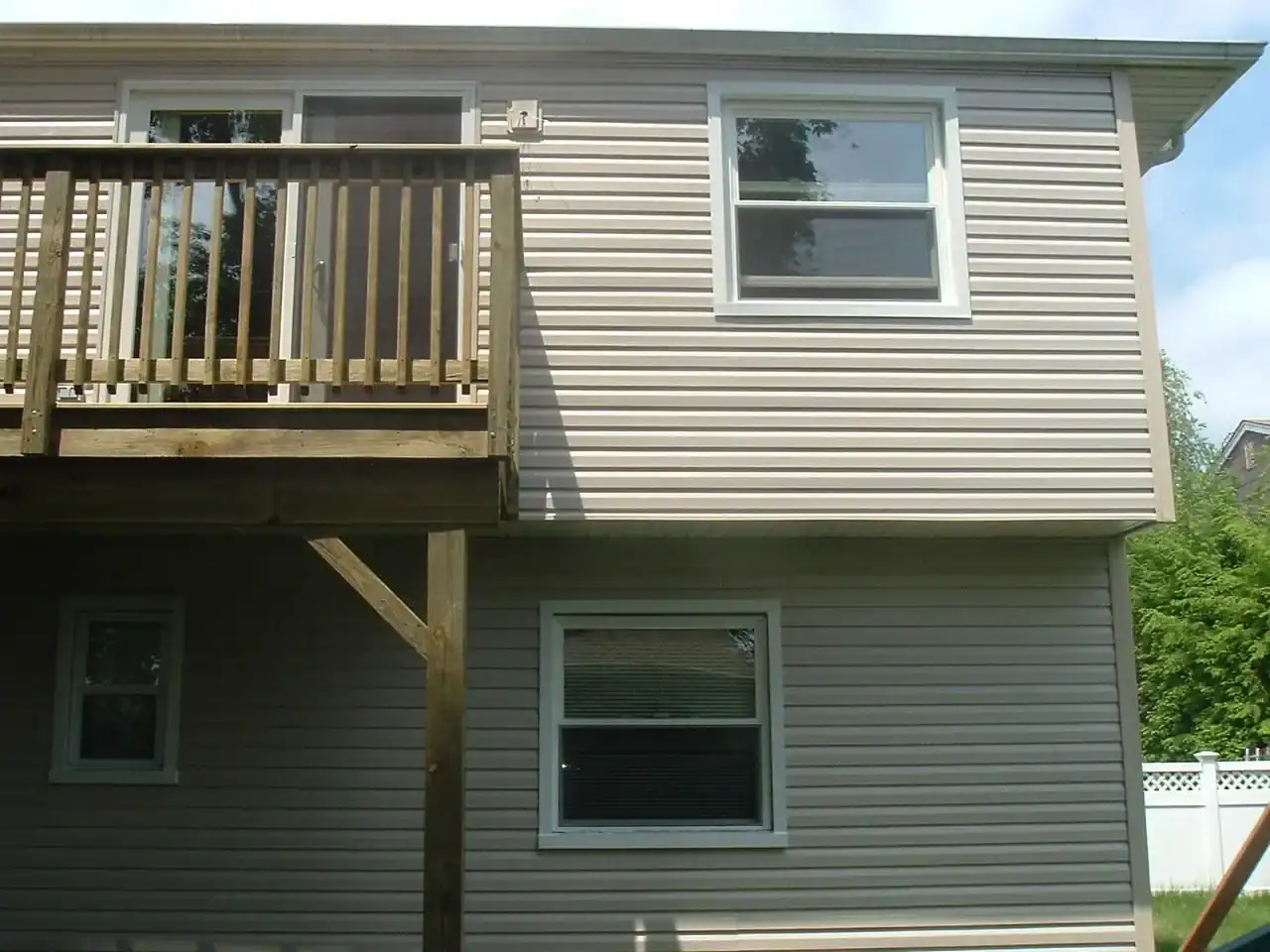
A whole house renovation isn’t one project. It’s a sequence of interconnected projects that have to happen in the right order, coordinated across multiple trades, inside a home that may or may not be cooperating. The scope typically includes some combination of kitchen remodeling, bathroom renovations, flooring, electrical updates, plumbing work, structural changes, and exterior improvements — and in Nassau County, it often includes dormer additions to Cape Cods, first-floor layout overhauls in split-levels, and system replacements in homes that haven’t been touched since the Reagan administration.
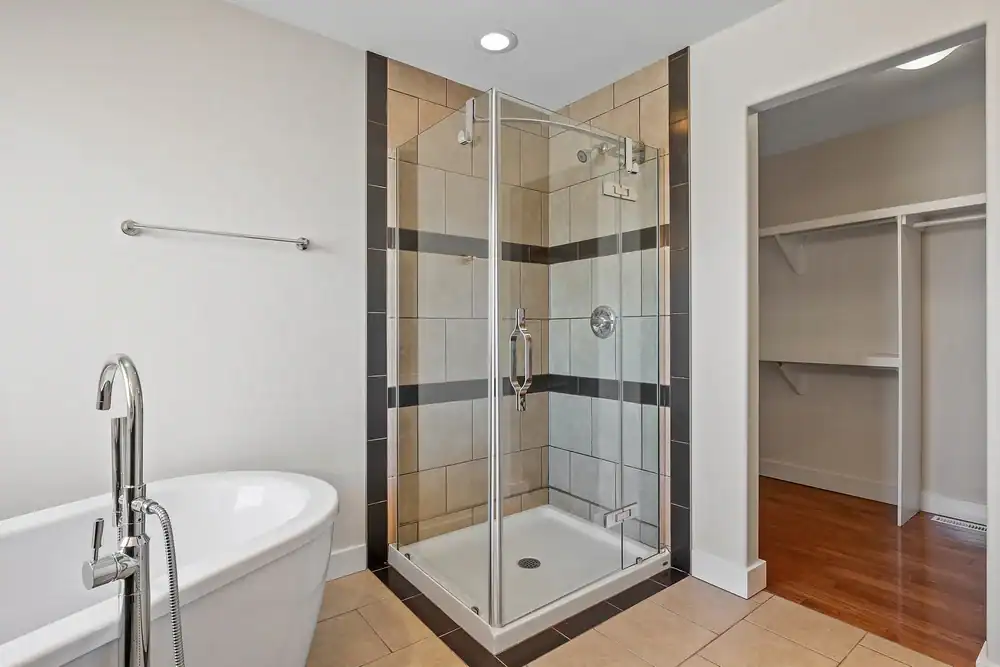
Each of those components carries its own cost range. A mid-range kitchen remodel in Nassau County runs $25,000 to $65,000 and up. A full bathroom renovation can run $15,000 to $35,000 per bathroom, with master bath renovations frequently exceeding that. Basement finishing, dormer additions, and structural changes each add their own layer of cost — and when you’re doing all of it at once, the coordination itself becomes a line item.
One factor that doesn’t show up in most cost guides: permit and inspection costs. Many renovation projects in Nassau County require building permits — especially anything involving structural changes, electrical upgrades, plumbing modifications, or additions. Permits add time and cost to the project. They also add protection: permitted work is inspected, documented, and on record when you eventually sell.
Skipping permits to save money is a short-term decision with long-term consequences, particularly in a market where buyers and their attorneys look carefully at permit history. The industry standard recommendation for contingency is 10 to 20 percent of your total project budget set aside for surprises. In Nassau County’s aging housing stock, that contingency isn’t a cushion — it’s a planning assumption. Budget for it from the start, and you won’t be caught off guard when the first wall opens and reveals something that wasn’t in the original plan.
Want live answers?
Connect with a Ray Coleman expert for fast, friendly support.
Before you reach out to contractors, it helps to have a working sense of what you’re trying to accomplish and what it realistically might cost. Not a precise number — that requires a walkthrough and a detailed scope — but a range that tells you whether your expectations and your budget are in the same conversation.
A simple framework: start with your home’s square footage, apply a per-square-foot range that reflects the scope of work (cosmetic versus systems-level versus structural), and add 15 percent for contingency. Then ask yourself whether the number you land on is something you can commit to — because the worst outcome in renovation isn’t a high quote. It’s starting a project you can’t finish.
This is a question we hear often, and it’s worth taking seriously. Nassau County’s real estate market is competitive, and updated homes sell for meaningful premiums. But so does everything else. If you sell your home and buy something larger or more updated in the same market, you’re absorbing transaction costs — agent commissions, transfer taxes, moving expenses — on top of the price premium of the home you’re buying into.
A whole house renovation at $150,000 to $300,000, depending on scope, may cost less than the combined friction of selling, buying, and moving in a market where inventory is tight and prices are high. And at the end of it, you’re in a home you know, in a neighborhood you chose, with the layout and finishes you actually want.
That’s not an argument for renovation in every case. If your home can’t accommodate the space you need, or if the structural condition makes renovation impractical, moving may be the right answer. But for homeowners in Plainview, Great Neck, North New Hyde Park, or Baldwin who are sitting on a solid post-war home in a neighborhood they love, the math often favors renovating over relocating — especially when mortgage rates make the alternative more expensive than it looks on paper.
The key is going into that decision with real numbers, not national averages. If you’re budgeting based on what a renovation costs in a different market, you’ll underestimate what it costs here — and that gap between expectation and reality is where renovation projects go sideways before they even start.
The cost of your renovation is only partly determined by the scope of work. A significant part of it is determined by who you hire. A contractor who gives you a low number to win the job and then manages the project through change orders will cost you more than a contractor who quoted accurately from the start. This is one of the most consistent patterns in home renovation, and it’s one of the most preventable.
Nassau County requires all home improvement contractors to hold a current Home Improvement License issued by the Nassau County Office of Consumer Affairs. This is a county-level requirement — not just a state registration — and it involves fingerprinting, insurance verification, and active compliance. Contractors who aren’t licensed in Nassau County face legal consequences, including being barred from recovering payment. Before you sign anything, ask for the license number and verify it.
Beyond licensing, the questions that matter most are practical ones. Who will actually be on your job site every day? Is it the owner, a project manager you haven’t met, or a rotating cast of subcontractors? What does the estimate include, specifically — materials, labor, permits, cleanup? What happens when something unexpected comes up inside the walls, and how are those decisions and costs communicated? A contractor who answers those questions clearly, in writing, before the project starts is a contractor who has thought through the process.
We’ve been doing this work in Nassau County since 1972. Over fifty years, the homes here have taught us things you can’t learn from a manual — what’s typically behind the walls of a 1955 Cape Cod in Wantagh, what a split-level in Baldwin Harbor usually needs when you open the first floor, what the permit process looks like for a dormer addition in Great Neck. That kind of local knowledge isn’t a selling point. It’s just what makes the difference between a project that goes smoothly and one that doesn’t.
More than sixty percent of our work comes from referrals. That’s not a marketing claim — it’s the result of fifty years of being reachable, being honest about costs before the project starts, and showing up every day until the job is done. Ray Coleman and his son work on-site personally on every project. Not managing from an office. Actually there.
The most useful thing this guide can do is give you a realistic starting point — one that reflects what renovation actually costs in Nassau County, not what it costs somewhere else. Long Island homes are older, labor costs are higher, and the gap between a national average and a local quote is real. Going in with that understanding puts you in a much stronger position.
When you’re ready to talk specifics, the next step is a walkthrough with a contractor who knows this market, will give you an itemized estimate, and will tell you the truth about what they find — before you’re committed to a budget that doesn’t account for what’s behind the walls.
If you’re planning a whole house renovation in Nassau County and want a straight answer on what it’s likely to cost, reach out to Ray Coleman Home Improvement. We’ll give you real numbers, not a number designed to get you to sign.
Summary:
Share: