Not every contractor who says they do bathroom remodels actually does them well. Here's what to look for before you commit to anyone on Long Island.
You’ve probably already called a few contractors. Maybe one called back. Maybe none did. That’s not an exaggeration — it’s the reality for most Nassau County homeowners trying to get a bathroom remodel off the ground. The market is competitive, schedules are packed, and finding someone who actually picks up the phone can feel harder than the renovation itself.
We’re here to help you cut through that noise. We’ll walk you through what a reliable bathroom contractor actually looks like, what questions are worth asking, and what the process should feel like when it’s done right.
Most of Nassau County’s housing stock was built between the late 1940s and the 1970s. That means the average bathroom you’re looking at remodeling is somewhere between 50 and 75 years old — possibly original, possibly touched up once or twice, but almost certainly hiding something behind those walls.
Galvanized steel pipes, cast-iron drain lines, undersized electrical panels, and tight 5-by-7 footprints are the norm, not the exception. A contractor who hasn’t spent years working specifically in Nassau County homes will be caught off guard by that reality. When surprises come up mid-project, you feel it — in delays, in change orders, and in a final bill that looks nothing like the estimate.
Experience in the local housing stock isn’t a bonus. It’s a baseline.
There’s a meaningful difference between a contractor who handles cosmetic bathroom upgrades and one who can manage a full renovation from demo to final inspection. A true full-service contractor coordinates plumbing, electrical, tile, carpentry, and waterproofing under one roof — which means you’re not hunting down a separate plumber, then a separate electrician, then trying to get everyone on the same schedule.
That coordination matters more than most homeowners realize going in. When trades aren’t managed by a single point of contact, scheduling gaps happen. One subcontractor finishes and the next one isn’t available for two weeks. The project drags. The bathroom sits half-finished. You’re fielding calls and trying to keep the timeline moving yourself — which is exactly what you were paying a contractor to avoid.
A bathroom renovation in Nassau County also involves more moving parts than a simple refresh. If you’re relocating a toilet, moving a vanity, or expanding a shower footprint, you’re touching plumbing rough-in. If you’re adding recessed lighting or upgrading to a heated floor, you’re touching electrical. Both may require permits depending on scope — and a contractor familiar with Nassau County’s building department knows which projects trigger that requirement and how to handle it properly.
What you’re really vetting when you evaluate bathroom contractors on Long Island isn’t just their tile work. It’s their ability to manage a multi-trade project without dropping the ball — and their familiarity with the specific conditions inside older Nassau County homes that can turn a straightforward job into a complicated one if the contractor isn’t prepared.
We’ve been doing this work in Nassau County for over 40 years. The split-levels in Wantagh, the Cape Cods in North Bellmore, the older colonials in Roslyn — we know what’s typically behind those bathroom walls before we open them up. That experience doesn’t eliminate surprises entirely, but it means we’re rarely caught off guard, and we’re honest with you upfront about what we might find.
The way a contractor handles the first phone call and the estimate appointment tells you almost everything you need to know about how they’ll handle your project. If they don’t call back promptly, they won’t communicate well mid-project either. If their estimate is vague — a rough number with no line-item breakdown — that’s not a starting point, that’s a setup for a conversation about extra costs once your walls are already open.
A dramatically low bid is one of the clearest warning signs in this industry. It almost always means something is missing from the scope, the labor is underqualified, or the price will climb once work begins. Over 20% of bathroom remodels on Long Island go over budget, and the most common reason isn’t unexpected conditions behind the walls — it’s a low initial estimate that wasn’t built on a realistic scope of work.
A few other things worth watching for: a contractor who asks for a large upfront payment before work begins is a red flag. Industry standard is roughly 10% to get started, with the remainder tied to project milestones. A contractor who can’t provide a verifiable license number — not just “we’re licensed,” but an actual number you can look up — is another.
Nassau County requires a Home Improvement Contractor license under Section 21-11 of the Nassau County Administrative Code. That’s not a technicality. It’s a legal requirement, and it protects you. The contractors who are worth hiring are transparent from the first conversation. They give you a written estimate with real numbers, explain what’s included and what might change, and don’t disappear between the estimate and the start date.
Want live answers?
Connect with a Ray Coleman expert for fast, friendly support.
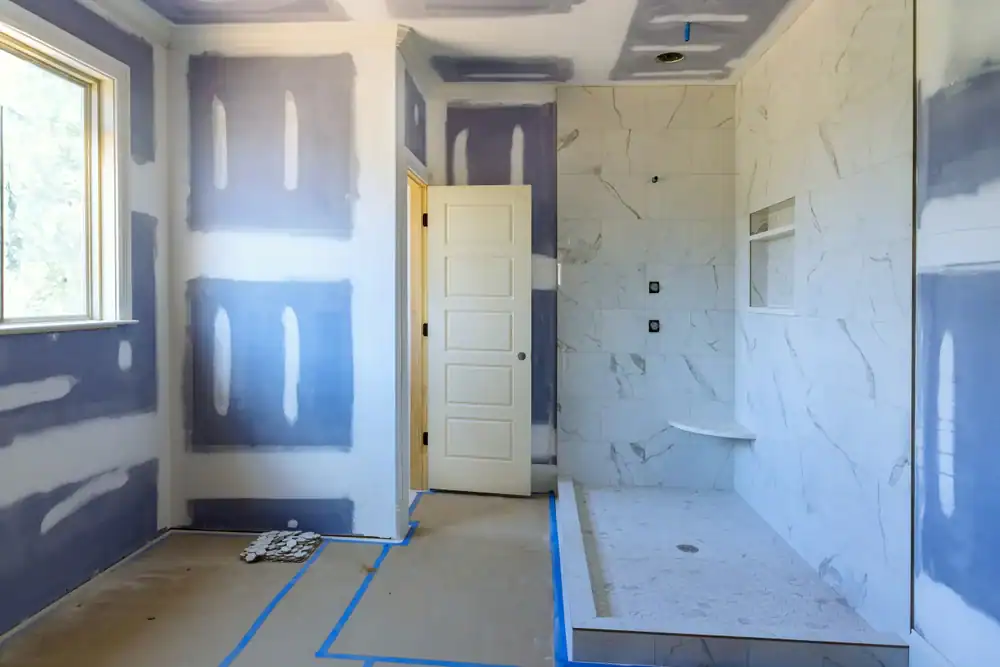
A well-run bathroom renovation follows a predictable sequence, even when the specifics vary by project. Demo comes first — existing fixtures, tile, and sometimes drywall come out. Then rough-in work: plumbing and electrical are updated or relocated before anything gets closed up.
Waterproofing, backer board, and tile follow. Then fixtures, vanity, lighting, and finish work. Final inspection happens if permits were pulled. The timeline depends on scope. A cosmetic refresh with new fixtures and tile can be done in a few days. A full gut renovation with plumbing and electrical changes typically runs two to four weeks.
Any contractor who gives you a firm date without knowing what’s behind your walls is guessing — and you should know that going in.
The estimate process should feel like a real conversation, not a sales pitch. A contractor worth hiring will walk through the bathroom with you, ask about your priorities, explain what the work actually involves, and give you a written estimate that reflects a realistic scope. If they’re pushing you to decide on the spot or making the estimate feel urgent, that’s pressure you don’t need.
Once work begins, you should expect daily progress and daily cleanup. A professional crew doesn’t leave your home looking like a demolition site at the end of each day. Dust and debris are part of any renovation, but there’s no reason they should be spreading through the rest of your house. If you have kids, pets, or anyone in the home with health sensitivities, this matters more than most contractors acknowledge upfront.
Communication throughout the project is the other thing that separates good contractors from frustrating ones. You shouldn’t have to chase someone down to find out what’s happening on your job. When something unexpected comes up — and in older Nassau County homes, it sometimes does — you should hear about it the same day, with a clear explanation of what it means for your timeline and your budget.
We keep the owner on-site daily, working alongside the crew. That’s not a marketing line — it’s how we’ve operated for over 40 years, and it’s the reason more than 60% of our work comes from referrals. When the person responsible for the project is actually present, things get caught before they become problems.
**What does a contractor shower remodel actually involve?**
A shower remodel handled by a general contractor goes well beyond swapping out tile. Depending on scope, it can include removing the existing shower surround or tub, waterproofing the substrate, updating or relocating plumbing rough-in, installing a new shower pan or custom tile floor, adding a frameless glass enclosure, and finishing with new fixtures and trim.
In older Nassau County homes, it often also means addressing what’s found behind the walls — deteriorated backer board, corroded pipe fittings, or inadequate waterproofing from a previous installation. A contractor who manages all of that in-house, without farming out the plumbing to someone you’ve never met, keeps the project moving and keeps accountability in one place.
**Do I need a permit for a bathroom remodel in Nassau County?**
It depends on what you’re doing. Cosmetic work — new tile, a replacement vanity, updated fixtures in the same location — typically doesn’t require a permit. But if you’re moving plumbing, relocating electrical, or making any structural changes, Nassau County requires a permit.
Skipping a required permit isn’t just a technicality. It can create real problems when you sell the home, and it can leave you liable if something goes wrong. We’re familiar with Nassau County’s building department and know exactly when a permit is needed and how to pull one correctly.
**How much does a bathroom remodel cost on Long Island?**
Bathroom remodel contractors in Nassau County typically quote anywhere from $8,600 to $50,600 depending on the size of the bathroom, the scope of work, and the materials chosen. Labor generally accounts for 40% to 65% of that total. Long Island pricing runs 20 to 35% higher than national averages — skilled tradespeople in Nassau and Suffolk counties command $85 to $145 per hour.
If you’re planning a full gut renovation, it’s smart to set aside an additional 15 to 20% as a contingency for what turns up once the walls are open.
**How do I verify that a bathroom contractor is licensed in Nassau County?**
Ask for their license number directly — not just confirmation that they’re licensed. Nassau County issues Home Improvement Contractor licenses through the Department of Consumer Affairs under Section 21-11 of the Nassau County Administrative Code. You can verify a license number through the county or through BuildZoom, which also tracks permit activity and work history.
Our license numbers are publicly listed and verifiable. If a contractor hesitates to provide that information, that tells you something important about how they operate.
**What’s a fair deposit for a bathroom remodel?**
Around 10% upfront is the industry standard to get a project started. A payment schedule tied to project milestones — demo complete, rough-in complete, tile complete, final walkthrough — is how professional contractors structure the rest. If someone asks for a large percentage of the total cost before work begins, that’s worth questioning.
The basics aren’t complicated: a licensed contractor who answers the phone, gives you a written estimate with real numbers, shows up when they say they will, and communicates clearly throughout the job. That’s what a good remodeling experience looks like.
If you’re planning a bathroom renovation in Nassau County — whether it’s a full gut remodel or a significant upgrade — the best thing you can do is start the conversation early, ask direct questions, and pay attention to how a contractor handles the estimate process. That tells you more than any review.
Ray Coleman Home Improvement has been doing this work in Nassau County for over 40 years. If you’re ready to talk through your project, give us a call. We pick up.
Summary:
Share: