Confused about when to call a contractor versus a handyman? This guide breaks down exactly what a home improvement contractor does — and when you genuinely need one.
There’s a moment most Nassau County homeowners recognize — when a project stops feeling like something you can patch together and starts feeling like something that needs a real professional. Maybe it’s a kitchen that hasn’t been touched since the ’90s. Maybe it’s a bathroom where the tile is cracking and the layout never made sense. Maybe you’ve outgrown your first floor entirely and you’re thinking about an extension or a dormer.
That’s when the question comes up: do I need a contractor, or can a handyman handle this? It’s a fair question, and the answer matters more than most people realize. Here’s what you should know before you make that call.
A handyman is useful for smaller, self-contained tasks — patching drywall, swapping out a light fixture, fixing a door that won’t close right. These are jobs with limited scope, limited liability, and limited licensing requirements.
A home improvement contractor is different. We manage large-scale residential projects from start to finish. That means coordinating crews, handling structural work, managing plumbing and electrical subcontractors, pulling permits when required, and delivering a finished result that meets code.
In Nassau County, that license isn’t optional — it’s a legal requirement issued through the Nassau County Office of Consumer Affairs. Any contractor doing meaningful work on your home is required to carry one.

The honest answer is: sooner than most homeowners expect. If your project involves moving walls, relocating plumbing or electrical, adding square footage, or changing the structural layout of your home in any way, you’re past handyman territory.
Nassau County has specific licensing categories covering general contractors, kitchen and bathroom remodelers, siding contractors, window and door installers, basement remodelers, and more. Virtually every home improvement trade requires separate licensure through the county.
That matters for a few reasons. First, an unlicensed contractor can’t legally enforce a contract or lien in New York, but that doesn’t protect you after the work is done poorly. Second, if something goes wrong on an unlicensed job — a worker gets hurt, a wall comes down, a pipe bursts — the liability can land on you as the homeowner. Third, work done without proper licensing can create problems when you go to sell the house. Buyers’ attorneys and home inspectors know what to look for.
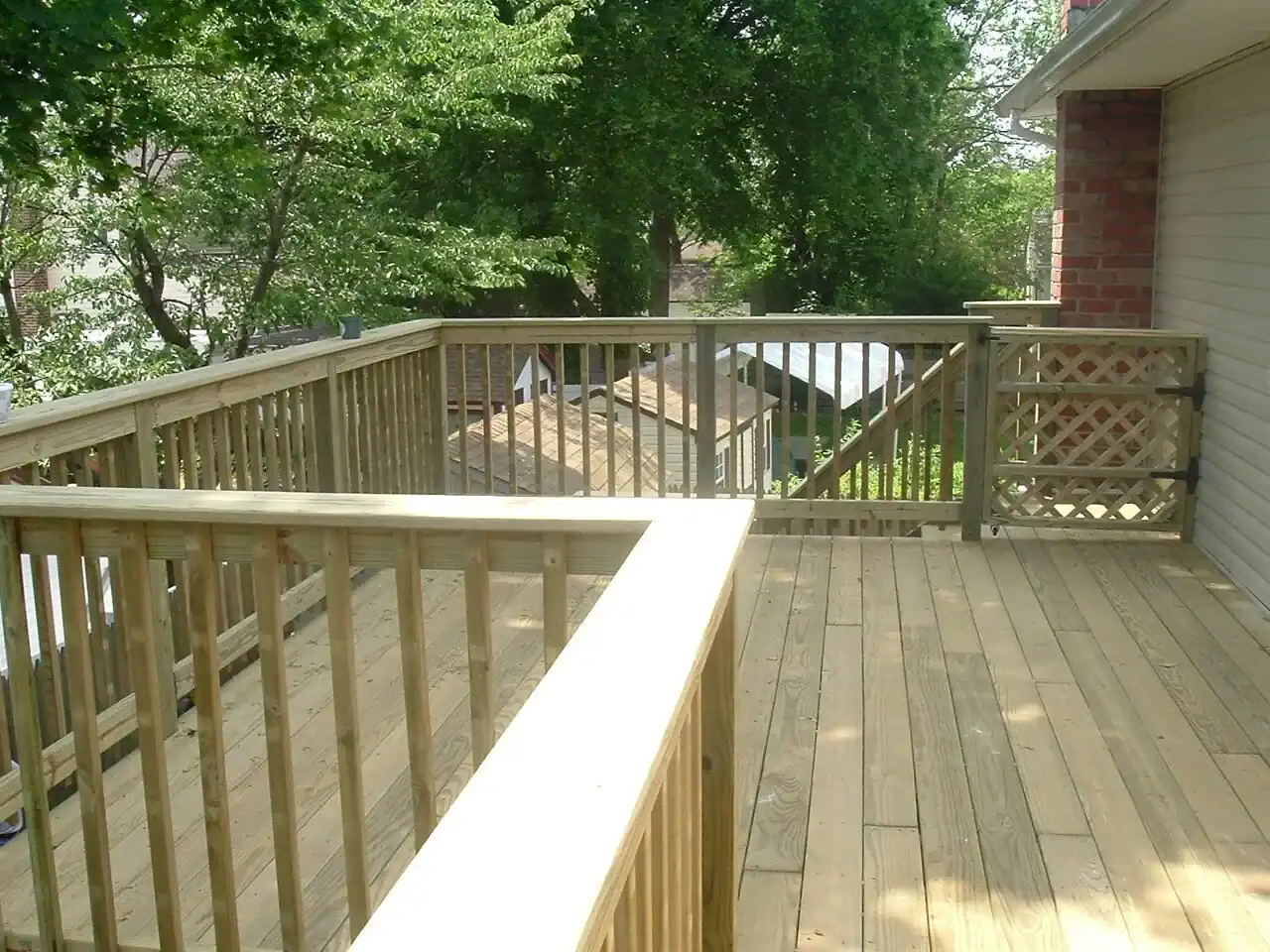
The scope threshold is real. A kitchen remodel that involves new cabinetry, relocated plumbing, updated electrical, and a reconfigured layout isn’t a handyman job — it’s a licensed contractor job. The same goes for a bathroom renovation that touches plumbing and structural walls, a dormer addition, a first-floor overhaul, or any kind of home extension. These projects require someone with the credentials, the insurance, and the experience to manage them properly.
You can verify a contractor’s license directly through the Nassau County Office of Consumer Affairs. That’s not a formality — it’s one of the most important steps you can take before signing anything. A legitimate contractor will hand you their license number without hesitation.
The contractor who answers the phone during the estimate phase is almost always the contractor who answers the phone during the project. That sounds obvious, but it’s one of the most reliable filters in the industry. Home improvement contracting is the number one consumer complaint category in New York — not because contractors do bad work, but because communication breaks down. You call, no one calls back. You ask a question, you get silence. The project stalls and you have no idea why.
Responsiveness isn’t a soft quality. It’s a direct indicator of how a contractor runs their business. If getting a callback takes three days during the sales process, what happens when you have a question after the deposit is paid?
Beyond that, there are a few things worth verifying before you commit. License status — check it through Nassau County Consumer Affairs, not just by asking. Insurance — at minimum, you want general liability coverage of $1 million per occurrence, plus workers’ compensation. A written, itemized estimate — New York State law requires written contracts for home improvement work exceeding $200, and any contractor who resists putting the agreement in writing is a red flag. References from similar projects in similar neighborhoods — not a curated list of best-case testimonials, but real homeowners with comparable jobs who are willing to talk.
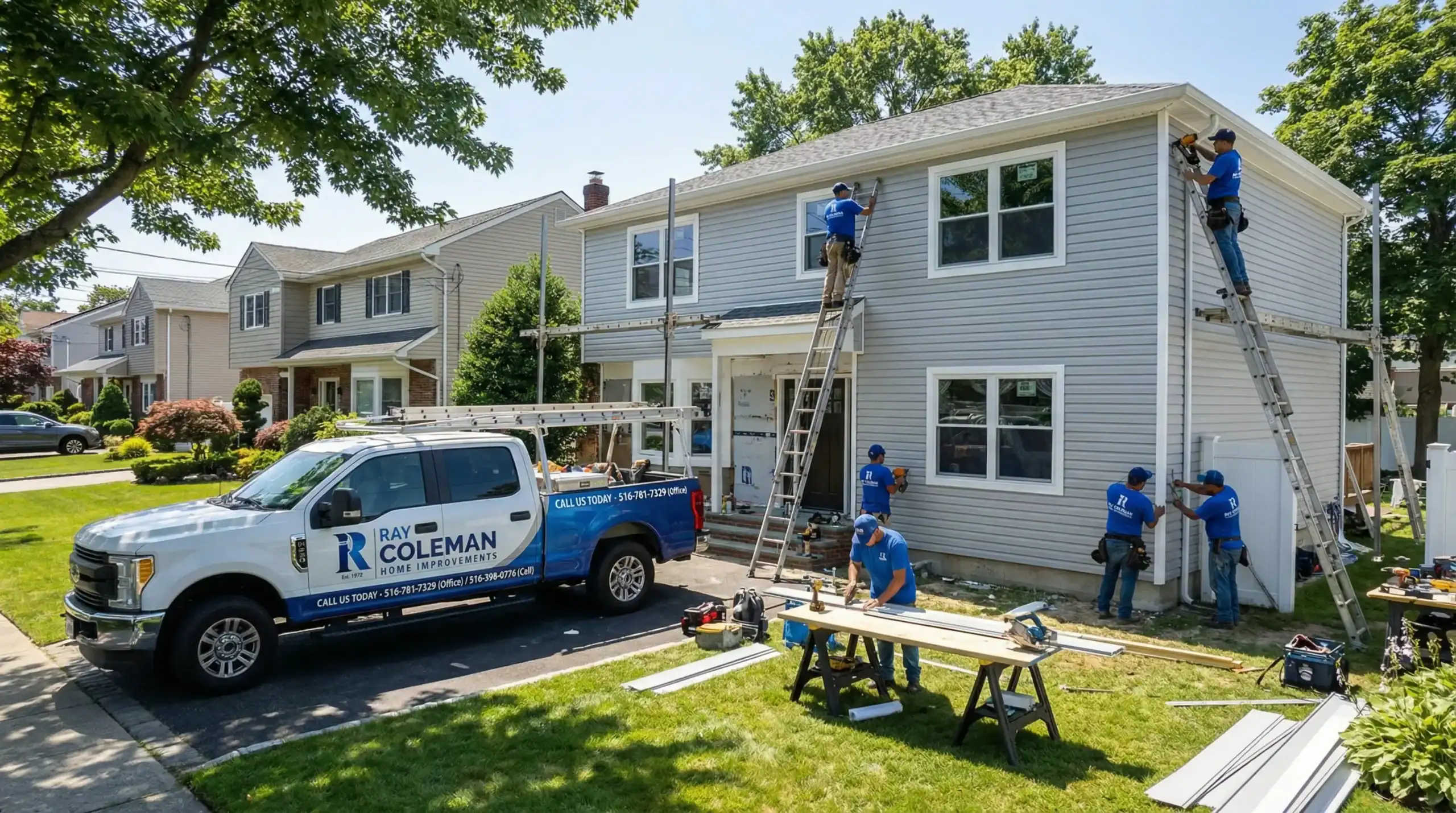
Owner involvement is worth asking about directly. There’s a real difference between a contractor who manages from an office and sends rotating crews to your house, and one who is on the job site every day working alongside the team. That daily presence creates accountability in a way that remote management simply doesn’t. When the person whose name is on the company is the one showing up every morning, problems get solved faster, quality stays consistent, and you always know who to call.
Job site cleanliness is a genuine indicator of how a contractor operates. A crew that leaves debris piled in your driveway and dust across every surface isn’t cutting corners on tidiness — they’re telling you how they approach the work in general. A professional crew cleans up before leaving each evening. Drop cloths go down. Progress is visible without the mess.
Want live answers?
Connect with a Ray Coleman expert for fast, friendly support.
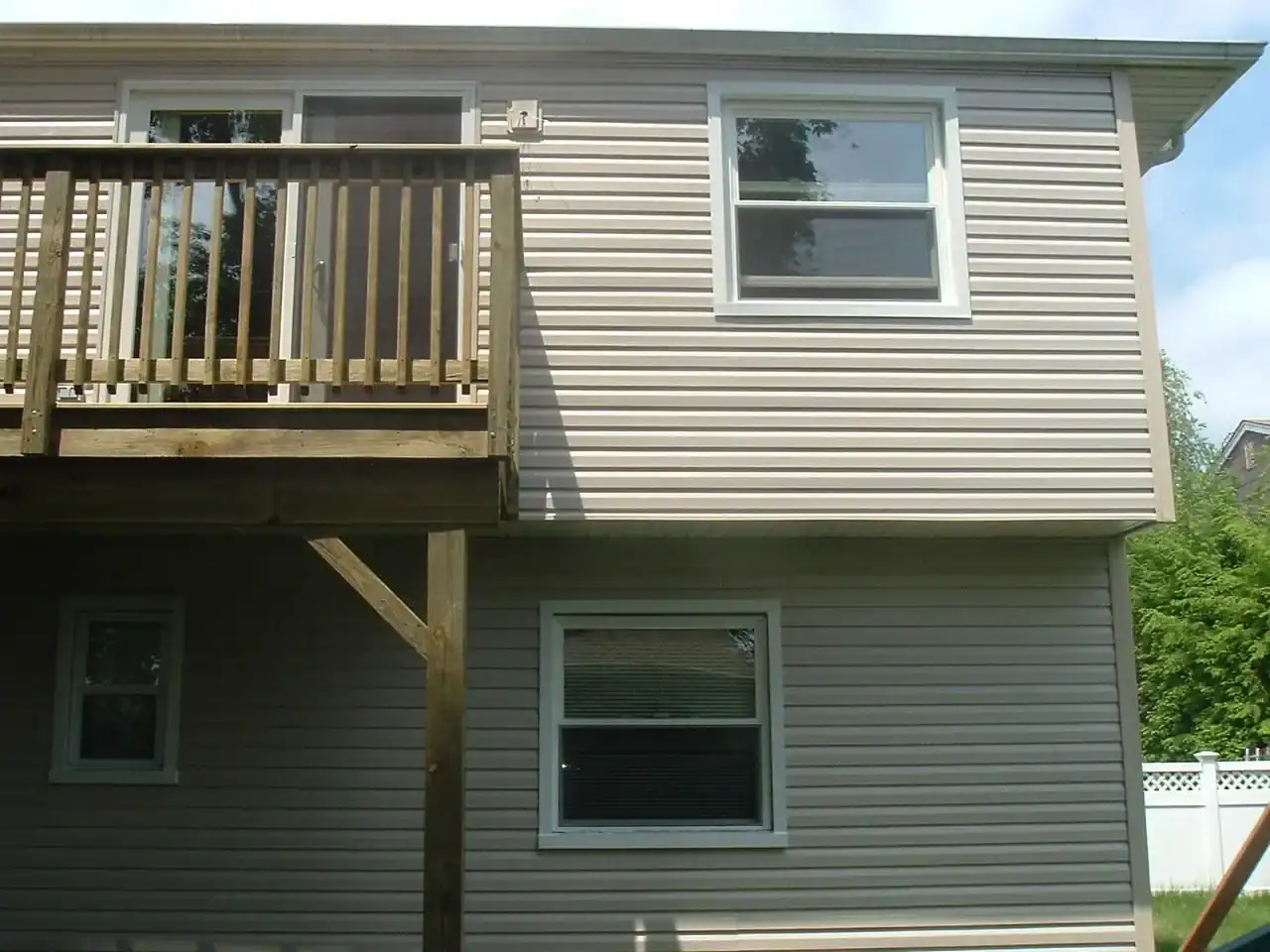
Siding replacement comes up often in Nassau County — and for good reason. The combination of salt air from the Atlantic and Long Island Sound, coastal storms, freeze-thaw cycles, and decades of weather exposure takes a real toll on exterior surfaces. Homes built in the post-war era that defined so much of Nassau County’s housing stock are reaching the point where original or early-replacement siding has simply run its course.
What many homeowners don’t realize is that siding work often makes the most sense as part of a larger exterior or whole-home renovation rather than as a standalone project. When we handle siding as part of a broader scope, we can coordinate the work more efficiently, ensure everything ties together properly, and avoid the scheduling and cost friction that comes from managing multiple separate contractors.
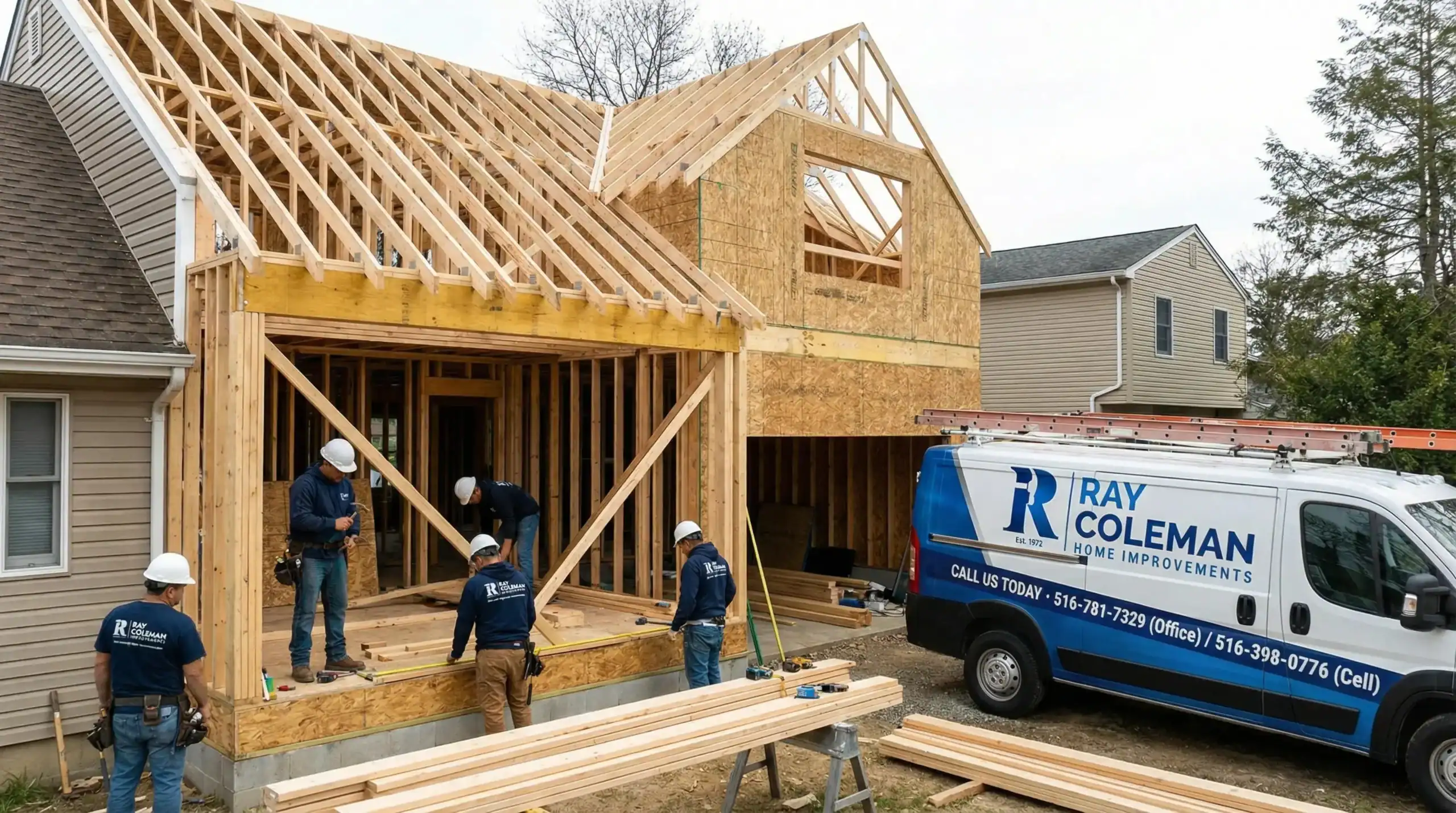
When a Nassau County homeowner calls about siding, it’s rarely the only thing that needs attention. In most cases, the windows are aging alongside the siding. The trim is showing wear. The exterior insulation hasn’t been touched since the house was built. Addressing these together — under a single contractor managing the full scope — produces a better result than patching them one at a time over several years.
When we handle siding replacement, we assess what’s underneath before new material goes up. In older Long Island homes, that sometimes means discovering deteriorated sheathing, moisture intrusion, or inadequate insulation that would have stayed hidden if the project had been approached as a surface-only fix. Catching those issues during the siding project rather than after is exactly the kind of thing that separates thorough work from a surface-level cover-up.
Material selection matters here too. Vinyl siding holds up well in coastal conditions and doesn’t require the maintenance that wood demands — a practical consideration for Nassau County homes that face salt air and storm exposure year after year. Fiber cement is another option that performs well in Long Island’s climate, offering durability without the expansion and contraction issues that affect some materials in freeze-thaw conditions. We walk homeowners through what makes sense for their specific home, their exposure, and their budget — not just what’s easiest to install.
The key question to ask any siding contractor is whether they’re treating this as an isolated job or thinking about how it connects to the rest of the exterior. A contractor who’s done this work on Long Island for decades understands that Nassau County homes face specific conditions that require specific solutions.
Nassau County has seen its share of contractor problems. After major storms, unlicensed operators move through affected neighborhoods offering fast, cheap repairs — and homeowners who are stressed and in a hurry sometimes take the bait. The result is work that fails inspection, creates liability exposure, or simply falls apart within a year or two.
The red flags are consistent regardless of project type. A contractor who asks for more than a third of the total project cost upfront is asking for more trust than they’ve earned. A contractor who wants cash only and can’t produce a written estimate is telling you they don’t want a paper trail. A contractor who can’t give you a license number or gets vague when you ask about insurance is not someone you want working on your home.
Verbal promises don’t hold up. New York State law requires written contracts for home improvement work over $200 — that’s not just good practice, it’s the law. Any contractor who says “don’t worry, we’ll work it out” when you ask for something in writing is a contractor you should walk away from.
The other red flag that doesn’t get talked about enough: a contractor who ghosts you during the estimate phase. If they can’t manage a callback when they’re trying to win your business, they won’t manage it when you’re two weeks into a project and something unexpected comes up behind the walls. In a competitive market like Nassau County, where there are plenty of licensed, insured, responsive contractors to choose from, there’s no reason to settle for someone who treats your time as an afterthought.
The bar for what makes a good home improvement contractor isn’t complicated. It’s a valid Nassau County license, real insurance, a written estimate, an owner who shows up, and someone who answers the phone. Most of the horror stories in this industry come down to one of those things being missing.
If you’re planning a kitchen remodel, bathroom renovation, dormer, extension, or whole-house renovation on Long Island, the project deserves someone who has done this work here — in this market, in this climate, with an understanding of what Nassau County homes actually need. Not a generalist, not someone who just moved into the area, and not someone whose crew you’ll never see twice.
We’ve been doing this work in Nassau County since 1972. If you’re ready to talk about what you’re planning, we’re easy to reach — and we actually pick up.
Summary:
Share: