Planning a whole house renovation in Nassau County? These 7 budget secrets help you avoid the costly mistakes that derail most projects before they even start.
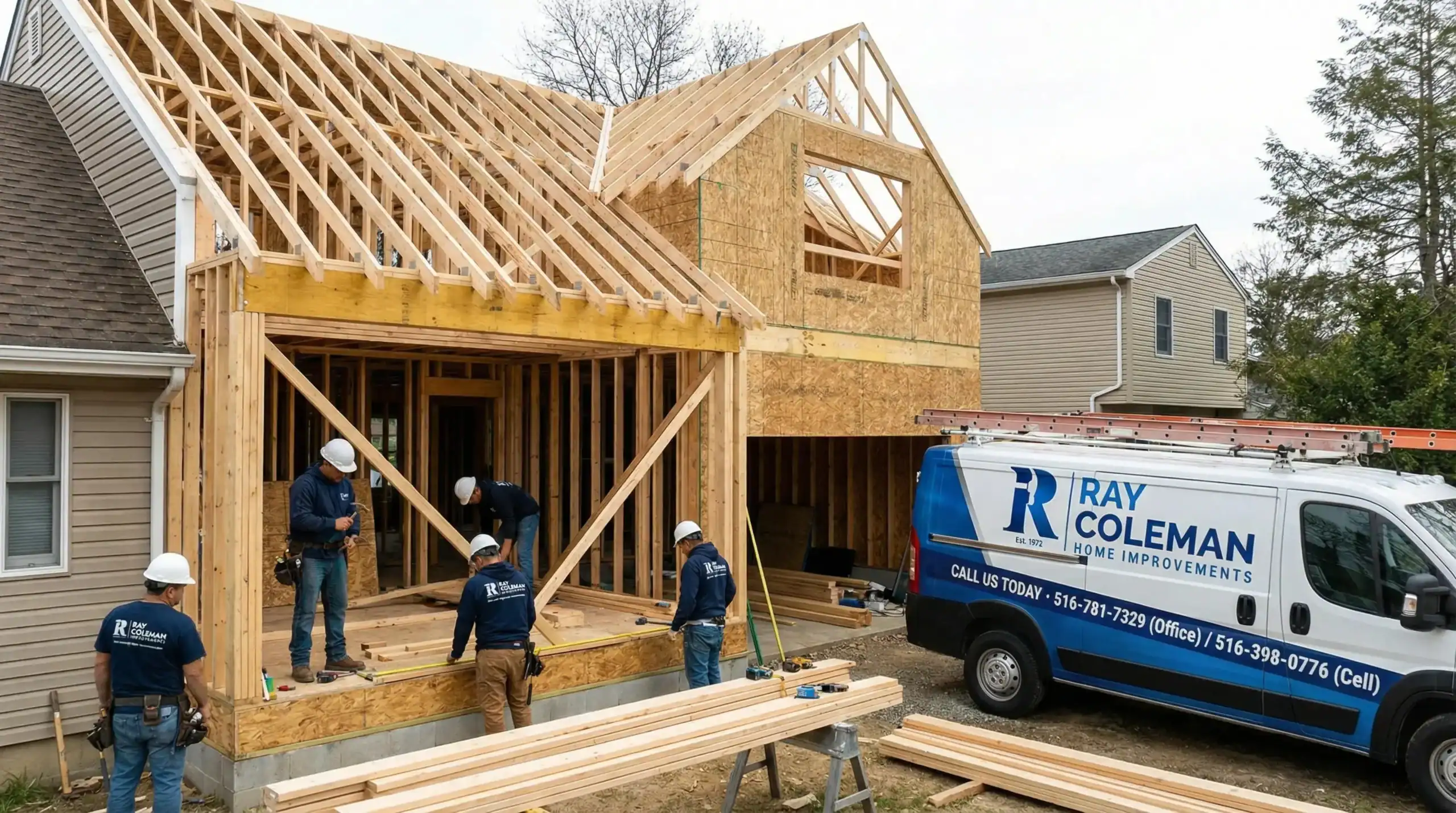
If you’re budgeting $50,000 for a whole house renovation in Nassau County, you need to hear this now: that number probably won’t cover what you think it will. Not because contractors are dishonest, but because most homeowners don’t understand what goes into the real cost.
In Nassau County, full home remodels typically run between $185 and $300 per square foot. That’s not a scare tactic—that’s the reality of labor costs, material pricing, and the complexity of working in older homes with systems that haven’t been touched in decades. A 1,500 square foot renovation could easily land between $277,500 and $450,000 depending on finishes and scope.
But here’s what matters more than the per-square-foot number: understanding what drives those costs up or down. It’s not just about granite versus laminate. It’s about whether you’re moving plumbing, opening walls, updating electrical that hasn’t been touched since the ’70s, or dealing with structural issues nobody saw coming.
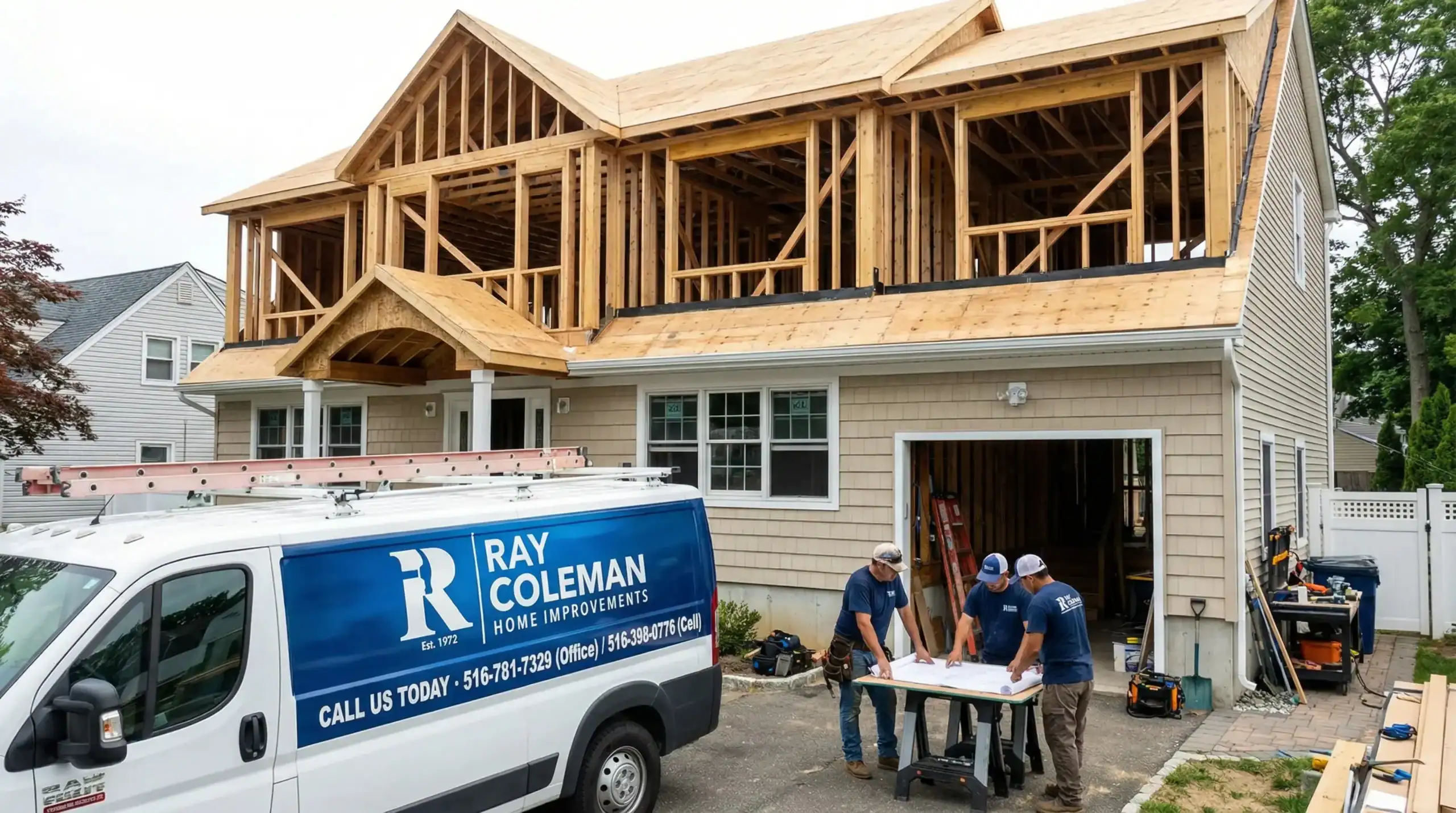
Labor is your biggest expense, typically eating up 25% to 35% of your total budget. In Nassau County, that percentage holds steady whether you’re spending $100,000 or $400,000. Skilled tradespeople—electricians, plumbers, HVAC specialists—don’t come cheap here, and for good reason. They’re navigating building codes, working in tight spaces, and solving problems that only reveal themselves once the walls are open.
Material costs come next, but they’re trickier than you’d think. It’s not just about picking expensive tile versus affordable tile. It’s about understanding that when we open a wall and find knob-and-tube wiring that needs replacing, you’re not just paying for new wire—you’re paying for the electrician’s time, the permit, the inspection, and possibly the drywall repair that follows. These cascading costs are where budgets get shredded.
Then there’s the stuff nobody talks about in the initial estimate. Permits in Nassau County aren’t just a formality—they’re a cost and a timeline factor. Inspections can reveal issues that need addressing before work continues. Weather delays during winter months or hurricane season aren’t hypothetical—they’re real factors that can stretch your timeline and, by extension, your budget. And if your home was built before 1980, there’s a decent chance you’ll encounter something—outdated plumbing, insufficient insulation, foundation settling—that wasn’t visible during the walkthrough.
The homeowners who stay on budget aren’t the ones who get lucky and avoid these issues. They’re the ones who plan for them from day one. They build contingency funds. They ask us what typically goes wrong in homes like theirs. They don’t treat the estimate as a ceiling—they treat it as a starting point for an honest conversation about what could happen when reality meets renovation.
Here’s the secret most people miss: the cost isn’t the problem. The problem is pretending these costs won’t apply to you. Every contractor has seen the homeowner who budgets to the penny, then panics when the first unexpected issue surfaces. Don’t be that homeowner. Build in breathing room, ask uncomfortable questions upfront, and understand that whole house renovations in Nassau County are investments that require realistic financial planning—not wishful thinking.
Setting a realistic budget starts with honesty, not optimism. Sit down and figure out what you can actually afford to spend—not what you hope the project costs, but what you can spend if things go sideways. If that number makes you uncomfortable, you’re probably being realistic.
Now take that number and immediately set aside 15% to 20% as a contingency fund. Not 5%. Not 10%. At least 15%, and if your home is older than 30 years, push it to 20% or higher. This isn’t pessimism—it’s math. The majority of whole house renovations encounter at least one significant unexpected cost, and the homeowners who finish on budget are the ones who planned for it.
Next, get multiple estimates from contractors, but don’t just compare the bottom-line numbers. Look at what’s included. Does one estimate account for permits and inspections? Does another include a buffer for material price fluctuations? The lowest bid often leaves out the details that become change orders later. You want a contractor who’s transparent about what could go wrong, not one who tells you what you want to hear.
Here’s where most people make their biggest mistake: they budget for the renovation but forget about everything around it. Where are you living during a whole house renovation? If you’re staying in the house, how much are you spending on takeout because your kitchen is gutted? If you’re moving out temporarily, what’s that costing? Are you storing furniture? These aren’t small line items—they add up fast and they come out of the same bank account as your renovation.
Talk to us about phasing if your budget is tight. Maybe you do the kitchen and bathrooms now, and tackle the bedrooms and living spaces in six months. Phasing isn’t ideal from a workflow perspective, but it’s smarter than running out of money halfway through and living in a construction zone for months while you scramble to find more funding. We’ll work with you on this because we’d rather see you finish the project comfortably than stretch yourself too thin trying to do everything at once.
One more thing: don’t max out your budget before you even start. If your absolute limit is $200,000, plan the project for $170,000 and keep that $30,000 cushion untouched until you need it. Because you will need it. Maybe not all of it, but you’ll need some of it. And when we call to say we found a plumbing issue that needs immediate attention, you’ll be grateful you’re not scrambling to figure out how to pay for it.
The homeowners who finish their whole house renovations on budget aren’t lucky. They’re prepared. They’ve done the math, built in contingencies, asked hard questions, and made peace with the fact that renovations cost more than you think they will. That mindset—expecting challenges instead of hoping they won’t happen—is the difference between a project that stays on track and one that derails your finances for years.
Want live answers?
Connect with a Ray Coleman expert for fast, friendly support.
The budget you set before the project starts is important. But how you manage costs once the work begins is where most homeowners either save their budget or blow it apart. This is where discipline matters more than planning.
First rule: every decision costs something. When we ask if you want to upgrade the tile, move a light fixture, or add an outlet, your gut reaction might be “sure, while we’re at it.” Stop. Ask what it costs. Ask how it affects the timeline. Ask if it requires a change order. Those small “while we’re at it” decisions are budget killers because they feel insignificant in the moment but they add up fast.
Second rule: communication isn’t optional. You need to know where you stand financially at all times. We give our clients regular updates—what’s been spent, what’s coming, what issues have surfaced. If you ever feel like you’re not getting enough information, ask for it. Weekly is ideal. Waiting until the end to find out you’re $20,000 over budget isn’t a strategy—it’s a disaster.

Scope creep is the silent budget killer. It’s what happens when you start with a plan to remodel the kitchen and bathroom, then decide halfway through that you might as well repaint the whole first floor. And hey, those floors could use refinishing too. And actually, wouldn’t it be nice if we opened up this wall?
Each of those decisions feels reasonable in isolation. But together, they’re the reason your $100,000 renovation becomes $140,000 before you realize what happened. The homeowners who stay on budget have something in common: they decided what they wanted before the project started, and they stuck to it even when opportunities to upgrade presented themselves.
Here’s the truth about change orders: they’re expensive not just because of the work itself, but because of what they do to workflow. When you change the plan mid-project, we have to stop, reassess, reorder materials, possibly reschedule subcontractors, and adjust the timeline. All of that costs money. A change order that seems like it should cost $500 ends up costing $1,200 because of the disruption it causes.
So how do you avoid scope creep? Make your decisions during the planning phase, not the construction phase. Walk through every detail with us before work begins. Pick your finishes, your fixtures, your paint colors, your hardware. Yes, it’s tedious. Yes, it takes time. But it’s infinitely cheaper to change your mind on paper than it is to change your mind when the tile is already ordered and the electrician is scheduled for next Tuesday.
That said, some changes are unavoidable. When we open a wall and find mold or outdated wiring, you don’t have a choice—you have to fix it. These aren’t scope creep. These are necessary repairs that protect your investment. The key is distinguishing between “we have to do this” and “wouldn’t it be nice if we did this.” One is essential. The other is optional. Treat them differently.
If you do need to make a change, get it in writing before any work happens. Understand what it costs, how it affects the timeline, and what happens if you say no. We won’t pressure you. We’ll give you the information and let you decide. If a contractor is pushing upgrades or changes without clear cost breakdowns, that’s a red flag. You’re not there to pad their profit margin—you’re there to get your home renovated within your budget.
One more thing: resist the urge to compare your project to what you see online or what your neighbor just did. Your budget is your budget. Your priorities are your priorities. If you planned for mid-range finishes and your friend went high-end, that’s fine—but it doesn’t mean you need to match them. Staying on budget requires ignoring the noise and sticking to what you decided was important before the project started.
Let’s be clear: unexpected costs will surface. It’s not a matter of if, it’s a matter of when and how much. The homeowners who handle this well aren’t the ones who avoid surprises—they’re the ones who respond to surprises without panic.
When we tell you there’s an issue, your first move is to understand what you’re dealing with. Is this a safety concern that needs immediate attention? Is it something that affects the structural integrity of your home? Or is it an inconvenience that could be addressed later? Not every unexpected cost is urgent, and not every urgent cost is expensive. Get clarity before you make decisions.
Next, ask for options. We don’t just present a problem—we present solutions at different price points. Maybe there’s a code-minimum fix that costs $2,000 and a premium fix that costs $5,000. Maybe there’s a way to phase the repair so you’re not paying for everything at once. You won’t know unless you ask, and we’ll always give you choices, not ultimatums.
This is where your contingency fund comes in. If you followed the advice earlier and set aside 15% to 20% of your budget, you’re not scrambling. You’re making a decision from a position of financial stability instead of desperation. You can evaluate the options, choose what makes sense, and move forward without derailing the entire project.
But what if the unexpected cost is bigger than your contingency? This is where tough decisions happen. Can you cut costs somewhere else? Maybe you downgrade finishes in a less visible area. Maybe you postpone a non-essential part of the renovation. Maybe you phase the project and finish the rest later. These aren’t fun conversations, but they’re better than going into debt or stopping the project halfway through.
Here’s what you don’t do: you don’t ignore the problem and hope it goes away. If we say the electrical panel needs replacing, it needs replacing. If we find water damage that requires remediation, it requires remediation. Cutting corners on structural or safety issues to stay on budget is a false economy—you’ll pay more later, and you’ll compromise the integrity of your home in the process.
The other thing you don’t do is blame your contractor for things outside their control. Yes, it’s frustrating when costs go up. But if we opened a wall and found something that wasn’t visible during the estimate, that’s not our fault—it’s the reality of working on existing homes. We do everything we can to minimize the impact, but we can’t predict what’s behind drywall until we look.
One final point: document everything. When unexpected costs arise, get a detailed explanation in writing. Understand what the issue is, why it needs to be fixed, what it costs, and how it affects the timeline. This protects both you and us. It ensures everyone’s on the same page, and it gives you a paper trail if questions come up later. Verbal agreements and handshake deals are fine until they’re not—and when money’s involved, you want everything documented.
Unexpected costs are part of whole house renovations. The homeowners who stay on budget aren’t the ones who avoid them—they’re the ones who plan for them, respond calmly when they happen, and make informed decisions instead of emotional ones. That’s the difference between a renovation that stays on track and one that spirals out of control.
Staying on budget during a whole house renovation in Nassau County isn’t about luck. It’s about planning for reality instead of hoping for the best. It’s about setting aside contingency funds, making decisions before construction starts, and managing costs with discipline once the work begins.
The homeowners who finish on budget understand that renovations cost more than the initial estimate suggests. They build in buffers, they communicate constantly with their contractor, and they resist the urge to make changes once the project is underway. They know that unexpected costs will surface, and they’re prepared to handle them without panic.
If you’re planning a whole house renovation, start with honest conversations about what you can afford and what you’re willing to compromise on. Work with a contractor who answers when you call, keeps the job site clean, and gives you transparent updates about where your money is going. That’s how projects stay on track. That’s how you finish smiling instead of stressed. If you’re ready to start planning your renovation the right way, we’ve been helping Nassau County homeowners navigate these exact challenges for over 50 years.
Summary:
Share: