Researching kitchen renovation costs in Nassau County? The numbers you're seeing online don't match Long Island reality. Here's what you'll actually pay in 2026.

You’ve Googled “kitchen renovation cost” at least three times this week. You’ve seen numbers ranging from $15,000 to $150,000. Some articles say the average is $30,000. Others claim $75,000 is typical. And none of them seem to match what contractors are actually quoting you.
Here’s why: most of those numbers don’t reflect Nassau County reality. Labor costs here run closer to NYC rates. Permits are handled town-by-town. And if your home was built before 1980, you’re probably looking at electrical or plumbing upgrades the moment walls come down.
This guide gives you real 2026 pricing for Nassau County kitchen renovations—what you’ll actually pay, what drives costs up or down, and how to budget without getting blindsided halfway through the project.
Most full kitchen remodels in Nassau County fall between $35,000 and $85,000 in 2026. That’s higher than the national average, and it’s not because contractors are padding estimates.
Long Island labor costs track closer to NYC rates than national figures. Permits and inspections are managed town-by-town across Nassau County, each with different fees and timelines. And older homes—especially those built between the 1940s and 1970s—often need behind-the-walls work that doesn’t show up until demolition starts.
If someone quotes you $25,000 for a full kitchen remodel in Nassau County, they’re either missing major line items or planning to cut corners you’ll regret later. The real question isn’t whether Long Island costs more—it’s understanding where your money actually goes so you can make smart decisions about your budget.
Nassau County kitchen renovation costs don’t exist in a vacuum. Several factors specific to Long Island push pricing higher than what you’d see in other parts of the country.
Labor is the first major driver. Skilled tradespeople—electricians, plumbers, tile setters, carpenters—charge rates that reflect Long Island’s cost of living and proximity to New York City. You’re not paying Midwest or Southern rates here. A full kitchen remodel typically allocates 30-40% of the total budget to labor alone, and that percentage climbs to 55-60% for gut renovations involving structural changes or major system relocations.
Permits add another layer. Nassau County doesn’t have a one-size-fits-all permitting process. Each town handles applications differently, with fees typically ranging from $500 to $1,500 depending on your project’s scope. Kitchen remodels involving electrical work, plumbing changes, or structural modifications require permits. And Nassau County building departments are strict—unpermitted work can stall a home sale years down the line when it surfaces during inspection.
Older homes create the biggest cost variables. Many Nassau County houses were built decades ago, long before modern electrical codes or efficient plumbing standards existed. Once we open walls during demolition, we often find outdated wiring that can’t handle today’s appliance loads, corroded pipes that need replacing, or insulation that barely exists. These aren’t optional upgrades—they’re code requirements that have to be addressed before the project can move forward.
Material costs matter too, but they’re more predictable. Cabinets typically eat up 30-40% of your budget and represent the single largest expense in most kitchen remodels. The jump from stock cabinets to semi-custom, and especially to fully custom, can add tens of thousands to your total. Countertops usually account for 10-15% of the bill, with quartz remaining the most popular mid-range choice in 2026. Appliances take another 10-20% depending on whether you’re installing standard models or high-end brands.
Kitchen size and layout changes also drive pricing. A straightforward pull-and-replace project—new cabinets, counters, and appliances in the same footprint—costs significantly less than a renovation involving wall removal, plumbing relocation, or structural modifications. Moving a sink across the room means rerouting water lines and drain pipes. Removing a wall to create an open concept requires engineering to ensure proper support. These changes add weeks to the timeline and thousands to the budget.
The smartest approach isn’t chasing the lowest number. It’s understanding what scope and finish level make sense for your home, your budget, and how long you plan to stay. A $45,000 mid-range remodel with semi-custom cabinets and quartz counters delivers very different results than a $45,000 budget stretched to include custom cabinetry and layout changes that compromise on materials elsewhere.
Understanding how your kitchen renovation budget splits between labor and materials helps you make better decisions about where to invest and where to save.
For most Nassau County kitchen projects, labor accounts for roughly one-third to just under half of your total cost. A typical mid-range remodel might break down to 35-40% labor and 60-65% materials. Gut renovations involving structural work, major plumbing relocations, or electrical panel upgrades push labor closer to 50-60% of the total budget because the work becomes more complex and time-intensive.
Labor costs cover more than just the hours spent swinging hammers. You’re paying for licensed electricians to run new circuits and ensure your kitchen can handle modern appliance loads. Plumbers reroute water lines, install new drains, and connect dishwashers and refrigerators with ice makers. Carpenters build custom elements, install cabinets precisely, and handle trim work. Tile setters work on backsplashes and flooring. Countertop fabricators template and install stone or quartz surfaces.
General contractor fees typically add 10-20% markup over direct trade costs. That markup covers project management—scheduling trades in the correct sequence, ordering materials to arrive when needed, coordinating inspections with local building departments, and troubleshooting problems before they derail your timeline. On a $60,000 kitchen remodel, that might represent $6,000 to $12,000, but it’s what keeps your project moving instead of stalling for weeks because the electrician and plumber both showed up on the same day with nowhere to work.
Material costs are more straightforward but vary wildly based on your selections. Cabinets dominate this category. Stock cabinets from big box stores might run $100-$250 per linear foot. Semi-custom options typically range from $250-$600 per linear foot. Fully custom cabinetry built to your exact specifications can exceed $1,200 per linear foot. A typical kitchen with 20 linear feet of cabinetry could cost anywhere from $2,000 to $24,000 just for the boxes—before installation labor.
Countertops follow a similar pattern. Laminate costs $20-$50 per square foot and works fine for budget-conscious projects. Quartz runs $50-$150 per square foot for most mid-range brands, offering durability and consistent patterns without maintenance headaches. Natural stone like granite or marble can push $150-$200+ per square foot depending on the slab you choose. Fabrication and installation add another $1,000-$3,000 in labor, separate from material costs.
Appliances create another major line item. Basic packages with standard refrigerators, ranges, dishwashers, and microwaves start around $2,000-$5,000. Mid-grade stainless steel appliances from recognizable brands typically run $5,000-$10,000. High-end professional-grade equipment from Wolf, Sub-Zero, or similar manufacturers can easily exceed $25,000 for a full package.
Flooring, lighting, backsplash tile, fixtures, and hardware round out material costs. Luxury Vinyl Plank flooring—waterproof, durable, and popular in 2026 Nassau County kitchens—costs less than hardwood but performs better in high-traffic areas. LED recessed lighting, pendant fixtures, and under-cabinet task lighting add both function and ambiance. Large-format backsplash tiles in earthy tones remain trending because fewer grout lines mean less scrubbing.
The key is balancing labor and materials based on your priorities. Investing in quality installation ensures your beautiful materials get installed correctly the first time. Skimping on skilled labor to afford fancier finishes often backfires when cabinets hang crooked, tile cracks, or plumbing leaks six months after the project wraps.
Want live answers?
Connect with a Ray Coleman expert for fast, friendly support.
Planning your kitchen remodel budget starts with understanding the three main cost tiers and what you actually get at each level.
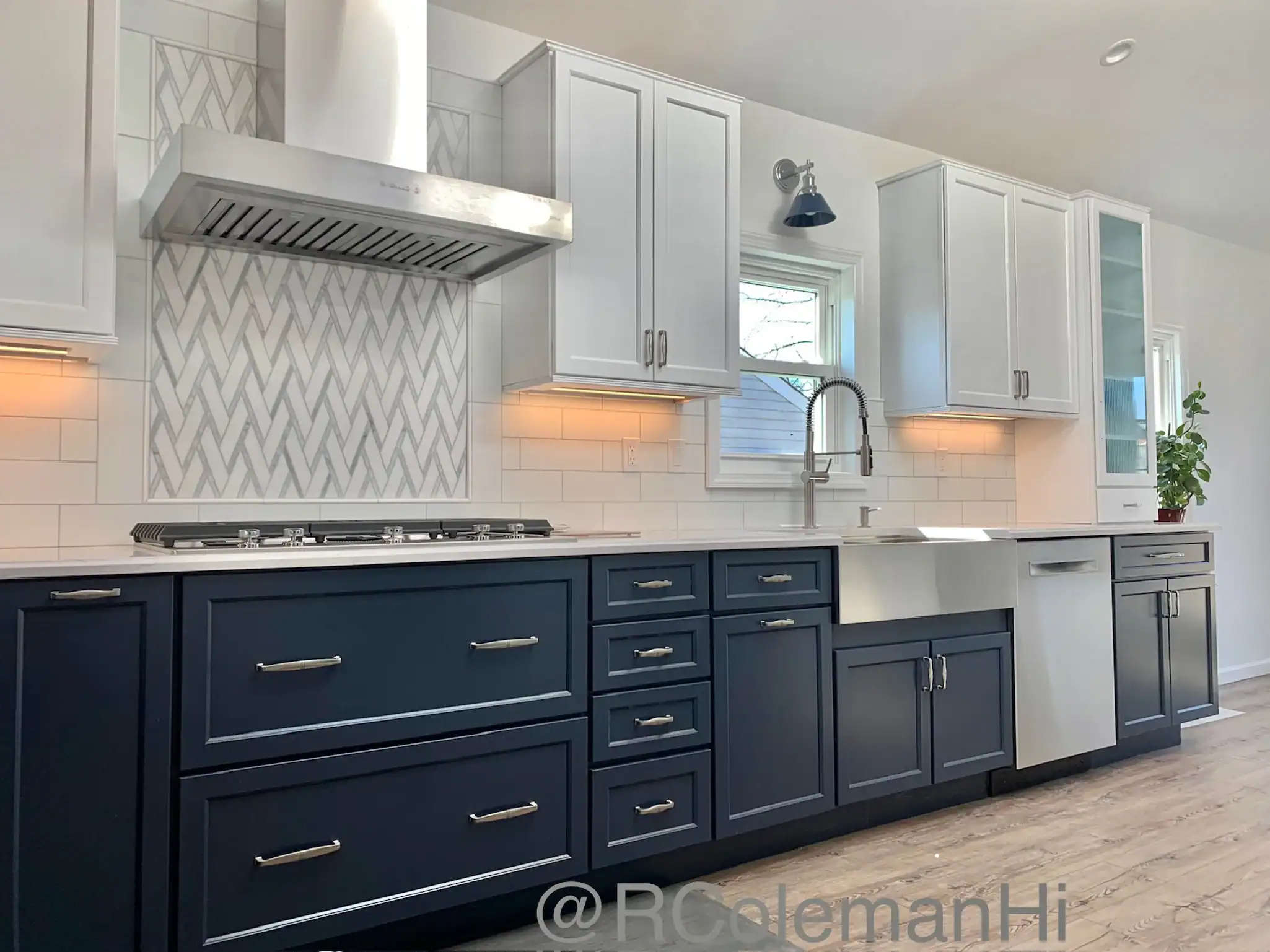
Budget refreshes run $20,000-$35,000 and keep your existing layout. You’re replacing cabinets, countertops, and appliances without moving plumbing or electrical. This works well for smaller kitchens or homeowners who like their current layout but need updated finishes. Expect stock or ready-to-assemble cabinets, laminate or entry-level quartz counters, and standard appliance packages.
Mid-range remodels land between $45,000-$85,000 and represent where most Nassau County homeowners end up. You get semi-custom cabinets, quality quartz countertops, updated lighting and flooring, and the flexibility to make minor layout adjustments. This tier offers the best balance of durability, daily usability, and resale value. It’s enough budget to fix functional problems while using materials that hold up to real life.
High-end renovations start at $100,000 and climb from there. You’re looking at custom cabinetry built to exact specifications, natural stone countertops, professional-grade appliances, and potentially significant layout changes or structural modifications. This tier makes sense when you’re creating a forever kitchen in a home you plan to stay in long-term, or when your home’s value supports the investment.
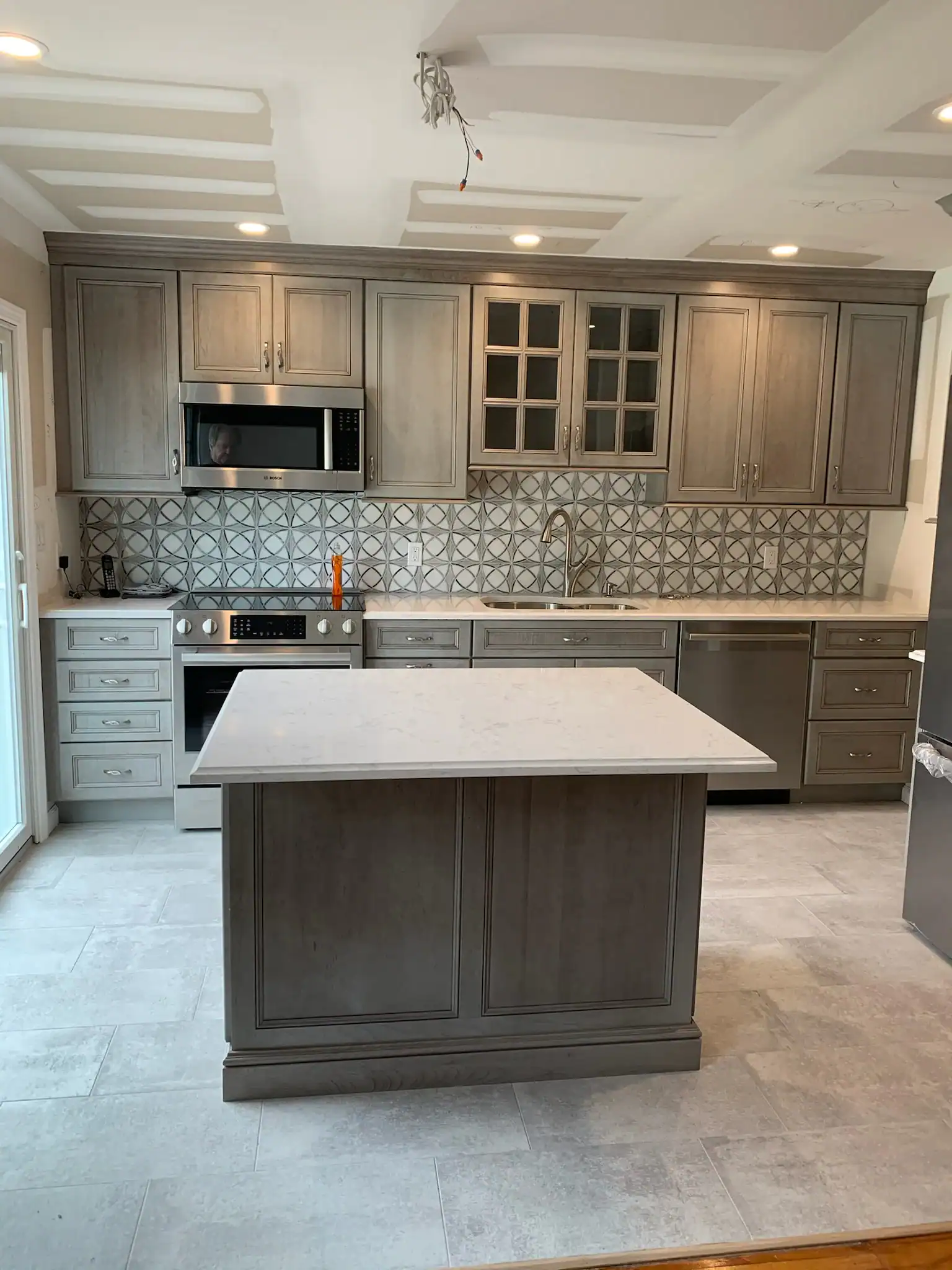
The costs that blindside homeowners aren’t usually the big-ticket items like cabinets or countertops. They’re the behind-the-walls surprises that don’t show up until demolition starts.
Electrical upgrades rank among the most common hidden costs in Nassau County kitchen remodels. Homes built before 1980 often have electrical systems that can’t handle modern kitchen loads. You’re running a refrigerator, dishwasher, microwave, range, garbage disposal, and multiple small appliances simultaneously. Older panels and wiring weren’t designed for that. Bringing everything up to current code might mean running new circuits, upgrading your electrical panel, or rewiring sections of your kitchen. Budget $2,000-$8,000 depending on what needs updating.
Plumbing issues surface next. Corroded pipes, outdated materials, or poorly executed DIY repairs from previous owners create problems once you start moving fixtures or opening walls. If you’re relocating your sink, adding a second sink, or installing a pot filler, you’re rerouting water lines and drain pipes. Older homes sometimes have galvanized pipes that should be replaced with copper or PEX. Plan for $1,500-$5,000 in plumbing work beyond basic fixture installation.
Structural concerns come up when you want to remove walls or expand your kitchen footprint. Not every wall is load-bearing, but if the one you want gone is holding up your second floor, you’ll need engineered beams and proper support posts. An engineer’s assessment runs $500-$1,500. The actual structural work adds several thousand more depending on span and load requirements.
Insulation barely existed in many older Nassau County homes. Once walls are open, it makes sense to add proper insulation before closing everything back up. You’ll notice the difference in comfort and energy bills. Figure $1,000-$3,000 depending on your kitchen’s size.
Permit fees in Nassau County vary by town and project scope. Most kitchen remodels involving electrical or plumbing work require permits. Fees typically range from $500-$1,500. The real cost isn’t the fee—it’s time. Permit approval can take 2-4 weeks, and inspections throughout the project add coordination complexity. Working with a licensed contractor who handles permitting as part of the project saves you weeks of delays and potential violations.
HVAC adjustments sometimes become necessary when you change your kitchen’s layout or add square footage. Moving ductwork, adding vents, or upgrading capacity to handle the new space adds $1,000-$4,000 depending on what’s required.
The smartest move is budgeting a 10-15% contingency specifically for these surprises. On a $60,000 kitchen remodel, that’s $6,000-$9,000 set aside for the unexpected. Older homes built in the 1920s through 1960s almost always reveal something once walls come down. Having that buffer means you’re not scrambling to find extra cash or making compromises that affect the finished result.
Your kitchen renovation timeline directly impacts your total investment through carrying costs, temporary living arrangements, and how long you’re without a functioning kitchen.
Most mid-range kitchen remodels in Nassau County take 3-4 months from initial planning to completion, with 6-10 weeks of active construction. Pull-and-replace projects keeping the same layout run shorter—typically 2-3 months total with 4-6 weeks of construction. High-end renovations involving structural changes, custom cabinetry, or major layout reconfigurations often push 4-5+ months with 8-12+ weeks of construction time.
Planning consumes more time than most homeowners expect. You’ll spend weeks selecting cabinets, choosing countertop slabs, picking tile, finalizing layouts, and making hundreds of small decisions before demolition even starts. Rushing this phase leads to mid-project changes that cost more and take longer. Contractors who push you to make quick decisions so they can start tomorrow usually create problems later when you realize the layout doesn’t work or you hate the cabinet color you picked under pressure.
Cabinet lead times represent the single biggest timeline wildcard in 2026. Stock cabinets from big box stores might arrive in days or weeks. Semi-custom cabinets typically take 6-8 weeks from order to delivery. Fully custom cabinetry can require 12-20 weeks for quality work. If your cabinets are delayed, your entire project stalls because countertop fabrication can’t happen until cabinets are installed and templated.
Permit approval adds 2-4 weeks in most Nassau County towns, sometimes longer during busy seasons or if your plans require revisions. Towns handle applications differently—some accept online submissions, others require in-person filing. Inspections throughout the project add coordination complexity. You can’t close up walls until electrical and plumbing pass inspection. You can’t install certain finishes until rough inspections are complete. We understand local building departments and have relationships with inspectors that keep things moving.
Material availability creates delays when specialty items are backordered. That imported tile you fell in love with might have a 10-week lead time. The specific quartz slab you selected could be on backorder. Custom range hoods, specialty lighting fixtures, or unique hardware sometimes take months to arrive. Ordering everything well in advance and confirming lead times before demolition starts prevents our crew from standing around waiting for materials.
Unexpected issues once walls open add time you can’t predict. Older Nassau County homes often reveal surprises—outdated wiring, corroded plumbing, structural settling, or previous DIY work that wasn’t done to code. Addressing these issues properly adds days or weeks depending on severity. We communicate clearly about what we find, why it needs fixing, and how it affects your timeline. Contractors who hide problems or try to work around code violations create bigger headaches down the road.
Living without a functioning kitchen for 6-10 weeks means eating out more, relying on temporary setups with microwaves and toaster ovens, or cooking in other parts of your home. Those costs add up. Some homeowners budget $2,000-$4,000 for meals during construction. Others set up temporary kitchens in basements or dining rooms. Either way, factor this into your total project investment.
The contractors who keep projects on schedule do three things consistently: they finalize all major selections before demolition starts, they order long-lead items early, and they show up every day instead of bouncing between multiple job sites. Projects stall when contractors disappear for two weeks to work another job, then come back when they feel like it. Once we start your kitchen, we’re there until it’s done.
Kitchen renovation costs in Nassau County run higher than national averages for legitimate reasons—labor rates near NYC levels, town-by-town permitting, and older homes requiring code updates. Most full remodels realistically fall between $35,000-$85,000 in 2026, with budget refreshes starting around $20,000 and high-end custom projects exceeding $100,000.
The smartest approach isn’t chasing the lowest quote. It’s understanding what drives costs up or down, budgeting a 10-15% contingency for surprises in older homes, and working with contractors who communicate clearly and show up when they say they will.
Your kitchen renovation represents a significant investment in both money and daily life disruption. Getting it right the first time—with proper planning, realistic budgeting, and skilled contractors—beats cutting corners and dealing with problems later. If you’re ready to move forward with transparent pricing and straightforward communication, we’ve been handling large-scale kitchen renovations in Nassau County for over 50 years.
Summary:
Share: