Nassau County home addition costs look nothing like the national averages you've been reading. Here's what homeowners in this market actually pay — and why.
You searched “home addition cost,” found a national average somewhere around $51,000, and now you’re wondering if that number makes any sense for your house in Nassau County, NY. It doesn’t. Long Island is its own market — labor rates, permitting complexity, and material costs all run significantly higher than the national baseline. That gap matters, and walking into contractor conversations without knowing it puts you at a real disadvantage.
We’ve been working in this market since 1972, and we’ve watched these costs evolve. This guide breaks down what additions actually cost here, what drives those numbers, and how to make sure you’re getting a straight answer when you ask for an estimate.
Nationally, home addition costs average somewhere between $80 and $210 per square foot. In Nassau County, that range shifts considerably — most projects fall between $157 and $313 per square foot for standard to premium construction, and that number climbs higher depending on the type of room, the complexity of the tie-in, and the finish level you’re after.
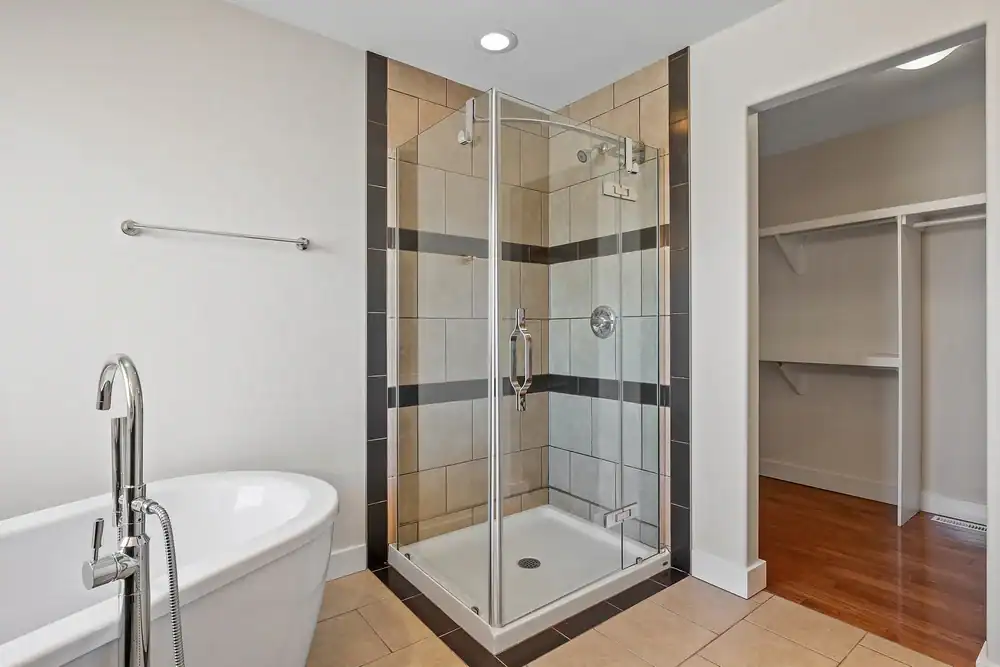
For a realistic sense of scope: smaller additions like a mudroom or a bathroom extension tend to start around $100,000. A larger project — a full second-story addition, an in-law suite, or a major kitchen extension — can run anywhere from $150,000 to well over $450,000. Those aren’t outliers. That’s the Nassau County market.
There are a few reasons why the number you find online and the number you get quoted locally can feel like two completely different conversations — and none of them have to do with contractors overcharging you.
Labor is the biggest factor. Tradespeople in Nassau County — framers, electricians, plumbers, HVAC technicians — earn wages that reflect the cost of living in the New York metro area. That’s just the reality of working in a high-cost market, and it shows up in every estimate.
Material costs follow the same pattern. Nassau County’s coastal exposure, with the Atlantic to the south and the Sound to the north, means certain materials need to be rated for that environment. Salt air, freeze-thaw cycles, and nor’easters are not abstract concerns here — they’re reasons why cutting corners on materials tends to cost more in the long run than doing it right the first time.
Then there’s permitting. Nassau County doesn’t operate on a single countywide code — it runs through individual towns and villages, each with its own zoning rules, setback requirements, and inspection processes. The Town of Hempstead handles things differently than Oyster Bay, which handles things differently than North Hempstead. A contractor who knows these distinctions can move a project through the system efficiently. One who doesn’t can stall your timeline for weeks.
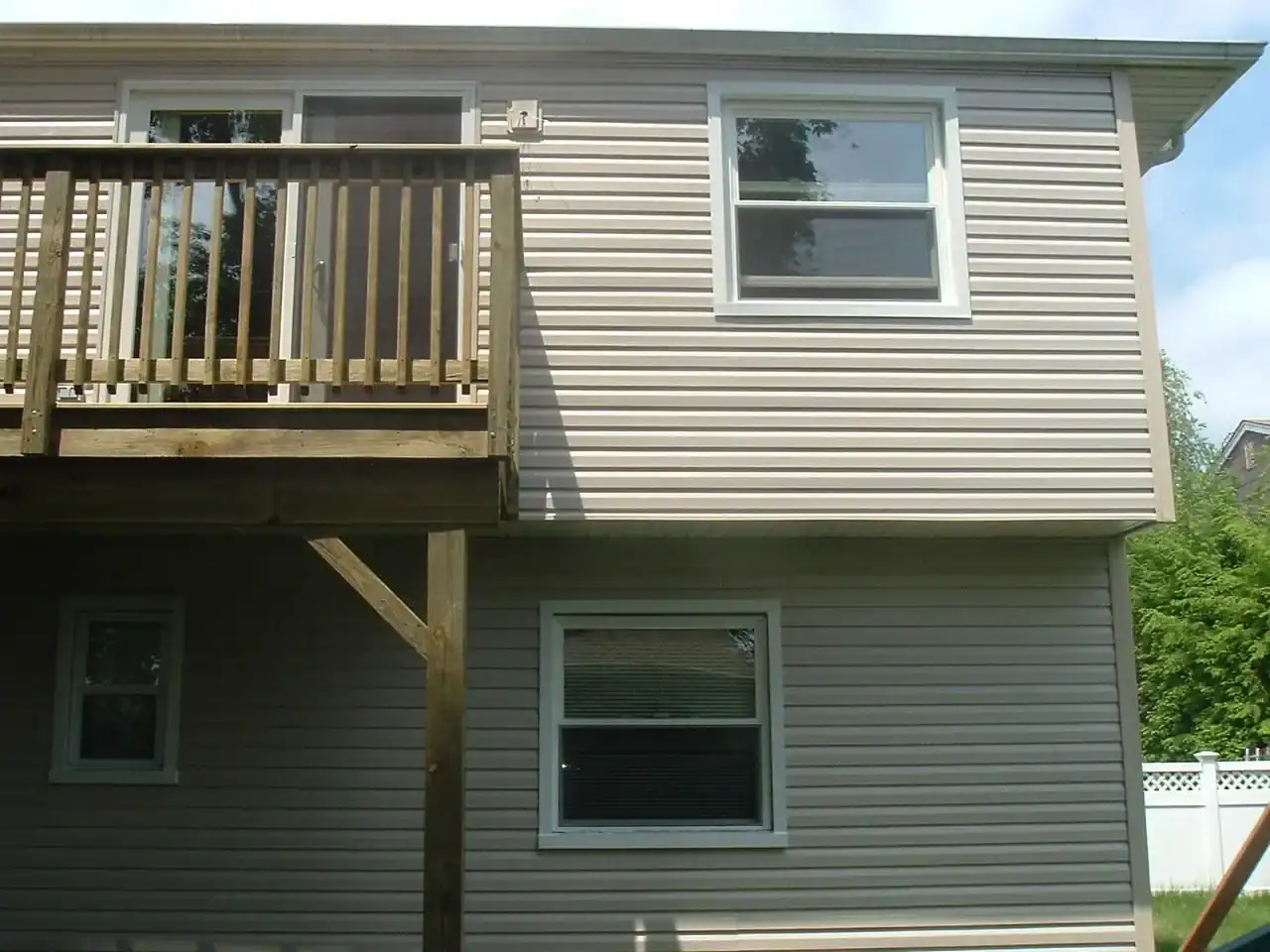
Finally, there’s the housing stock itself. A huge portion of Nassau County’s homes — particularly in communities like Levittown, Wantagh, Massapequa, and Seaford — were built between the late 1940s and early 1960s as modest Cape Cods and split-levels. They were designed for smaller families in a different era. Expanding them today often means working around original framing, older mechanical systems, and rooflines that weren’t built with additions in mind. That structural complexity adds time and cost that a per-square-foot average simply can’t capture.
This is the question most homeowners are quietly asking even when they’re searching for cost-per-square-foot data. And in Nassau County’s current market, it’s worth running the actual math.
Median home prices in communities like Levittown have been hitting $735,000 and climbing. Inventory is tight. Competition for available homes is real. If you’re trying to buy a house that’s meaningfully larger than the one you’re in, you’re likely looking at a significant premium — plus transaction costs that can easily run $50,000 to $80,000 once you factor in agent commissions, transfer taxes, and the cost of moving.
A well-executed home addition lets you stay in the neighborhood you chose, keep your kids in the schools you picked, and hold onto a mortgage rate that you’d give a lot to keep. The addition adds real square footage, and most Long Island additions return somewhere between 60 and 80 percent of their cost in appraised value — higher in premium coastal towns.
None of that means an addition is automatically the right answer for every homeowner. But it does mean that “just move” isn’t the obvious financial slam-dunk it might seem at first glance. For a lot of Nassau County families, expanding in place is the smarter long-term move — financially and practically.
One important note: always build a contingency into your budget. Industry standard is 10 to 20 percent of the total project cost. Additions involve structural work, and structural work occasionally surfaces surprises once walls come down. A contractor who’s honest about this upfront is a better sign than one who promises a pristine, complication-free process.
Want live answers?
Connect with a Ray Coleman expert for fast, friendly support.
Finding cost data is the easy part. The harder part is finding a contractor you can actually trust to do the work — and in Nassau County’s competitive market, that distinction matters more than most homeowners realize until something goes wrong.
The first thing to verify is licensing. Nassau County requires every contractor performing residential home improvement work to hold a Home Improvement Contractor license issued by the Nassau County Office of Consumer Affairs. This isn’t a statewide credential — it’s county-specific, it’s legally required, and an unlicensed contractor cannot legally enforce a contract or file a lien against your property. Verifying that license before you sign anything is one of the simplest protections available to you.
Beyond licensing, the things that separate a reliable contractor from an unreliable one tend to be operational, not credential-based. Does the contractor answer the phone? Do they return texts the same day? Do they show up when they say they will? These sound like basic expectations, but they’re not universal — and the homeowners who’ve had bad experiences will tell you that the warning signs were there early.
A contractor’s track record in the local market is one of the most reliable indicators of what working with them will actually be like. Not just how long they’ve been in business in general, but how long they’ve been working specifically in Nassau County — navigating its permitting offices, its building stock, its inspectors, and its homeowners.
We’ve been doing this work since 1972. That’s over 50 years of additions, dormers, extensions, and whole-house renovations in Nassau County specifically. Ray Coleman and his son are on the job site personally — not managing from a distance, but actually working. That’s not something most contractors can say, and it’s something our customers notice immediately.
More than 60 percent of our work comes from referrals. That’s a reflection of what happens when homeowners feel like they were treated fairly, given straight answers, and handed back a finished project that matched what they were promised. Several of those customers have called us back three and four times for different projects.
We’re licensed and insured in both Nassau and Suffolk Counties. We provide free estimates. We respond to calls and texts the same day. And when something urgent comes up — a frozen pipe at 3 AM, a storm that’s left a situation that can’t wait — we’re available. That kind of responsiveness isn’t common, and if you’ve already tried calling a few contractors and heard nothing back, you already know that.
**How long does a home addition take in Nassau County, NY?** It depends heavily on the type of addition. A dormer project, for example, typically runs four to twelve weeks depending on size and scope. Larger additions — a full second story, a significant kitchen extension, an in-law suite — take longer, especially when permitting is involved. Nassau County’s town-by-town permitting process can add time if you’re working with a contractor who isn’t familiar with the local system. We coordinate the permitting process for our clients so that piece doesn’t become a surprise.
**Do I need a permit for a home addition in Nassau County, NY?** For most structural additions — anything that changes the footprint, roofline, or load-bearing elements of your home — yes, a permit is required. Nassau County’s Home Improvement Contractor licensing framework specifically covers additions to residential structures, and the permit requirement exists to protect you: it ensures the work is inspected, up to code, and legally recorded. Skipping permits on work that requires them can create serious problems when you go to sell. We handle the permitting process for our clients in Nassau County, so you don’t have to navigate the town-specific requirements on your own.
**What type of addition costs the most?** Kitchen and bathroom additions consistently run higher than bedroom or family room additions of the same square footage. The reason is plumbing, electrical, and mechanical work — those systems add significant cost regardless of how large the room is. Second-story additions also tend to run higher because of the structural complexity involved in tying into an existing foundation and roofline.
**How do I know if an estimate is fair?** A fair estimate is a detailed estimate. It should break out labor, materials, and any additional costs — not hand you a single lump sum and ask you to trust it. A bid that’s significantly below what other contractors are quoting isn’t necessarily a deal; in Nassau County’s market, it often signals that something is being left out. We don’t vary from our estimates. What we quote is what you pay.
The national numbers aren’t wrong — they’re just not yours. Nassau County has its own labor market, its own permitting landscape, its own housing stock, and its own set of reasons why additions cost what they cost here. Going in with a realistic picture of that is the difference between a project that goes smoothly and one that blows past your budget before the framing is done.
The other thing that matters just as much as the numbers is who you hire. A contractor who’s been working in Nassau County for decades, shows up personally, answers the phone, and gives you a detailed estimate you can actually hold them to — that’s not easy to find, but it’s worth looking for.
If you’re ready to get a real number for your project, Ray Coleman Home Improvement is available Monday through Sunday and responds the same day. Call or text, and you’ll hear back.
Summary:
Share: