Confused about whether you need a general contractor or a home builder? Here's how to tell the difference — and why it matters for your Nassau County home.
You’ve got a project in mind — maybe it’s a kitchen that’s been bothering you for years, or a dormer you’ve been putting off, or a first floor that doesn’t work for how your family actually lives. So you start searching, and you immediately run into a problem: every contractor seems to call themselves something slightly different. General contractor. Home builder. Renovation specialist. Remodeler. It all starts to blur together. This guide cuts through that confusion. By the end, you’ll know exactly which type of professional matches your project — and what to ask when you’re ready to make a call.
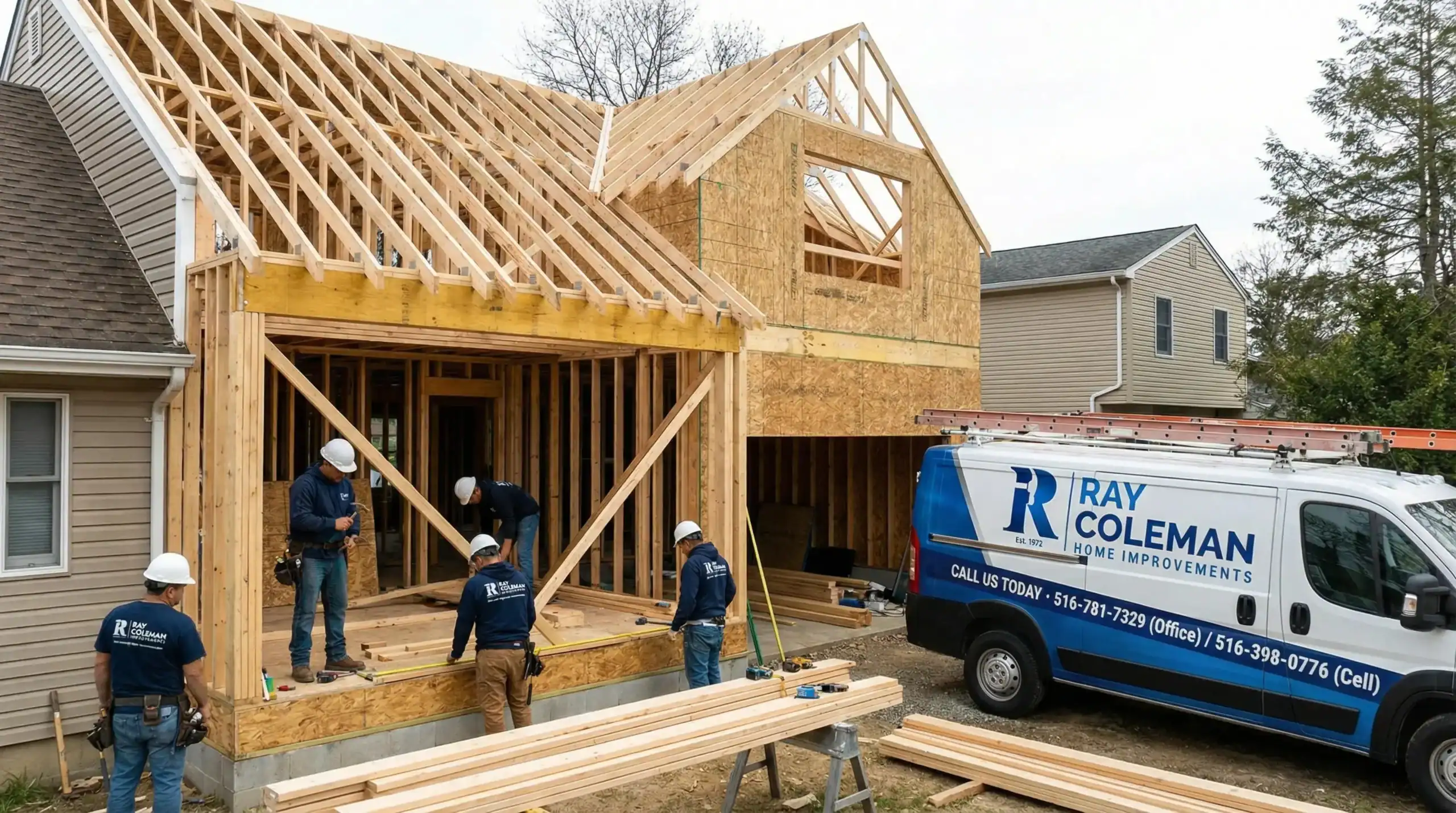
The short version: a home builder focuses on new construction. They take a piece of land and build a house on it — from the foundation up. Some home builders work from set floor plans; others do fully custom builds. Either way, their expertise is oriented around creating something new where nothing existed before.
A general contractor is a broader role. A GC manages the full scope of a construction or renovation project — coordinating subcontractors, pulling permits when needed, sequencing the work, and making sure everything comes together on time and on budget. That can include new builds, but it also covers everything else: renovations, additions, dormers, gut rehabs, and whole-house transformations. For most homeowners with an existing home in Nassau County, a general contractor is the right call.
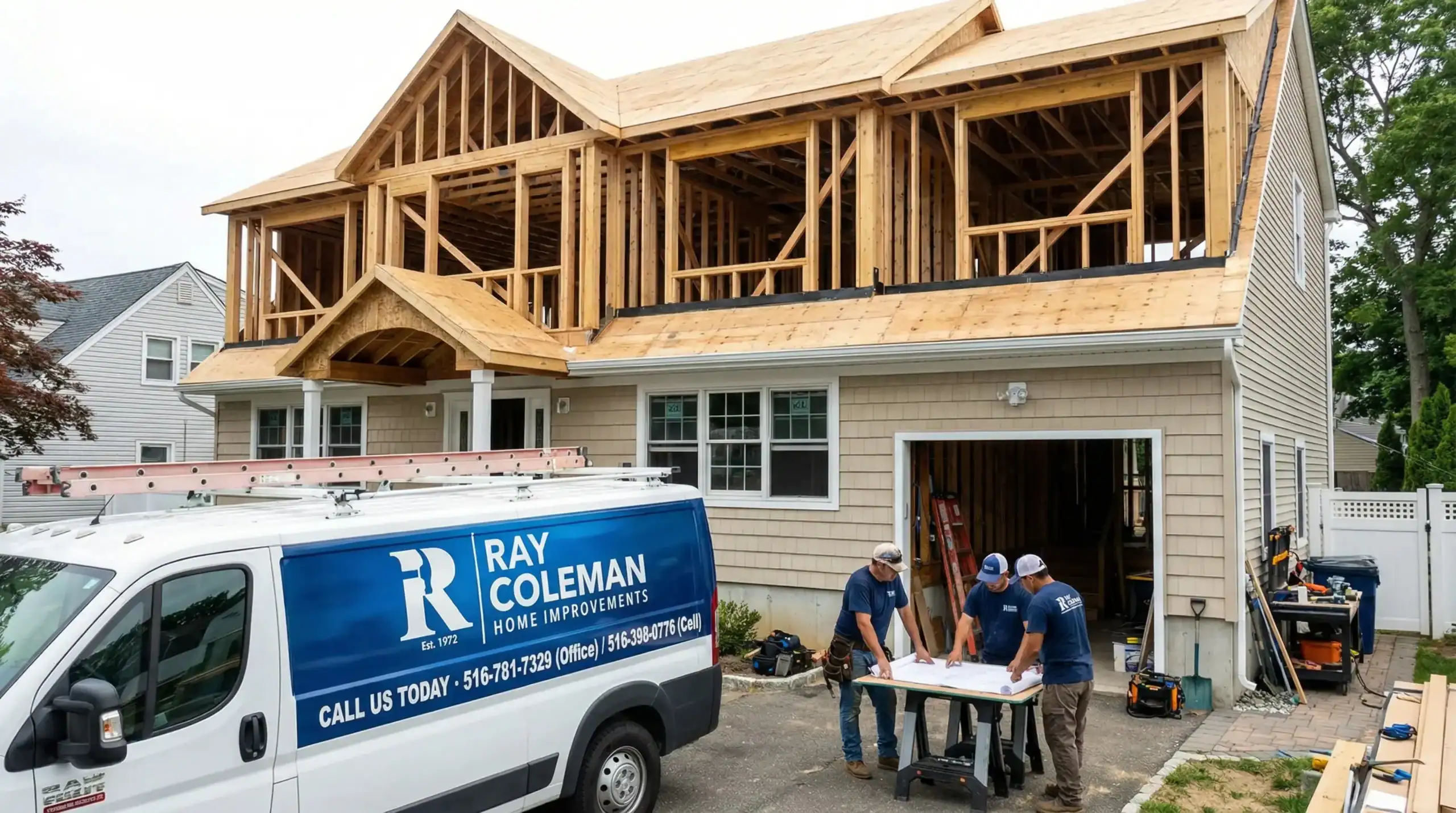
A renovation specialist is a general contractor whose focus is on existing homes — not ground-up construction. It sounds like a subtle distinction, but it matters more than most people realize.
Working inside an existing structure is a fundamentally different skill set than building new. When you’re renovating a 1960s split-level in Levittown or opening up the first floor of a ranch in West Hempstead, you’re dealing with decades of prior work — some of it done well, some of it not. You’re working around load-bearing walls that aren’t always where you’d expect them. You’re navigating plumbing and electrical systems that were installed under codes that no longer exist. You’re making modern decisions inside a structure that wasn’t designed for them.
A contractor who spends most of their time building new homes from scratch doesn’t face those challenges every day. A renovation specialist does. They know how to assess what’s behind the walls before committing to a scope of work. They know how to handle surprises — because on older homes, there are almost always surprises — without blowing up the budget or the timeline.
Nassau County’s housing stock makes this especially relevant. A huge portion of the county’s residential homes were built during the post-WWII suburban boom of the late 1940s through the 1960s. These are 60- to 80-year-old homes — solid, well-located, and full of potential, but they need a contractor who understands what that age means structurally. The kitchen layouts, the bathroom configurations, the electrical panels — all of it reflects a different era. Renovating them well requires experience with exactly that kind of work.
That’s the core of what we do at Ray Coleman Home Improvement. We’ve been doing this since 1972 — over 50 years of working inside Nassau County homes, dealing with exactly the kinds of projects and surprises that come with this housing stock. Kitchen remodel, bathroom renovations, first-floor transformations, dormers, extensions — this is the work we know best.
One of the things homeowners don’t fully anticipate before a renovation starts is how many moving parts there are. There’s the demo crew, the plumber, the electrician, the tile setter, the cabinet installer, the painter. Each one has their own schedule. Each one’s work depends on what the person before them did. If the sequencing is off, you end up with delays that compound — and a project that was supposed to take six weeks stretches into four months.
This is where home renovation project management becomes the difference between a smooth job and a nightmare. The general contractor is the person responsible for keeping all of that coordinated. They’re the one who knows the plumber can’t rough in until demo is finished, and the electrician needs to be in before the drywall goes up, and the tile setter needs the floor leveled before they can start. They hold the schedule together. When something runs late or a material doesn’t arrive on time, they adjust — without passing the chaos on to you.
What that actually looks like in practice varies a lot by contractor. Some GCs sell the job, hand it off to a project manager or foreman, and you rarely see the person you originally met. Others — and this is less common than it should be — are on the job site themselves, every day, working alongside their crew.
We fall into the second category. Ray Coleman and his son are on every job site personally, not just checking in but actually working. That’s not something you’ll find everywhere. In fact, it’s one of the things our clients mention most often in reviews — that they knew exactly who was in their home, every day, and that the person who showed up to sell the job was the same person swinging a hammer. That kind of accountability changes the entire dynamic of a project.
We also make a point of leaving job sites clean at the end of every day. When you’re living in your home during a renovation — which most Nassau County homeowners are — coming home to a clean space, not a construction zone, makes the whole process significantly less stressful.
Want live answers?
Connect with a Ray Coleman expert for fast, friendly support.
Knowing the difference between a GC and a home builder is useful, but the harder part is finding a specific contractor you can actually trust. The Long Island market has a well-documented contractor reliability problem — disappearing acts, unanswered calls, surprise charges at the end of a job. It’s not universal, but it’s common enough that most homeowners approach the hiring process with real caution.
The good news is that there are concrete things you can look for that separate reliable contractors from unreliable ones. It’s not about finding the lowest bid or the most polished website. It’s about accountability — and there are specific signals that tell you whether a contractor has it.
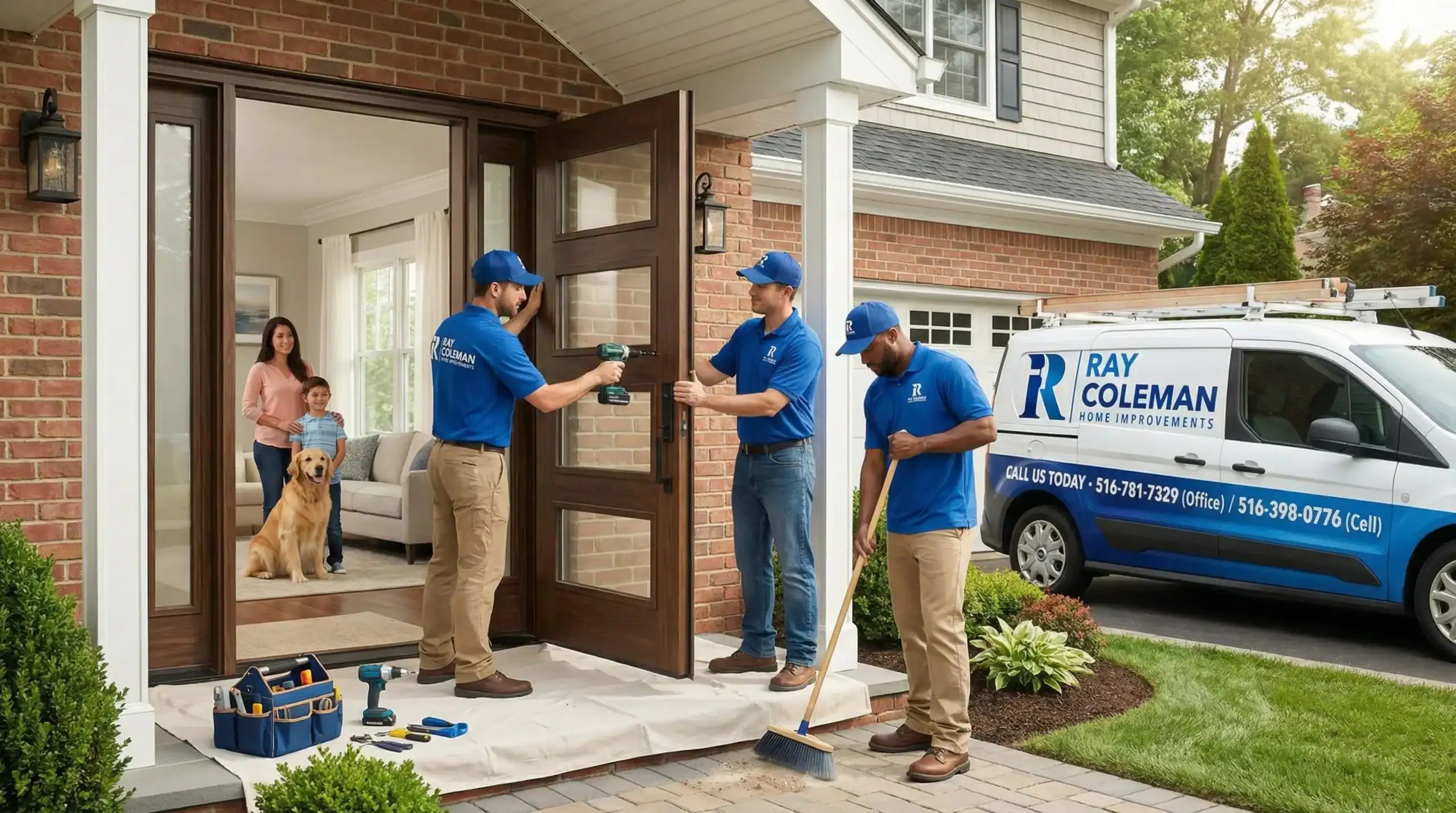
Before you sign anything, there are a few questions worth asking every contractor you’re considering. The answers — and the way they’re delivered — tell you a lot.
Start with licensing. In Nassau County, home improvement contractors are required to hold a current Nassau County home improvement contractor license. This is not a statewide license — New York State does not issue a general contractor or home improvement contractor license. The licensing happens at the county level, and Nassau County has its own requirements. Ask for the license number and verify it through the Nassau County Department of Consumer Affairs. A contractor who can’t produce that number, or who gets evasive when you ask, is a red flag.
Ask about insurance. Specifically, ask for proof of liability insurance and workers’ compensation coverage. If someone gets hurt on your property and the contractor isn’t properly insured, that can become your problem. Any reputable contractor will have current documentation and won’t hesitate to show it.
Ask who will be on your job site. This one matters more than most people think. Will it be the person you’re meeting with now, or will you be handed off to a crew you’ve never met? There’s no right or wrong answer in the abstract — large contracting companies use project managers, and that can work fine — but you should know going in what to expect. If the answer is vague, that’s worth noting.
Ask how they handle unexpected issues. Older homes in Nassau County almost always have surprises once work begins — outdated wiring behind a wall, plumbing that’s been patched together over decades, structural elements that don’t match the original plans. A contractor with real experience will have a clear, calm answer to this question. They’ve dealt with it before. They’ll tell you how they communicate scope changes and how they handle pricing when the unexpected comes up.
Ask for references from recent, comparable projects — not just a list of names, but specific projects similar to yours, ideally in Nassau County. A contractor who has been doing this work locally for decades will have no shortage of references.
Experience matters in contracting, but not all experience is created equal. A contractor who has spent decades working in Nassau County specifically has accumulated something that can’t be replicated quickly: deep familiarity with the local housing stock, the local permit offices, the local subcontractor network, and the particular challenges that come with working on Long Island.
Nassau County has dozens of incorporated villages and municipalities, each with its own building codes and permit requirements. What’s standard in Syosset, NY might be handled differently in Great Neck, NY or Oceanside, NY. A contractor who has been navigating that complexity for 50 years doesn’t have to figure it out on your project — they already know.
The local climate matters too. Long Island winters are hard on houses. Frozen pipes are a real and recurring problem, and when one bursts at 3 AM in January, you want to know your contractor is reachable. We offer emergency response around the clock — not as a marketing point, but because we’ve been getting those calls for decades and we know what it means to a homeowner when something goes wrong in the middle of the night.
We’ve been in business since 1972, and more than 60% of our work comes from referrals and repeat clients. That’s not something you can manufacture. It’s the result of showing up, doing the work right, and being the kind of contractor people feel comfortable recommending to their neighbors. In a market where the horror stories are real and plentiful, that track record is worth something.
If you’re in Levittown, NY, Wantagh, NY, Plainview, NY, Jericho, NY, Williston Park, NY, or anywhere else in Nassau County, and you’ve got a project in mind — a kitchen, a bathroom, a dormer, a first-floor renovation — we’re available Monday through Sunday, 8:00 AM to 5:00 PM, and we answer the phone when you call.
If you’re building a house from scratch on a vacant lot, you want a home builder. But if you have an existing home — a split-level in Levittown, NY, a ranch in West Hempstead, NY, a colonial in Syosset, NY — and you’re looking to renovate, expand, or transform it, you want a general contractor with real residential renovation experience.
The terminology matters less than the fit. What actually matters is finding someone who is licensed in Nassau County, carries proper insurance, shows up personally, communicates clearly, and has a track record of finished projects and satisfied clients willing to say so by name.
If that’s what you’re looking for, Ray Coleman Home Improvement has been doing this work in Nassau County since 1972. Give us a call — we’ll pick up.
Summary:
Share: