Not sure whether a dormer or a full second story makes more sense for your Nassau County home? Here's what each actually costs — and what nobody tells you upfront.

You’ve Googled dormer costs. You saw a national average around $15,000 and thought, okay, that’s workable. Then a Nassau County, NY contractor quoted you $60,000 — and suddenly you’re wondering if someone is trying to take advantage of you.
They’re not. Long Island is just a completely different market, and the national numbers have almost nothing to do with what you’ll actually pay here. We’ve been doing this work in Nassau County since 1972, and we can tell you exactly why the gap exists — and what it means for your specific project.
The gap between national cost estimates and Long Island reality is real, and it’s explainable. Nassau County has higher labor costs, a permitting landscape that varies village by village, and a housing stock made up largely of postwar Cape Cods and ranches — homes that are 60 to 80 years old, with aging materials, quirky framing, and structural surprises that newer construction simply doesn’t have.
Nationally, HomeAdvisor puts the average dormer cost around $15,000. On Long Island, you’re looking at a different range entirely — and the type of dormer you’re adding makes a significant difference in where you land.
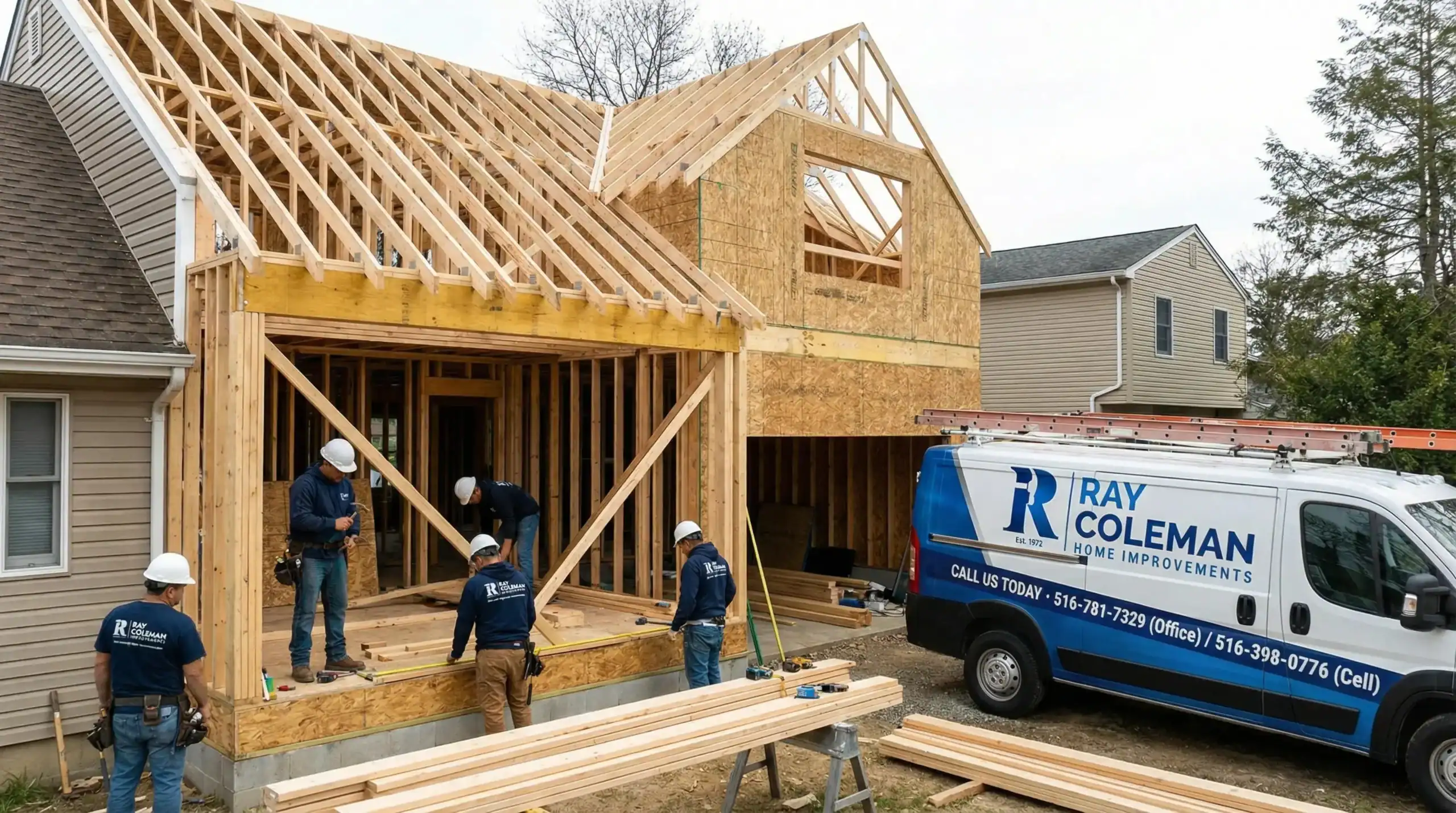
A gable dormer — the classic triangular-roofed style you see on older Nassau County homes — typically runs between $35,000 and $65,000 on Long Island. It adds a window, some headroom, and a modest amount of usable floor space. It’s the right choice when you need to open up one room, bring in light, or create a small dedicated space without dramatically changing the roofline.
A shed dormer is a different animal. Instead of a small peaked bump-out, it runs the full width of the roof and creates a flat or low-slope section that opens up the entire upper floor. That’s where the space really comes from — and that’s reflected in the cost. Shed dormers on Long Island typically run $40,000 to $75,000 for the exterior and structural work, and can reach $80,000 to $150,000 or more when you factor in full interior finish, insulation, windows, and electrical.
Then there’s the full Cape Cod conversion — turning that half-story with the sloped ceilings and cramped bedrooms into a proper second floor with full headroom throughout. If your home is a classic Levittown-era Cape, this is probably what you’re actually picturing when you imagine the finished result. That project runs $80,000 to $150,000 in Nassau County, depending on the home’s existing structure, the finish level you’re targeting, and the specific municipality you’re in.
Nassau County has over 95 incorporated villages, each with its own building department. Permit fees alone typically run $2,000 to $4,000. Some villages — Garden City and Old Westbury among them — require Architectural Review Board approval before a building permit is even issued. That adds time and, sometimes, cost. A contractor who knows Nassau County’s permitting landscape from experience isn’t just convenient — it’s the difference between a project that moves and one that stalls.
The short answer is that almost everything costs more here — and for reasons that are specific to this market, not arbitrary.
Labor rates on Long Island are materially higher than the national average, which is partly a function of the cost of living and partly a function of how in-demand skilled tradespeople are in a county where the median home price sits at $800,000. When you’re working on a home worth that much, the expectation for quality is high — and the tradespeople who can deliver it know their value.
The housing stock adds another layer. The average Nassau County home is about 73 years old. When a crew opens up a roof to frame a dormer, they’re often working around original framing that doesn’t meet current code, insulation that’s long past its useful life, and structural conditions that weren’t visible until the work started. Experienced contractors build contingency into their estimates for exactly this reason — and you should budget a 15% buffer for surprises, because they happen more often than not on older Long Island homes.
Permitting is its own cost center. Every structural dormer in Nassau County requires a building permit with structural engineering drawings stamped by a licensed professional engineer. The permit process, depending on your specific village and whether your project triggers an ARB review or a zoning variance, can add $2,000 to $5,000 to the project cost and several weeks to the timeline.
When a Long Island contractor quotes you $60,000 for a project that HomeAdvisor says should cost $15,000, that gap reflects real market conditions — labor rates, housing age, and regulatory requirements specific to Nassau County, NY.
Want live answers?
Connect with a Ray Coleman expert for fast, friendly support.
Sometimes a dormer is exactly the right answer. And sometimes the family has grown, the space needs are real, and a shed dormer just isn’t going to get you there. That’s when a full second-story addition becomes the conversation.
A second-story addition is a fundamentally different project from a dormer — in scope, in cost, in timeline, and in what it does to your home’s structure. Understanding the difference before you talk to a contractor will save you a lot of confusion and help you ask the right questions.
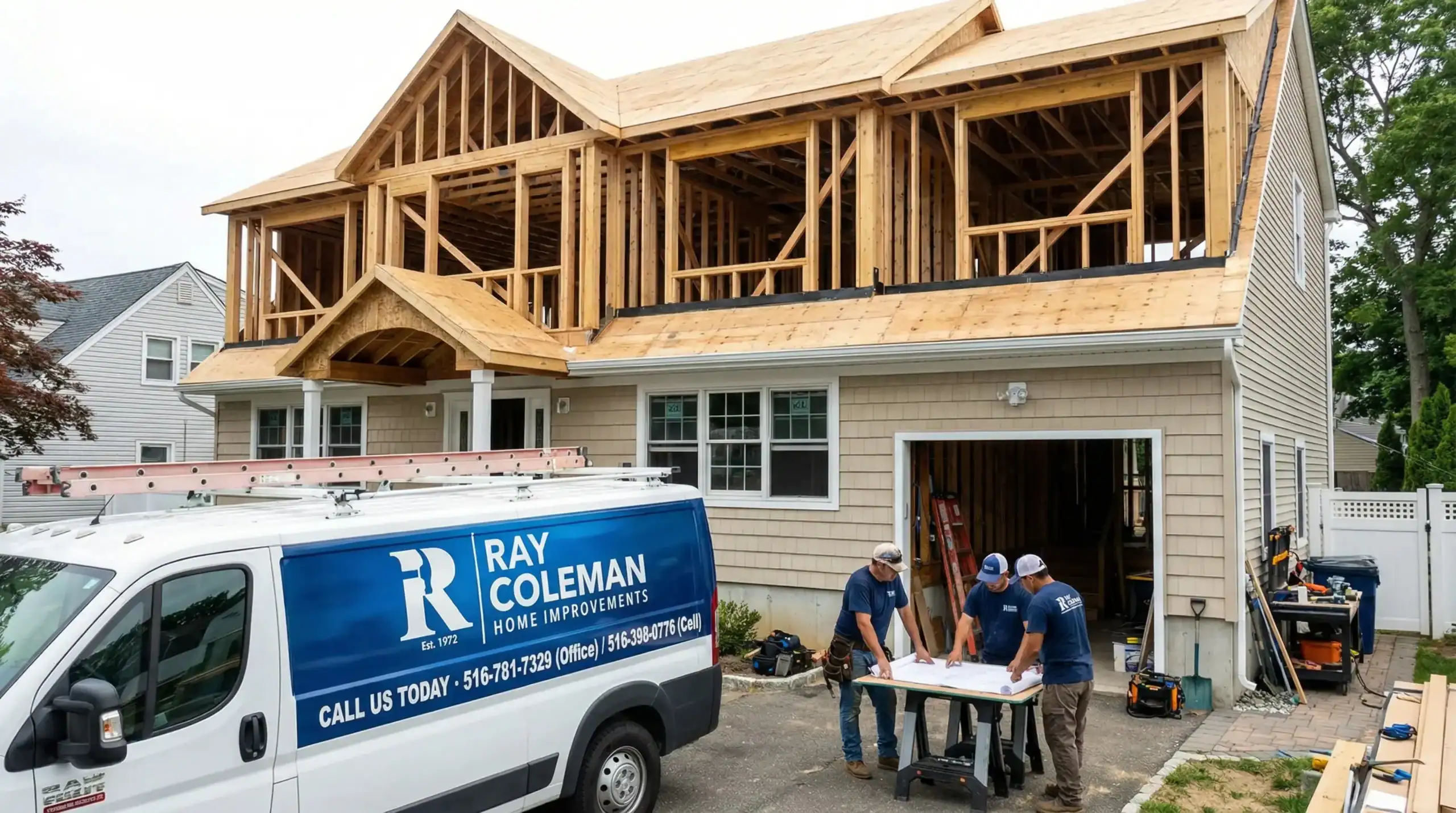
A full second-story addition means removing the existing roof, building an entirely new floor on top of the current structure, and then putting a new roof back on. It’s a major structural project that starts with a foundation assessment — because not every home in Nassau County was built to support a second story, and some will need reinforcement before framing can even begin. Foundation work, when it’s required, can add $4,000 to $12,000 to the project cost.
Beyond the foundation question, a second-story addition involves structural engineering, full framing, roofing, insulation, windows, interior walls, electrical, plumbing if bathrooms are included, HVAC extension, and complete interior finish. It’s essentially building a floor of a house — because that’s exactly what it is.
The timeline reflects that scope. A full second-story addition typically takes six to twelve months from start to finish. A partial addition — adding space over one section of the home rather than the full footprint — might come in at three to five months. Either way, you’re living in a construction zone for a significant stretch of time, and that’s a real quality-of-life factor that doesn’t show up in the cost estimate.
Floor Area Ratio limits are another consideration specific to Nassau County. FAR caps vary by municipality, and a full second-story addition can push a home against or over its FAR ceiling — which means you’d need an architect to verify feasibility before design even begins, and potentially a variance application if the project exceeds what’s permitted by right.
Nationally, HomeAdvisor puts the average second-story addition at around $175,000, with a range of $80,000 to $600,000 depending on scope, size, and finish level. On Long Island, the realistic range for a full second-story addition runs from $100,000 to $250,000 and up — with high-end projects and complex structural situations pushing well beyond that.
Per square foot, you’re looking at $100 to $300 nationally, and toward the higher end of that range — or beyond it — in Nassau County. A 1,000-square-foot addition at Long Island labor and material rates will land differently than the same project in a lower-cost market, and the finish choices you make (bathroom fixtures, flooring, windows, trim) have a significant impact on where the final number lands.
A shed dormer that opens up your existing half-story will cost considerably less than a full second-story addition and will be done in a fraction of the time. But if your home is a ranch with no upper floor at all, or if the space you need is simply more than a dormer can deliver, the second-story addition may be the only path that actually solves the problem.
The decision isn’t always about which option is cheaper. It’s about which option is right for your specific house, your specific budget, and how long you plan to stay. In a Nassau County market where homes are selling at or above list price and inventory sits at roughly two months of supply, adding meaningful square footage — whether through a dormer or a second story — is a financially sound decision for homeowners who aren’t ready to compete in that market as buyers.
If you need one or two bedrooms and your home has a usable half-story — the classic Cape Cod setup that covers most of Nassau County’s housing stock — a dormer addition is very likely the faster, more cost-effective path. If you need a full floor of new space and your home’s structure can support it, a second-story addition delivers more, but at significantly higher cost and a much longer timeline.
The right answer depends on your structure, your budget, your municipality’s zoning rules, and honestly, how long you’re willing to live through the project. Get a real assessment of your home’s foundation and framing before you commit to either option.
We’ve been working on Nassau County homes since 1972. If you want a straight conversation about what your house can support and what it would actually cost, give us a call or send a text — we pick up.
Summary:
Share: