Before you sign anything or hand over a deposit, make sure you're asking the right questions. Here's what actually separates reliable contractors from the ones who disappear.
You’ve probably heard at least one contractor horror story. A neighbor who paid a deposit and never saw the crew again. A kitchen remodel that took eight months instead of eight weeks. A final bill that looked nothing like the estimate. On Long Island, these stories aren’t rare — they’re practically a rite of passage.
The problem isn’t that good contractors don’t exist. They do. The problem is that most homeowners don’t know what to ask before they hire. This list changes that. These are the questions that actually reveal whether a contractor is worth your time — and your money.
This is the first question, and there’s no acceptable answer other than yes — with a license number to back it up. What most homeowners don’t know is that New York State doesn’t issue a statewide contractor license. Licensing is handled at the county level, which means a contractor licensed in Suffolk County is not automatically authorized to work in Nassau County. They’re two separate licenses issued by two separate agencies.
In Nassau County, home improvement contractors are licensed through the Nassau County Department of Consumer Affairs. A legitimate contractor knows their license number off the top of their head and won’t hesitate to share it. If someone fumbles on this question or gets vague, that’s your answer.
The Nassau County Department of Consumer Affairs doesn’t just hand out licenses. Every applicant goes through a judgment search — that includes tax liens, unpaid child support, and industry-related complaints. Fingerprinting is required. Proof of general liability insurance and workers’ compensation coverage has to be submitted. And licenses are issued for two-year periods, so there’s ongoing accountability, not just a one-time check.
What this means for you is that a licensed contractor in Nassau County has cleared a real bar. They’ve been vetted. Their subcontractors — with the exception of licensed plumbers and electricians — are also required to hold a valid Nassau County DCA license. That matters because a lot of contractors pass work off to whoever’s available, and those workers may not be covered under the same insurance or held to the same standards.
Ask for the license number and look it up. The Nassau County DCA makes this possible, and any contractor worth hiring will encourage you to do it. While you’re at it, ask for a certificate of insurance. General liability covers damage to your property; workers’ compensation covers injuries on the job site. Without both, you could be on the hook for either.
Bonding is another layer worth asking about. It provides additional financial protection if a contractor walks off the job or fails to complete the work. Nassau County also has a Home Improvement Restitution Fund that can pay up to $10,000 to homeowners harmed by a licensed contractor who doesn’t perform — but that protection only applies if the contractor was licensed in the first place. Another reason the first question matters most.
We’re licensed, insured, and bonded in both Nassau and Suffolk Counties. We’ve been operating out of Wantagh since 1972, and we’ll give you every credential upfront without being asked twice.
Permits are one of the most misunderstood parts of the renovation process, and they’re also one of the easiest ways a contractor can cut corners without you noticing — until you try to sell your house.
Nassau County’s permit landscape is more complicated than most people realize. The county is made up of multiple towns — Hempstead, North Hempstead, Oyster Bay — plus two cities and dozens of incorporated villages, each with its own building department. Permit requirements can differ significantly from one zip code to the next, even for the same type of project. A dormer addition in one town may have different filing requirements than the same project three miles away.
A contractor who knows Nassau County will tell you upfront which projects require permits, which don’t, and what the process looks like for your specific municipality. They’ll also be the one to pull the permits — not you. Under New York State law, the contractor is responsible for obtaining the necessary permits for the work they’re performing. If a contractor suggests you pull the permits yourself, or implies that permits aren’t necessary when they clearly are, those are serious red flags.
Not every project requires a permit. Some interior renovations and cosmetic updates don’t trigger a permit requirement, and there’s nothing wrong with that. But the contractor should be the one telling you that with confidence, based on actual knowledge of local code — not because it’s more convenient for their schedule.
Ask this question directly: “Which permits will this project require, and who handles pulling them?” The answer will tell you a lot about how organized and accountable they are before a single wall comes down.
Want live answers?
Connect with a Ray Coleman expert for fast, friendly support.
Licensing and insurance are the floor, not the ceiling. Plenty of licensed contractors still disappear mid-project, show up inconsistently, or leave your yard looking like a construction site for weeks on end. The questions below go beyond credentials and get at something harder to fake: how a contractor actually operates.
These are the questions that separate someone who passed a licensing exam from someone who has genuinely earned the trust of their clients — and kept it for decades.

This is a question most homeowners never think to ask, and it’s one of the most revealing ones on this list. There’s a common pattern in the contractor world: the owner shows up for the estimate, makes a great impression, and then hands the entire project off to a rotating crew of subcontractors the homeowner has never met. The owner manages from afar — checking in occasionally, fielding calls — but isn’t actually present on the job.
That arrangement isn’t inherently wrong, but it does create accountability gaps. When no one with real decision-making authority is physically present, small problems can become big ones before anyone catches them. Communication breaks down. Quality control slips. And when something goes wrong, the homeowner is left trying to reach someone who’s always “on another job.”
Ask directly: “Will you be on-site during the project?” If the answer is yes, follow up with how often and in what capacity. An owner who is physically working alongside their crew — not just supervising from the driveway — is a fundamentally different kind of contractor than one who delegates everything.
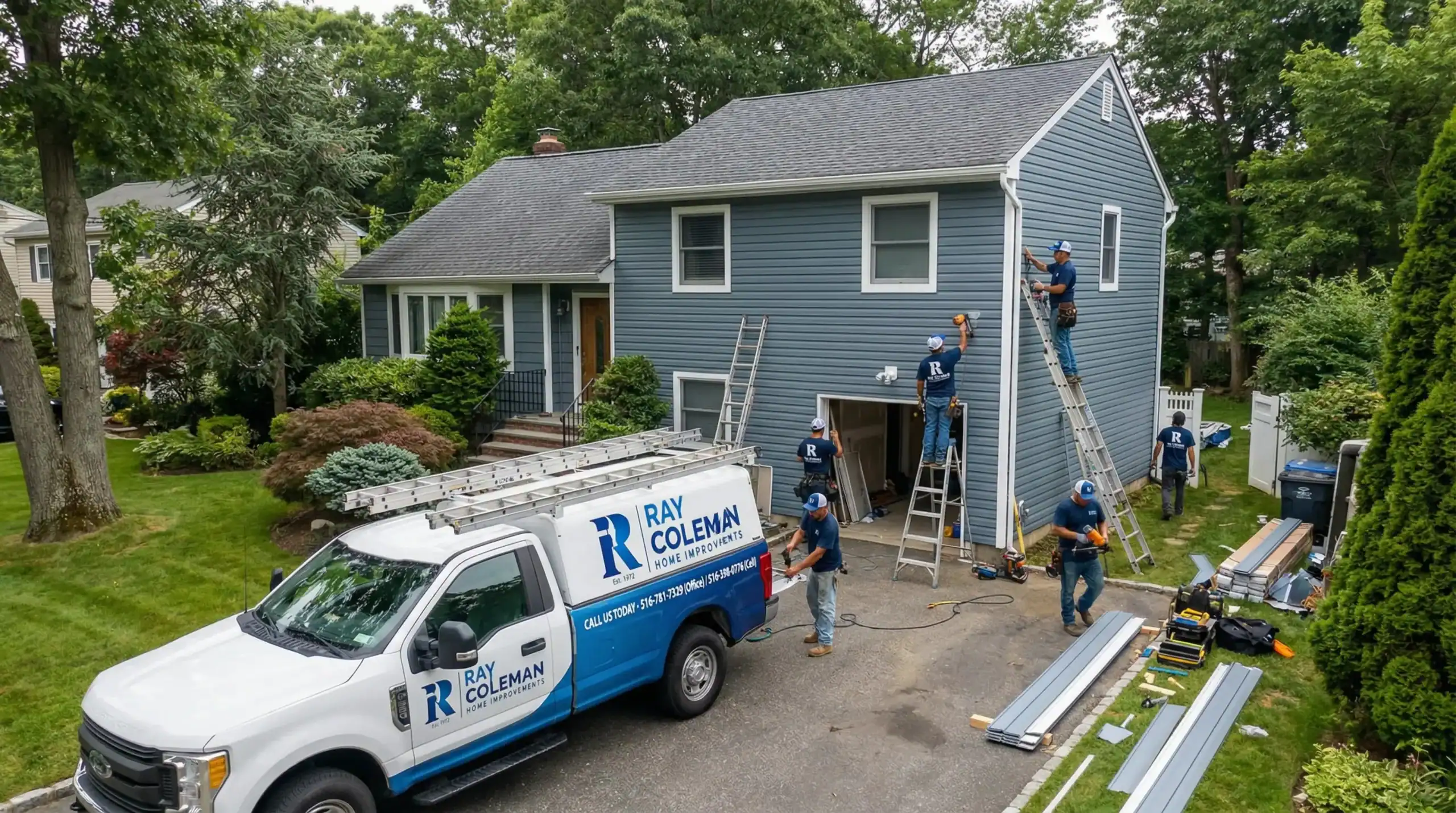
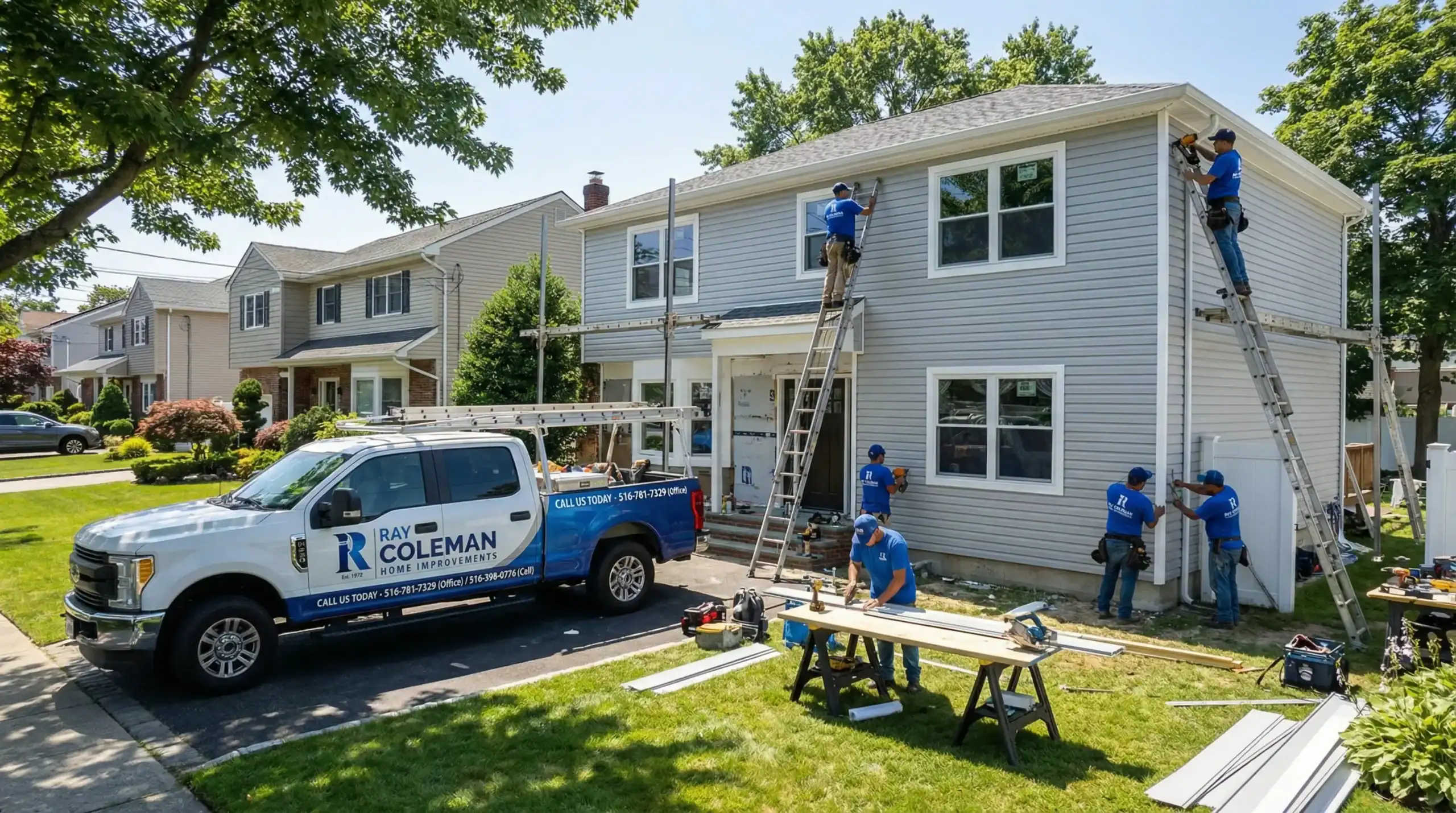
We’re on-site personally. Not managing from a distance — actually working. That’s been true since 1972, and it’s a big part of why roughly 60% of our new business comes from referrals. When the person who gave you the estimate is also the person doing the work, accountability isn’t a policy. It’s just how it works.
Ask about communication expectations while you’re at it. How often will you get updates? Who do you call if something comes up? What’s the expected response time? A contractor who answers these questions clearly, without hedging, is a contractor who has thought about the client experience — not just the construction process.
Timeline overruns are one of the most common — and most disruptive — problems in home renovation. A project that was supposed to take six weeks stretches into four months. Family members are displaced from parts of the house. Plans get pushed. And every week that drags on costs money, patience, and trust.
The question to ask isn’t just “how long will this take?” It’s “what’s your process for managing the timeline, and what happens when something unexpected comes up?” Because something unexpected almost always comes up. A contractor who gives you a realistic range and explains what affects it — weather delays, material lead times, permit processing — is showing you that they’ve done this before and aren’t just telling you what you want to hear.
For context, a dormer addition typically runs four to twelve weeks depending on the size and scope of the project. A mid-range kitchen remodel in Nassau County can run anywhere from $30,000 to $70,000, and a project at that scale deserves a timeline with real milestones, not a vague promise. Ask for a written schedule broken into phases. Ask what the process is if a phase runs long. Ask whether the crew will be on your project consistently or split across multiple jobs simultaneously.
This last point matters more than most people realize. Some contractors take on more work than their crews can handle, which means your project gets attention in between other commitments rather than as the primary focus. There’s nothing wrong with a contractor who runs multiple projects — but you deserve to know upfront how your job fits into their schedule.
One more question worth adding here: “How do you handle job site cleanup?” It sounds minor, but it isn’t. A crew that cleans up at the end of every day — tools stored, debris removed, the property left in reasonable condition — is a crew that respects your home and your neighbors. In a place like Nassau County, where houses are close together and curb appeal matters, this is a practical quality-of-life issue. Our crews clean up every day before leaving. It’s not a special service — it’s just how the job is supposed to be done.
The right contractor answers these questions without hesitation. They hand over a license number, a certificate of insurance, and a list of references from recent projects without being chased. They tell you clearly who will be on-site, how communication will work, and what a realistic timeline looks like. They put everything in writing before work begins — because New York State actually requires a written contract for any home improvement project over $500, and a contractor who skips that step is already telling you something.
Nassau County has no shortage of contractors. But a large-scale renovation — a dormer, a kitchen overhaul, a first-floor transformation — is too significant a project to hand to someone you haven’t properly vetted. The questions in this guide take fifteen minutes to ask and can save you months of headaches.
If you’re planning a project in Nassau County and want to talk through what it involves, we’ve been doing this work since 1972. Give us a call. We pick up.
Summary:
Share: