Searching for a bedroom addition contractor but not sure what that actually means? Here's what Nassau County homeowners need to know before making a call.
You’ve decided you need more space. Maybe the kids are sharing a room, maybe a parent is moving in, maybe you’ve just outgrown the house — but moving in Nassau County right now isn’t exactly an easy option when homes are selling for $735,000 and up with multiple offers. So you start searching. You type “bedroom addition contractor” and get a mix of results that don’t quite answer the question you’re actually asking. That’s because the term itself is a little misleading. There isn’t really a separate trade called a “bedroom addition contractor” — and understanding what that means will save you a lot of time and a few expensive mistakes.
The phrase “bedroom addition contractor” is a search term, not a trade category. It describes what you want done, not who does it. In practice, the professional you need for a bedroom addition is almost always a licensed general contractor — someone who can plan the project, pull the permits, coordinate the trades, and see it through from framing to final inspection.
The confusion is understandable. Some contractors specialize in specific trades — framing, electrical, plumbing — and market themselves around the type of work rather than the full scope of a project. But a bedroom addition isn’t a single-trade job. It’s a multi-step construction project that requires several specialists working in the right sequence, under one coordinating authority. That’s what a general contractor does.

Here’s a practical rule worth remembering: if your project involves three or more trades, you almost always need a general contractor. A bedroom addition clears that bar easily — usually by a wide margin.
Even a straightforward ground-level bedroom addition typically requires a framer to build the new walls and roof structure, an electrician to run circuits and install outlets and fixtures, an insulation crew to meet code requirements, a drywaller to close up the walls and ceilings, and a finish carpenter for trim, doors, and built-ins. If the addition includes a closet with plumbing nearby, or if the bathroom is being reconfigured to accommodate the new layout, you can add a plumber to that list. That’s five or six trades on a “simple” project.
Each of those trades needs to be scheduled in the right order. The framer has to finish before the electrician can rough in wiring. The electrician and insulation crew have to be done before the drywaller can close the walls. If anyone runs late or the sequencing breaks down, the whole project stalls. A general contractor manages that sequencing — and takes responsibility when it doesn’t go as planned.
Trying to coordinate that yourself, unless you have real construction experience, is a common mistake that tends to cost more in the end than hiring a general contractor from the start. Delays compound. Mistakes made by one trade get buried behind the next trade’s work. And if something isn’t up to code when the inspector shows up, it’s your problem to untangle.
In Nassau County, home improvement contractors are legally required to be licensed through the Nassau County Office of Consumer Affairs. That’s not a suggestion or a professional credential — it’s a legal requirement. A licensed general contractor carries that credential and is accountable to it. A collection of individual tradespeople you’ve assembled yourself may or may not be individually licensed, and the coordination gaps between them are your liability, not theirs.
This is a question Nassau County homeowners run into constantly, and it’s worth addressing directly because the answer affects your budget, your timeline, and who you hire.
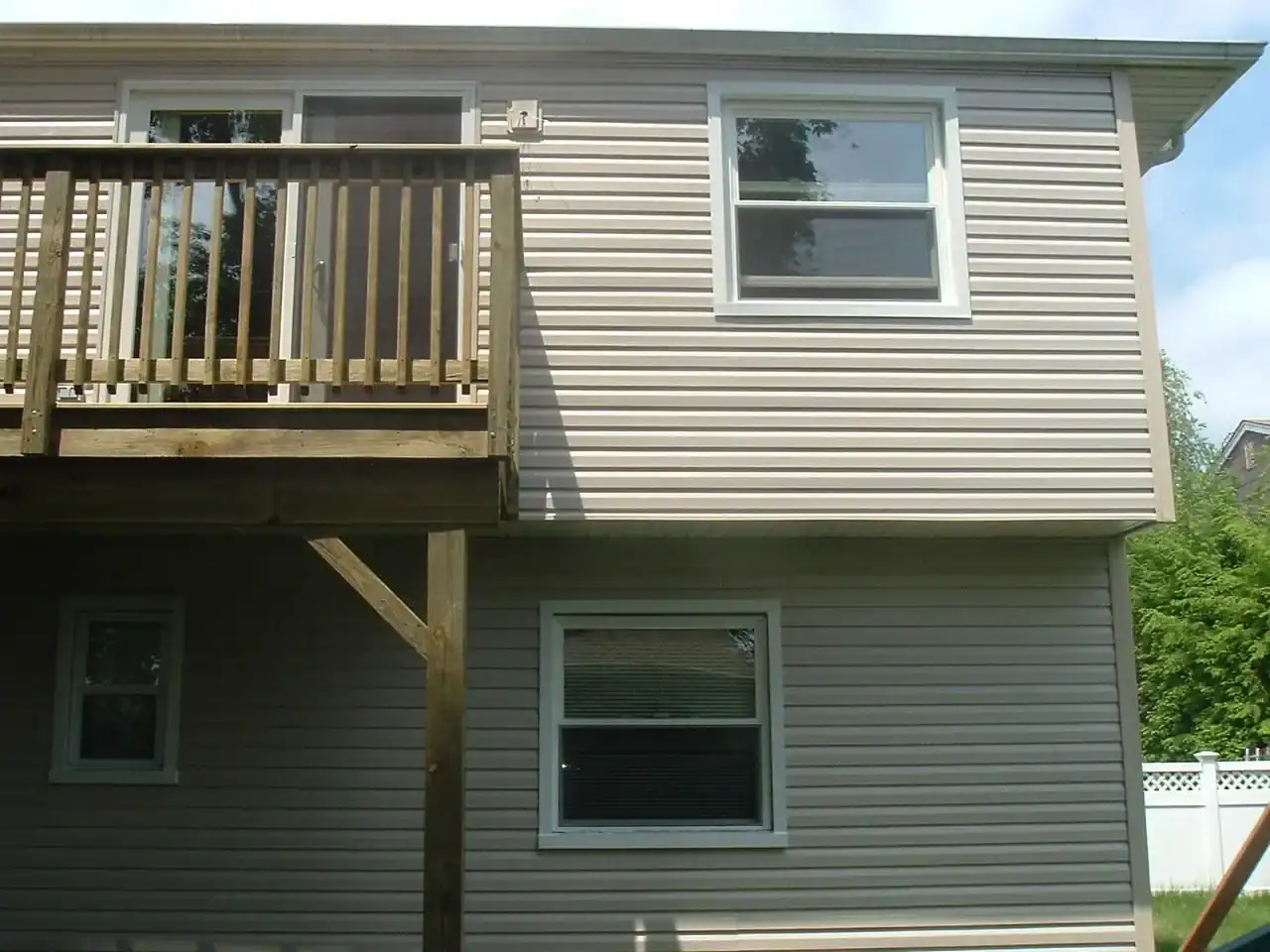
A ground-level bedroom addition — sometimes called a home extension — adds square footage by expanding the footprint of your house outward. You’re building new foundation, new exterior walls, a new roof section, and connecting it to your existing structure. It’s a significant project, but it’s straightforward in concept: you’re making the house bigger horizontally.
A dormer addition is different. It expands the upper level of the house by modifying the roofline — typically converting cramped attic space into livable, full-height rooms. Dormers are especially common throughout Nassau County because of the sheer number of Cape Cod-style homes built in the postwar era. Communities like Levittown, Wantagh, and Massapequa are filled with these homes, originally built small — often under 1,000 square feet — with upper levels that have low, sloped ceilings making the space barely usable. A dormer changes that. It’s one of the most practical ways to add a real bedroom to a Cape without touching the home’s footprint.
Both types of projects require permits in Nassau County. Both require a licensed general contractor. And both involve multiple trades working in sequence. The main differences are structural: a ground-level extension involves foundation work, while a dormer involves roofline modification and structural reinforcement of the existing framing. Either way, the person you need is someone who has done this kind of work in Nassau County before — someone who knows the local inspectors, understands the permit timeline, and won’t be figuring it out on your dime.
For dormer projects specifically, the timeline typically runs four to twelve weeks depending on the size and scope of the work. That’s a reasonable window, but only if the contractor has the experience to keep things moving.
Want live answers?
Connect with a Ray Coleman expert for fast, friendly support.
Once you know you need a licensed general contractor, the next question is how to tell a good one from a bad one. In Nassau County’s home improvement market, that distinction matters more than almost anywhere else. The market is competitive, the housing stock is aging, and the demand for additions and extensions is high — which means there’s no shortage of contractors willing to take your deposit and your patience.
The most useful filter isn’t credentials or marketing language. It’s behavior. How a contractor handles the first phone call tells you a lot about how they’ll handle the fourth week of your project.
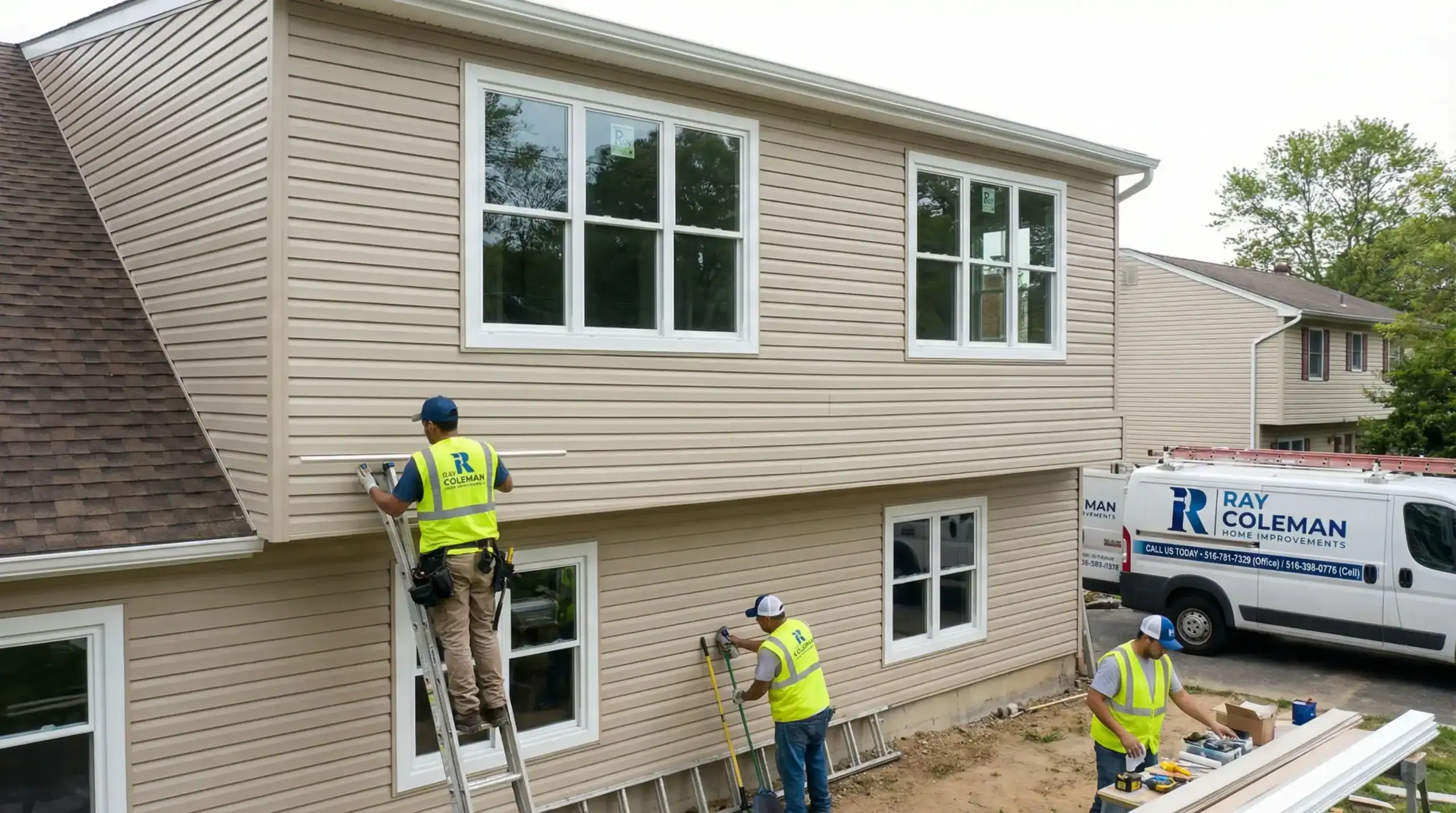
A licensed general contractor handling a bedroom addition should be doing more than showing up occasionally to check on the crew. The scope of what they manage is substantial, and it’s worth knowing what to expect so you can hold them to it.
Permit handling is one of the first things to clarify. In Nassau County, adding a bedroom — whether through an extension or a dormer — requires building permits, and the permit process involves plan review, inspections at multiple stages, and a final sign-off before the space can be legally occupied. We handle all of that. We submit the plans, schedule the inspections, and make sure the work passes. If a contractor is vague about permits or suggests you can skip them for a simpler addition, that’s a serious warning sign. Unpermitted additions create real problems at resale — buyers’ attorneys find them, lenders flag them, and you end up either tearing out work or negotiating from a weak position.
Beyond permits, a general contractor should be managing the full sequencing of trades — not just hiring them and stepping back. That means knowing when to bring each crew in, catching problems before they’re buried behind drywall, and communicating with you clearly throughout. Daily job site cleanup is a reasonable expectation, not a luxury. You’re living in that house while the work is happening. A contractor who leaves debris and dust accumulating each evening is telling you something about how they run their projects.
Pricing transparency is another non-negotiable. The budget you agree to upfront should be the budget you’re working within. Change orders happen in construction — but they should be documented, explained, and agreed to in writing before the work proceeds, not presented as a surprise on the final invoice. The New York Attorney General specifically advises homeowners never to make cash deposits before signing a written contract, and to get all pricing in writing before work begins. That’s good advice regardless of who you hire.
Finally, ask who is actually going to be on your job site. There’s a meaningful difference between a general contractor who manages projects remotely and one who is physically present on site every day. When something goes wrong — and in a multi-week construction project, something always comes up — you want the person who is accountable to be the person who sees it firsthand.
Whether you’re adding a bedroom, converting attic space, or reconfiguring your first floor to create a new room, the questions you ask before signing a contract are your best protection. Here are the ones that actually matter — and what a good answer looks like.
**Are you licensed in Nassau County?** The answer should be immediate and verifiable. Nassau County home improvement contractors are required to carry a license issued by the Nassau County Office of Consumer Affairs. Ask for the license number and look it up. A contractor who hedges on this question is not someone you want managing a major project on your home.
**Who will be on my job site every day?** This question separates contractors who run the project from contractors who sold you the project. The best answer is a named individual — ideally the owner or a senior member of the team — who is physically present and accountable. If the answer is “my crew” without a clear point of contact, keep asking.
**How do you handle permits for a project like this?** The right answer involves a clear explanation of what permits are needed, who files them, and what the inspection process looks like. If a contractor is dismissive about permits or suggests they’re not necessary for your particular project, trust your instincts.
**What does your pricing process look like?** You want a written proposal with itemized costs before any work begins. Vague estimates and verbal agreements are where contractor disputes start. Local general contractors who have been in business long enough to build their reputation on referrals tend to be straightforward on pricing — because they can’t afford not to be.
**Can you give me references from similar projects in Nassau County?** A contractor with real roots in this market — Levittown, Wantagh, Massapequa, Great Neck, Syosset, Plainview — should be able to point you to homeowners nearby who have been through a similar project. That kind of track record is worth more than any marketing claim.
If you’re planning a bedroom addition in Nassau County, you need a licensed general contractor — not a specialty trade, not a handyman, and not a patchwork of individual subcontractors you’re coordinating yourself. The project involves too many moving parts and too much legal exposure to approach it any other way.
The good news is that the right contractor isn’t hard to identify once you know what to look for. They answer the phone. They’re on your job site, not just managing from a distance. They handle permits without being asked. And the number they give you at the start is the number you pay at the end.
If you’re in Nassau County and ready to talk through what a bedroom addition would actually look like for your home, Ray Coleman Home Improvement has been doing this work since 1972 — and we’re happy to walk you through it.
Summary:
Share: