Planning a home renovation in Nassau County means understanding local costs, permit requirements, and the realities of older Long Island homes before you start tearing into walls.

You’ve lived in your Nassau County home long enough to know exactly what needs to change. The kitchen layout doesn’t work. The bathrooms are stuck in 1985. The first floor feels cramped and dark.
But knowing what you want fixed and actually planning a renovation that doesn’t turn into a year-long nightmare are two different things. Long Island projects come with their own set of challenges—permit processes that vary by municipality, costs that run higher than national averages, and older homes that reveal expensive surprises once you open the walls.
This guide breaks down what you actually need to know before you start: realistic budgets for Nassau County, how to handle permits and timelines, what goes wrong in the planning phase, and how to coordinate everything without losing your mind. Let’s start with the money.
If you’ve been researching online, you’ve probably seen national averages that don’t match what contractors are quoting you. That’s because Long Island renovation costs run 15 to 25 percent higher than most of the country.
Labor rates are premium here. Materials cost more. Permits add up. And if your home was built before 1980, you’re likely dealing with outdated systems that need upgrading just to meet current code.
A full home renovation in Nassau County typically runs between $150,000 and $250,000 for a standard project. Kitchen remodels alone can hit $40,000 to $80,000 depending on the scope. Bathrooms range from $15,000 to $40,000 each. These aren’t inflated numbers—they reflect what it actually costs to gut a space, upgrade electrical and plumbing, and rebuild it properly.
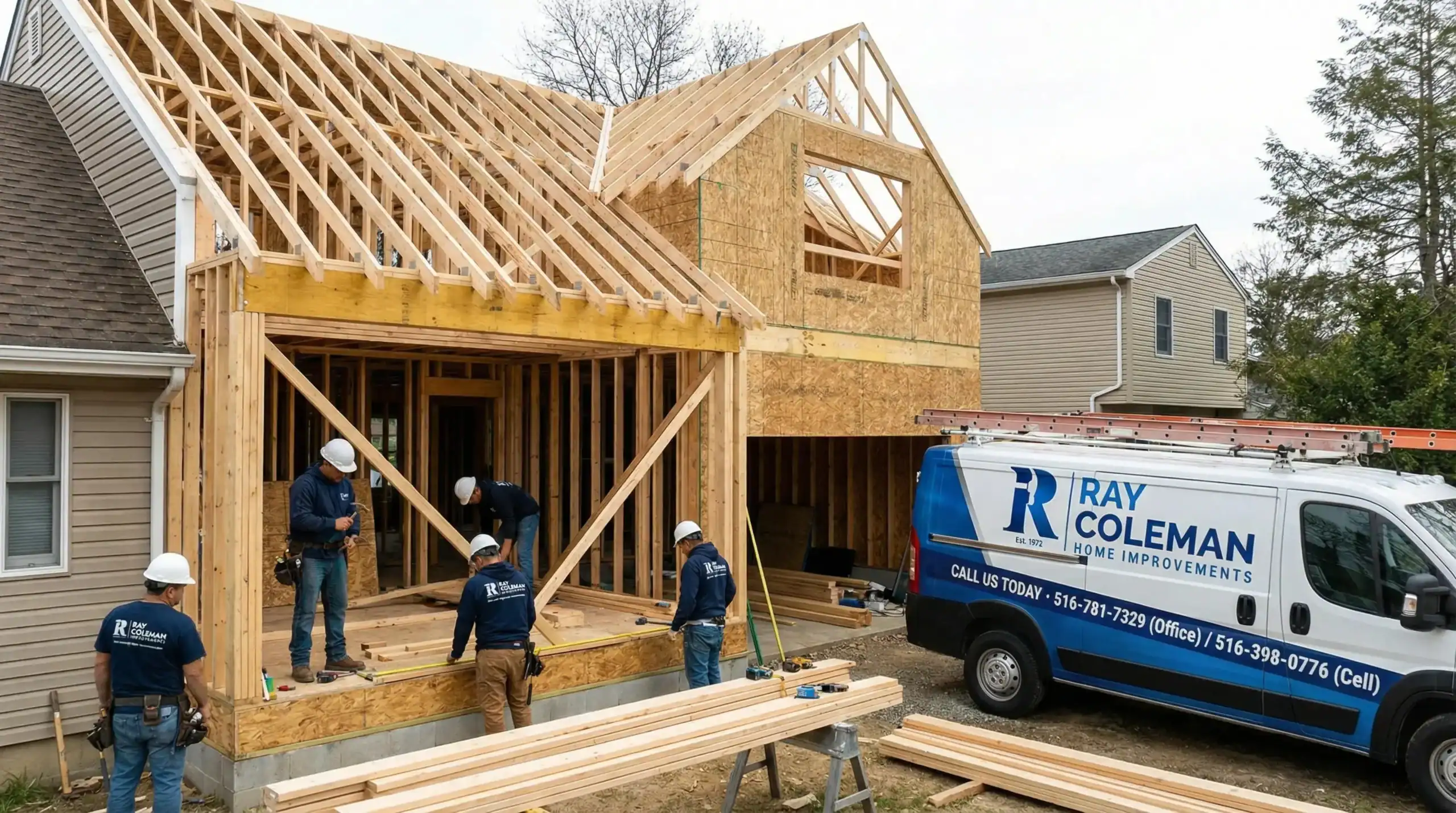
Labor eats up 25 to 35 percent of your total budget. That includes your general contractor, electricians, plumbers, carpenters, and everyone else who touches the project. On Long Island, skilled trades command higher wages than national averages, but that also means you’re getting experienced professionals who know local building codes.
Materials are the next big chunk. Cabinets, countertops, flooring, tile, fixtures—these add up fast, especially if you’re upgrading from builder-grade to mid-range or custom options. A kitchen remodel can easily spend $15,000 on cabinets alone before you’ve touched countertops or appliances.
Permits and fees vary by municipality but typically run $500 to $5,000 depending on your project scope. Structural changes, electrical upgrades, plumbing work, and additions all require permits in Nassau County. Skipping this step might save money upfront, but it creates legal problems when you try to sell.
Then there’s the contingency fund—the money you set aside for things you can’t predict. For standard renovations, plan on 10 to 20 percent of your total budget. For older homes with more unknowns, push that to 20 to 25 percent. This isn’t optional padding. It’s what covers the corroded plumbing you find when you open the walls, the outdated electrical that needs replacing to meet code, or the structural issues that weren’t visible during your initial walkthrough.
Hidden costs catch people off guard. Homes built before 1980 often contain asbestos, which requires professional remediation when disturbed. Pre-1940s homes have an 87 percent chance of containing lead paint. Older Long Island homes also tend to have undersized electrical panels, galvanized plumbing that’s corroded from decades of use, and insulation that barely exists. Addressing these isn’t optional—it’s what makes the renovation safe and functional.
Material costs fluctuate. Supply chain issues, seasonal demand, and regional pricing all affect what you’ll pay. Custom cabinets might have lead times of 8 to 12 weeks. Specialty tile could be backordered. These delays don’t just push your timeline—they can also mean price increases if materials go up between when you budgeted and when you actually order.
Start by getting clear on your actual goals. Are you updating cosmetics or changing the layout? Cosmetic updates—new cabinets, countertops, flooring, paint—cost significantly less than projects that involve moving walls, relocating plumbing, or adding square footage. A kitchen refresh might run $30,000. A full gut with layout changes can easily hit $80,000.
Get multiple detailed estimates from licensed contractors. Not vague ballpark numbers—actual line-item breakdowns that show labor, materials, permits, and fees. This gives you a realistic picture of what your specific project will cost, not what some online calculator says based on national averages.
Factor in everything beyond construction. Design fees if you’re working with an architect or designer typically run 8 to 15 percent of construction costs. Temporary housing if you need to move out during major work. Eating out more because your kitchen is gutted. Storage for furniture and belongings. These aren’t part of the construction budget, but they’re real costs you’ll face.
Plan your contingency based on your home’s age and condition. A newer home in good shape might only need 10 to 15 percent. An older Nassau County home built in the 1950s or 1960s should have 20 to 25 percent set aside. Once you open walls in these homes, you’re going to find things that need fixing. Budget for it now instead of scrambling for cash mid-project.
Be honest about what you can afford. Overspending on a renovation beyond what your neighborhood supports doesn’t increase your home’s value proportionally. If you have a $400,000 home and you’re planning a $150,000 renovation, make sure comparable homes in your area are selling for $550,000 or more. Otherwise, you’re over-improving for the market.
Track everything as you go. Costs creep up through small decisions—upgrading hardware, choosing slightly better tile, adding one more light fixture. Each decision feels minor, but they compound. Keep a running tally so you know where you stand against your budget at every phase.
Want live answers?
Connect with a Ray Coleman expert for fast, friendly support.
Permits aren’t just bureaucratic paperwork. They ensure your renovation meets safety codes, protects your investment, and doesn’t create legal issues when you sell. In Nassau County, most structural, electrical, and plumbing work requires permits, and the approval process takes time.
The timeline varies by municipality. Some Nassau County towns process permits in 2 to 3 months. Others take 4 to 6 months or longer if your plans require multiple reviews or revisions. This happens before any actual construction starts, so factor it into your overall project timeline.
Knowing what requires a permit saves you from delays and fines. Structural changes—removing walls, adding support beams, changing your home’s footprint—always need permits. Electrical upgrades, plumbing work, basement finishing, and any additions require approval. Even some window replacements need permits if they change the opening size.
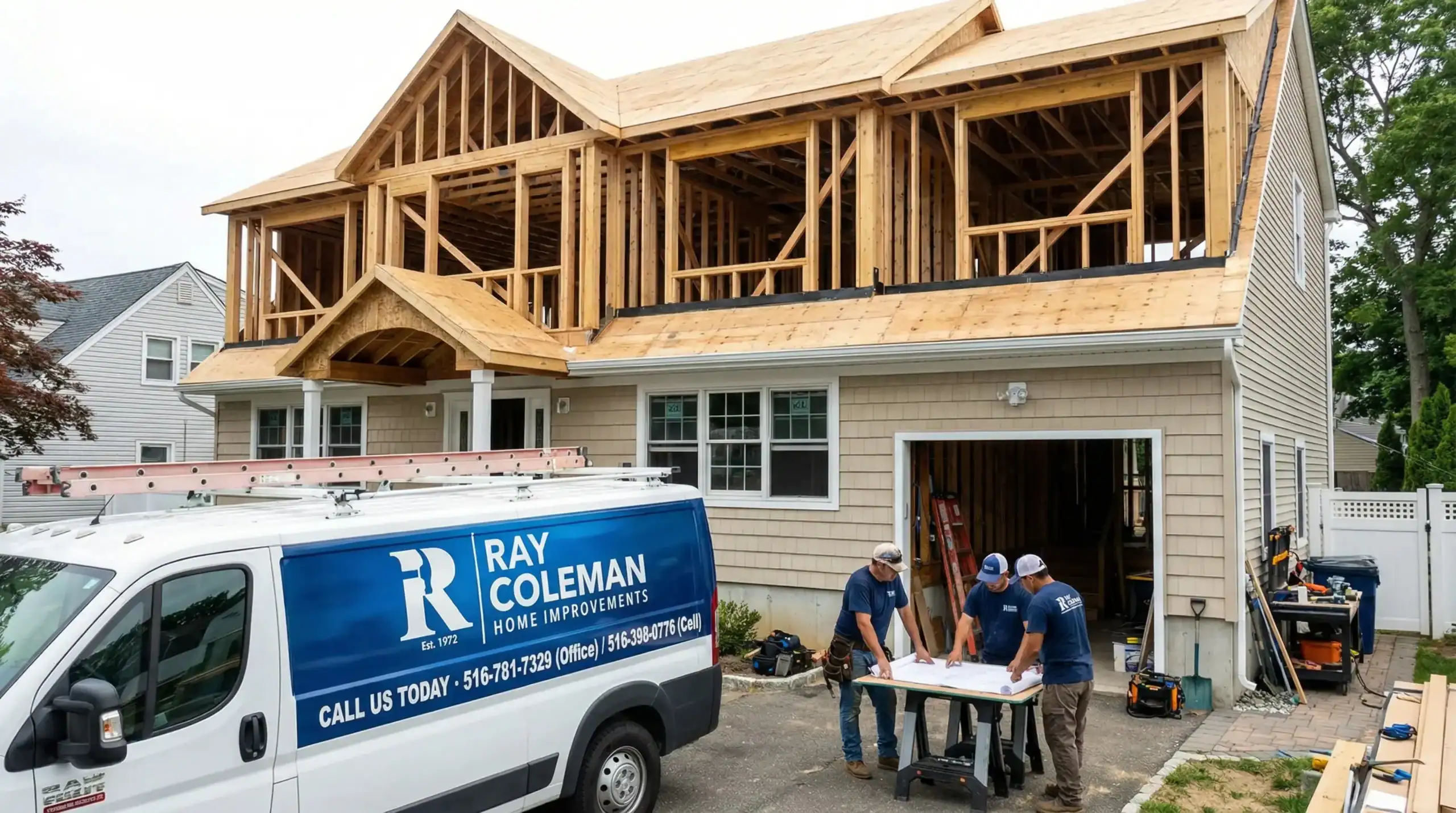
Nassau County handles permits through individual municipalities, not one central county office. That means if you’re in the Town of Hempstead, you submit to their building department. Village residents go through their local village office. The requirements, fees, and timelines all vary depending on exactly where your property sits.
Most major renovations require professional architectural drawings. Simple projects like replacing windows might only need basic sketches, but kitchen remodels, structural changes, and additions need detailed plans stamped by a licensed architect or engineer. These drawings show existing conditions, proposed changes, structural details, and how the work complies with building codes.
The application process involves submitting your plans, paying fees, and waiting for review. The building department checks that your plans meet code requirements for structure, electrical, plumbing, fire safety, and zoning. If they find issues, you’ll get revision requests that add more time to the approval process.
Inspections happen at various stages once work begins. Rough inspections check framing, electrical, and plumbing before walls close up. Final inspections verify everything was built according to approved plans and meets code. You can’t legally occupy or use the renovated space until you pass final inspection and receive your certificate of occupancy or completion.
Permit costs in Nassau County typically range from $500 for smaller projects to $5,000 or more for major renovations and additions. The fee usually scales with project value—the bigger and more expensive your renovation, the higher the permit cost. Electrical and plumbing permits often require separate fees on top of the general building permit.
Skipping permits creates serious problems. You risk fines from the building department if they discover unpermitted work. Insurance companies may deny claims for damage related to unpermitted renovations. When you sell, unpermitted work shows up in title searches and home inspections, creating delays or killing deals entirely. Buyers can demand you either get retroactive permits (expensive and sometimes impossible) or reduce the sale price to account for the risk.
Most whole house renovations in Nassau County take 3 to 6 months from start to finish, but that doesn’t include the planning and permit phases. Add another 2 to 6 months for permits, plus several weeks or months for design and material selection before construction even begins.
Kitchen remodels typically run 6 to 12 weeks once work starts. A straightforward cabinet and countertop replacement might be done in 6 weeks. A full gut with layout changes, new electrical and plumbing, and structural work can stretch to 3 months or more.
Bathroom renovations usually take 2 to 4 weeks per bathroom. A simple refresh with new fixtures, tile, and a vanity hits the shorter timeline. A complete gut with relocated plumbing, custom tile work, and high-end finishes takes longer.
What actually causes delays? Permit approvals are the biggest wildcard—you’re at the mercy of the building department’s workload and review process. Material lead times add weeks or months if you’re ordering custom cabinets, specialty tile, or fixtures that aren’t in stock. Hidden issues discovered during demolition require change orders, additional work, and time to address problems you couldn’t see until walls came down.
Weather affects outdoor work and material deliveries. Long Island winters can delay exterior projects, slow down deliveries, and create issues like frozen ground that makes site work harder. Summer humidity can affect drying times for concrete, plaster, and paint.
Contractor scheduling matters more than people realize. If your contractor is juggling multiple projects or waiting on subcontractors who are booked weeks out, your timeline stretches. This is why working with a general contractor who coordinates all trades under one schedule keeps things moving instead of waiting for the electrician to finish another job before they can get to yours.
Living in your home during renovation adds time. Contractors have to work around your schedule, protect areas you’re still using, and clean up more thoroughly each day. If you can move out during the heaviest construction phases, the work moves faster because crews aren’t constrained by your need to access certain rooms or keep dust contained.
Plan for the unexpected by adding buffer time to every phase. If your contractor says 8 weeks, plan for 10 to 12. If permits typically take 3 months in your town, assume 4 to 5. This isn’t pessimism—it’s realistic planning based on how projects actually unfold. Supply delays happen. Inspectors get backed up. Hidden issues emerge. Building in buffer time means you’re not stressed when the inevitable delays occur.
Home renovation planning in Nassau County comes down to understanding the local realities before you start. Budget for Long Island’s premium costs, not national averages. Plan for permit timelines that stretch months, not weeks. Set aside real contingency funds for the surprises that older homes always reveal.
The homeowners who have smooth renovations aren’t the ones who got lucky. They’re the ones who planned thoroughly, budgeted realistically, and worked with contractors who know Nassau County inside and out.
If you’re ready to start planning your renovation the right way, we’ve been handling large-scale Nassau County projects for over 50 years. We know what’s behind the walls of Long Island homes, how to navigate local permit processes, and how to keep projects on schedule and on budget.
Summary:
Share: