Long Island's contractor market has its own rules. Here's what makes hiring a home contractor in Nassau County different — and what to look for before you commit.

If you’ve spent any time asking around about contractors on Long Island, you’ve probably heard at least one story that made you hesitant to call anyone at all. A neighbor who paid a deposit and never saw the crew again. A kitchen remodel that stretched from six weeks to six months. A final bill that looked nothing like the estimate.
Those aren’t just bad luck. They reflect something real about this market. And if you’re a Nassau County homeowner trying to figure out who to trust with a major renovation, understanding what makes this area different is the best place to start.
New York State doesn’t issue a statewide general contractor license. Licensing happens at the county level, and Nassau County takes it seriously. Any contractor performing residential home improvement work in Nassau County is legally required to hold a Home Improvement Contractor license issued by the Nassau County Department of Consumer Affairs — not just a business registration, not just a trade license, but a specific county-issued credential governed by Administrative Code Section 21-11.
Licenses are issued for two-year periods, and applicants typically need to demonstrate years of hands-on supervisory experience to qualify. Contractors must also carry liability insurance and, in some cases, post a bond. Operating without this license isn’t just unprofessional — it’s illegal. If something goes wrong with an unlicensed contractor, your options for recourse are limited.
The Nassau County Department of Consumer Affairs maintains a public record of licensed home improvement contractors. Before you sign anything or hand over a deposit, verify a contractor’s license status directly through nassaucountyny.gov. It takes a few minutes and it’s worth doing every time, regardless of how professional someone seems in person or how many good reviews they have online.
What you’re looking for is an active license in good standing with no record of suspension or revocation. A contractor who is hesitant to provide their license number when asked is a red flag. Any reputable, properly licensed contractor will give you that number without hesitation — because they have nothing to hide.
New York State law requires that any home improvement contract for work exceeding $500 be in writing. That contract must include the contractor’s name, address, phone number, and license number, along with a project completion date and a description of the work. If a contractor pushes back on putting the details in writing, that’s another signal worth taking seriously.
The lowest bid is rarely the safest bet. A bid significantly lower than others often means someone is cutting corners — on materials, on labor, or on the permits and inspections that protect you legally. A detailed written scope, a realistic timeline, and a price that holds through completion are worth more than a number that looks good on paper but shifts the moment work begins.
We’ve been licensed, insured, and bonded in Nassau County throughout our entire history. When homeowners ask for our license number, we give it to them on the spot. That’s just how legitimate contractors operate.
Here’s something that doesn’t come up in most generic contractor-hiring guides: the age and character of Nassau County homes create a specific set of renovation challenges that not every contractor is prepared for.
Nassau County was built out largely between the late 1940s and the early 1970s. Levittown — one of the most recognized communities in American suburban history — was constructed between 1947 and 1951. Wantagh, Massapequa, Seaford, Bellmore, Valley Stream, Elmont — most of these neighborhoods were developed in the same postwar wave, and the homes built then are now 60 to 75 years old.
That matters because homes of that era come with a predictable set of issues. Electrical systems from that period often predate modern panel configurations and may not support today’s appliances, HVAC systems, or home office setups without significant upgrades. Plumbing in many of these homes uses galvanized steel or cast iron pipe that corrodes over time — which is part of why frozen pipes are such a recurring problem on Long Island every winter. The layouts themselves reflect how families lived in 1955, not how they live now: compartmentalized rooms, modest square footage, and configurations that feel cramped by today’s standards.
This is why dormers and rear extensions are among the most common projects we see in Nassau County. A cape cod that was the right size for a young family in 1960 isn’t the right size for a family with teenagers and two home offices in 2025. Rather than selling into a market where the median home price is pushing $800,000 and inventory sits at around two and a half months of supply, most homeowners here are choosing to renovate what they have. That decision makes sense financially — but it also means the contractor you hire needs to understand these homes at a structural level, not just a cosmetic one.
We’ve been working on Nassau County’s ranches, capes, split-levels, and colonials since 1972. The quirks of mid-century construction aren’t surprises to us — they’re familiar territory.
Want live answers?
Connect with a Ray Coleman expert for fast, friendly support.
Once you’ve confirmed a contractor is properly licensed, the vetting process is really about accountability. Licensing tells you someone met a legal threshold. What it doesn’t tell you is whether they’ll show up consistently, communicate clearly, finish what they started, and charge you what they said they would.
Those things are harder to verify from a website. But there are concrete signals you can look for before you commit to anyone.
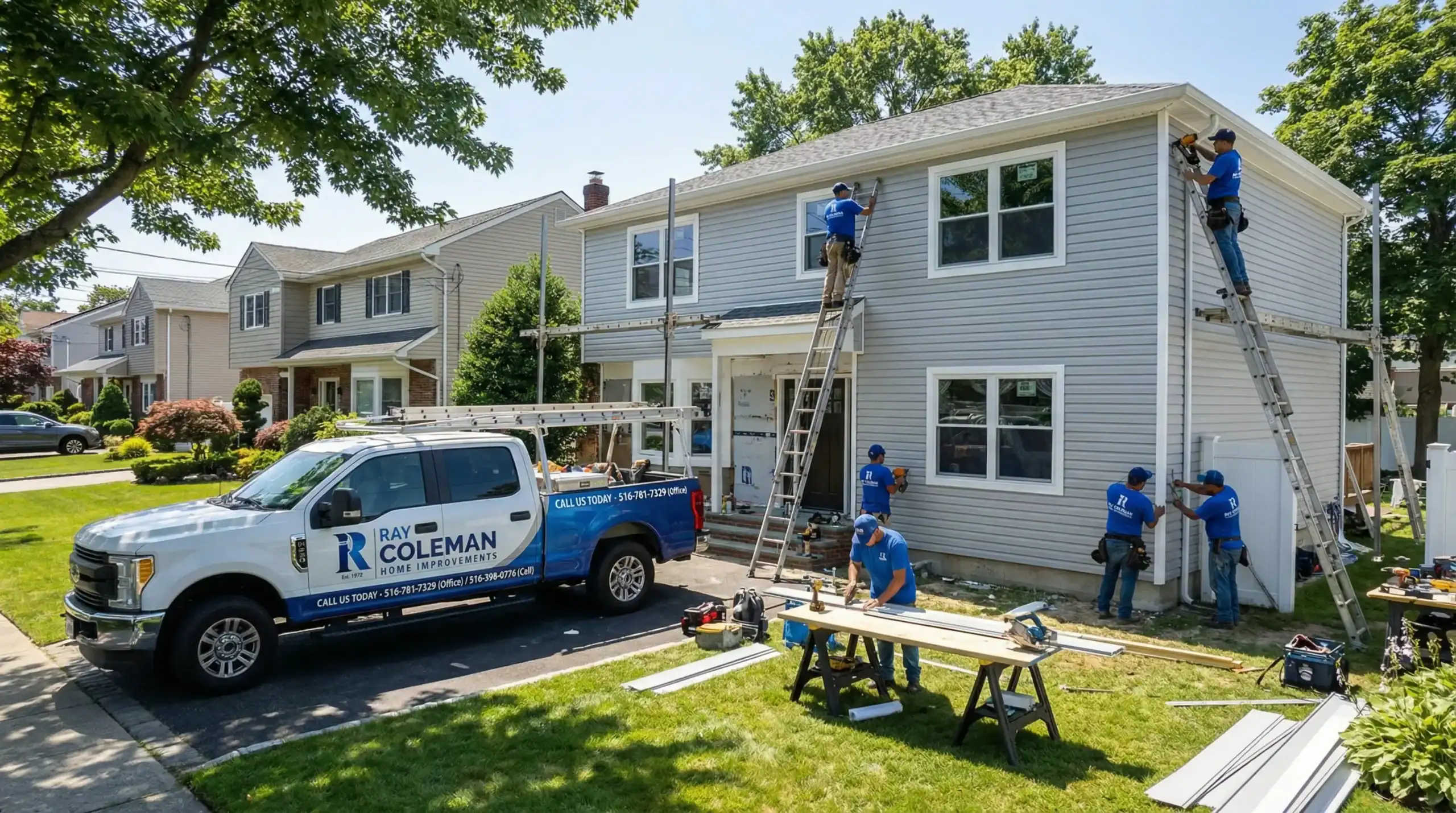
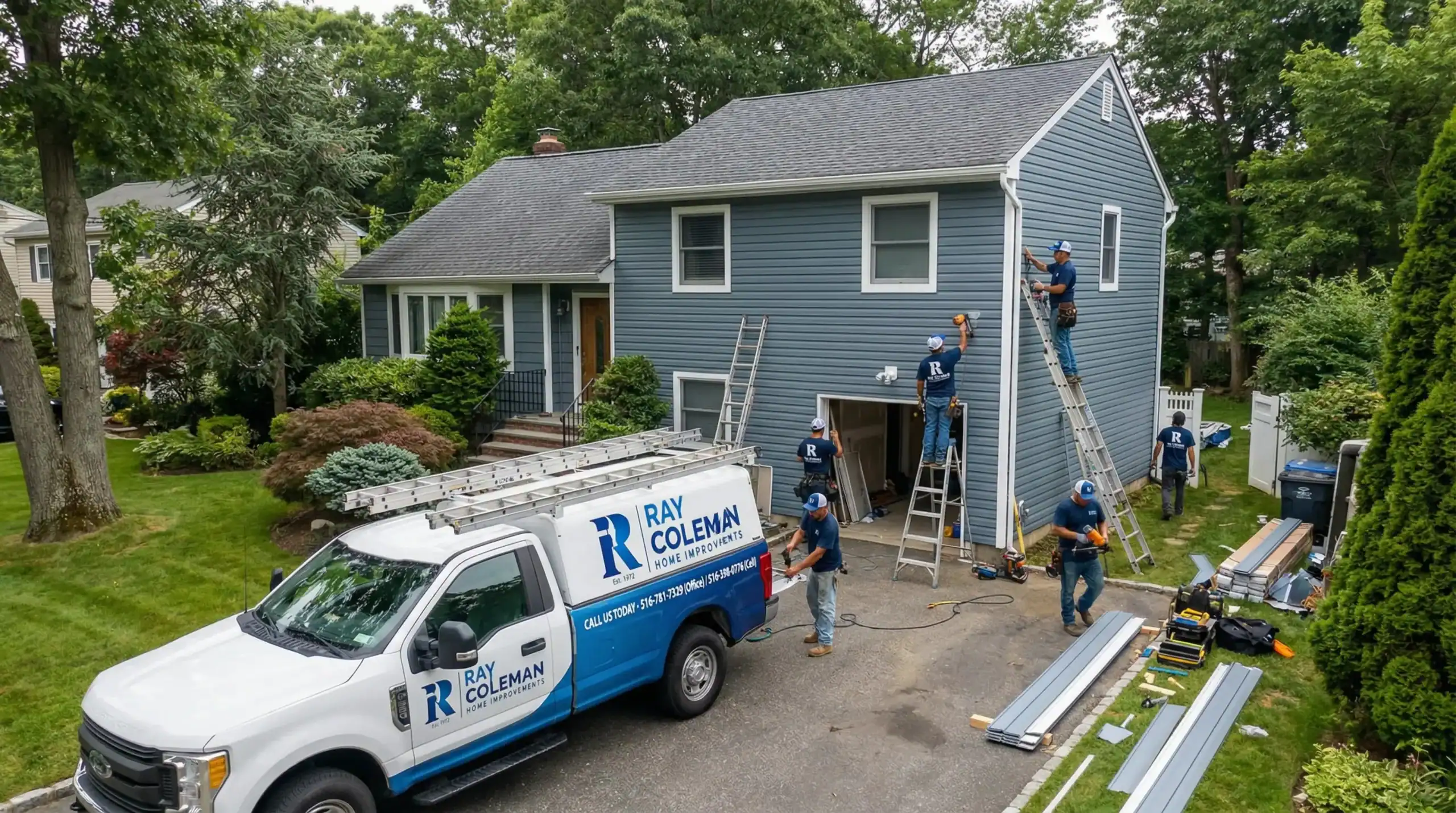
The most revealing question you can ask a contractor isn’t about price — it’s about presence. Who will be on your job site every day? Is it a crew you’ve never met, managed by someone who visits occasionally? Or is there an owner or senior person present daily, someone with skin in the game and a name attached to the work?
This distinction matters more than most homeowners realize. The most common contractor failure mode isn’t outright fraud — it’s drift. Projects lose momentum when no one is watching closely. Crews get pulled to other jobs. Communication slows down. Timelines slip. The homeowner starts calling and not hearing back. None of this happens overnight, but it almost always traces back to the same root cause: no one with real accountability was showing up every day.
Ask how long the contractor has been operating in Nassau County specifically. Longevity in a local market is one of the hardest things to manufacture. A company that has worked in the same county for decades has a reputation to protect in a way that a newer operation simply doesn’t.
Ask for references from homeowners in similar communities — not just a general testimonial page, but actual people you can call who had a project similar to yours. Ask how they handle unexpected issues. Every renovation of a 60-year-old home encounters something unexpected — a wall opened up to reveal outdated wiring, a subfloor that needs replacement, plumbing that doesn’t match the plans. The answer you’re looking for isn’t “that never happens.” It’s a clear explanation of how they communicate surprises, how scope changes are documented, and how pricing adjustments are handled before work continues.
And call them. Not just once — call them on a Tuesday afternoon and see how long it takes to hear back. In a market where “I can’t get anyone to return my call” is the defining homeowner complaint, the contractor who picks up the phone during the vetting process is already showing you how they’ll behave during your project.
Online reviews are useful, but they have limits. They’re self-selected, they can be gamed, and they rarely tell you the full story of how a project unfolded. A neighbor’s referral — someone who lives three blocks away, had a similar project done in a similar house, and is willing to walk you through their experience — carries a different kind of weight.
In Nassau County, communities are tight-knit and word travels. When something goes wrong with a contractor, people talk. When something goes right, they talk about that too. A contractor who has built a substantial portion of their business on referrals — year after year, in the same county — has earned something that no amount of advertising can replicate.
More than 60 percent of our work comes from referrals. Some customers have called us back to their homes three and four times over the years. That’s not a marketing stat — it’s a reflection of what happens when projects are completed the way they were promised, at the price that was agreed upon, by a crew that showed up and did the work.
We’ve been doing this in Nassau County since 1972. Ray and his son are on job sites daily — not managing from a distance, but working alongside the crew. Every evening, the site is cleaned up before anyone leaves. When something comes up at 3 AM because a pipe froze during a January cold snap, we’re reachable. These aren’t policies we invented to sound good. They’re just how we’ve operated for over 50 years, which is why the referrals keep coming.
For homeowners evaluating local home improvement contractors, ask directly: what percentage of your business comes from repeat customers or referrals? A contractor confident in their work will answer that without hesitation.
The advice that applies everywhere — get three quotes, check reviews, make sure they’re insured — is a starting point, not a complete picture. In Nassau County, you’re hiring someone to work on a home that’s likely 60 or more years old, in a market where the stakes of getting it wrong are high and the options for recourse against unlicensed or unaccountable contractors are limited.
Verify the license through the Nassau County Department of Consumer Affairs. Get everything in writing. Ask who will be on your job site every day. Call the contractor directly and see how they respond. And weigh referrals from people you actually know more heavily than anonymous reviews.
If you’re planning a kitchen remodel, bathroom renovation, dormer addition, first-floor renovation, or any other large-scale project in Nassau County, Ray Coleman Home Improvement is worth a conversation. We answer the phone, we show up, and we’ve been doing this work in this county since 1972.
Summary:
Share: