Discover how a handicap bathroom remodel transforms safety and independence for Nassau County homeowners, with practical guidance on ADA compliance, walk-in showers, and aging-in-place features.
Your bathroom shouldn’t feel like an obstacle course. If you’re stepping over a high tub edge, gripping the sink for balance, or avoiding showers because they feel unsafe, you’re not alone. Most bathrooms weren’t designed with accessibility in mind, and that creates real problems as mobility changes. A handicap bathroom remodel addresses these issues head-on, transforming a space that causes stress into one that supports independence. You don’t need to sacrifice style for safety, and you don’t need to wait until a fall happens to make changes. Let’s walk through what actually goes into creating a bathroom that works for you now and for years to come.
Planning a handicap bathroom remodel starts with understanding what you actually need versus what looks good in a magazine. The goal is creating a bathroom where you can move safely, reach everything comfortably, and maintain your independence without assistance.
The Americans with Disabilities Act provides guidelines that work as a solid foundation, even for residential bathrooms. These aren’t just arbitrary rules. They’re based on real measurements that accommodate wheelchairs, walkers, and the natural movements people make when balance or mobility is limited.
Your bathroom needs enough space for maneuvering. That means a 60-inch turning radius if you’re using a wheelchair, and doorways wide enough to actually get through without scraping knuckles or bumping into frames. Most standard bathroom doors fall short, which is why widening the entry is often one of the first modifications.
ADA compliance sounds technical, but it breaks down into practical features that make daily life easier. The toilet needs to sit at a specific height—between 17 and 19 inches from the floor—because that range makes sitting down and standing up less strenuous. Too low, and you’re straining to get up. Too high, and shorter individuals can’t place their feet flat on the ground.
Grab bars aren’t optional. They need to be installed on walls near the toilet and inside the shower, positioned where they’re actually useful when you’re transferring from a wheelchair or steadying yourself. The bars themselves must support at least 250 pounds and be mounted securely into wall studs or blocking, not just drywall. Decorative towel bars don’t cut it—they’ll rip right out of the wall when you need them most.
The sink requires knee clearance underneath so someone in a wheelchair can roll up close enough to use it comfortably. That means no vanity cabinet blocking the space. The faucet controls should be easy to operate with one hand and shouldn’t require twisting, gripping, or significant force. Lever handles or touchless faucets work well here.
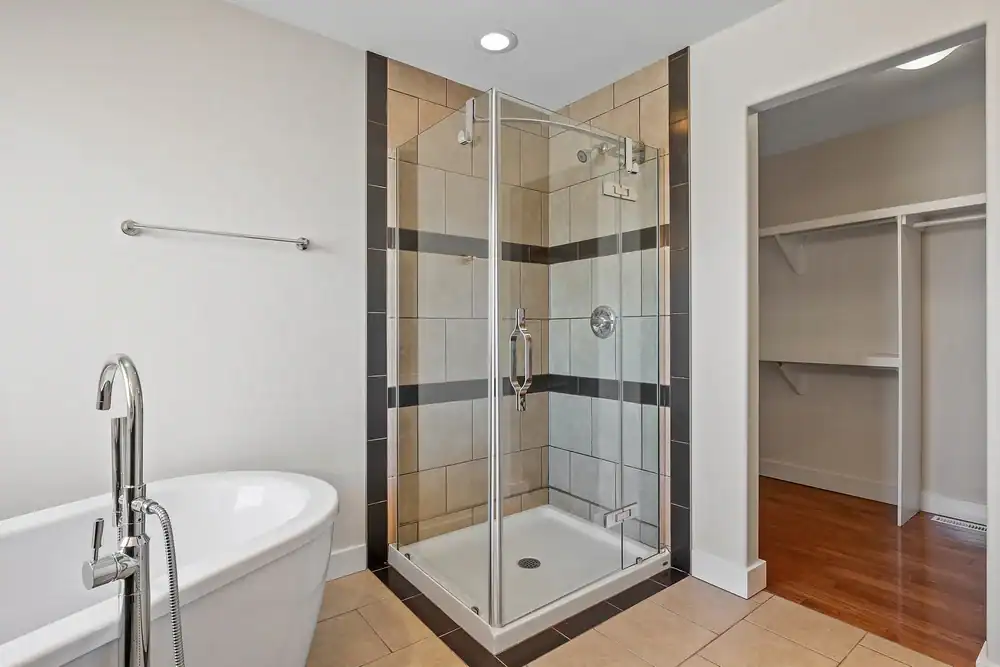
Your shower or tub is where most bathroom falls happen, so this area gets the most attention. A walk-in shower with a low threshold or no threshold at all eliminates the step-over that causes so many problems. The shower floor needs to be slip-resistant even when wet, and there should be a built-in or fold-down seat for anyone who can’t stand for the entire shower. Controls should be reachable from both a seated and standing position.
Doorways need to be at least 32 inches wide to accommodate wheelchairs and walkers. The door itself should swing outward or be a pocket door so it doesn’t block the limited floor space inside the bathroom. If someone falls and blocks the door, you need to be able to get in to help them.
Flooring throughout the bathroom should be non-slip. That doesn’t mean ugly institutional tile. Plenty of modern flooring options provide traction without looking clinical. The key is choosing materials that stay grippy when wet and don’t become slick with soap residue over time.
Aging in place means staying in your home safely as you get older, and the bathroom is where that plan succeeds or fails. More than 10 percent of adults over 65 experience falls that result in injuries each year, and most of those falls happen at home—often in the bathroom. Hard surfaces, water, and tight spaces create conditions where a slip can lead to serious consequences.
Grab bars are the most effective fall prevention tool you can install. They need to go in multiple locations: next to the toilet, inside the shower, and near the tub if you have one. The placement matters as much as the bars themselves. A grab bar positioned too high or too low won’t help when you need it. Modern grab bars come in finishes that match your faucets and fixtures, so they blend into the design rather than screaming “medical equipment.”
Curbless showers eliminate the trip hazard that comes with stepping over a raised threshold. Water containment is managed through proper floor sloping and drainage, not a curb. This design works for wheelchair users, but it’s also easier for anyone who’s ever tweaked their back, recovered from surgery, or dealt with knee problems. You walk straight in without lifting your leg over an edge.
Shower seats provide a place to sit while bathing, which reduces fatigue and fall risk. Built-in seats look cleaner and take up less space than portable shower chairs. Fold-down seats offer flexibility—they’re there when you need them and out of the way when you don’t. The seat height should match the toilet height, around 17 to 19 inches, to make transfers easier.
Lighting deserves more attention than it usually gets. Bathrooms need bright, even lighting that eliminates shadows and makes it easier to see wet spots on the floor or obstacles in your path. Motion-sensor lights can help, but make sure they’re positioned so they don’t turn off while you’re mid-shower. Layered lighting—overhead, vanity, and shower lighting—gives you control over visibility in different areas.
Non-slip flooring is non-negotiable. Glossy tile might look elegant in the showroom, but it becomes a skating rink when wet. Textured tile, slip-resistant vinyl, or other materials designed for wet areas provide traction without looking institutional. The flooring should extend into the shower so there’s no transition strip to trip over.
Lever-handle faucets and door handles are easier to operate than knobs, especially for anyone with arthritis or limited hand strength. Touchless faucets take it a step further by eliminating the need to grip anything at all. These aren’t just convenience features—they’re accessibility features that make the bathroom usable when your hands don’t work the way they used to.
Adequate storage within reach keeps you from bending, stretching, or climbing to get what you need. Open shelving or pull-out drawers positioned at accessible heights mean you’re not straining to reach shampoo or towels. Everything you use regularly should be within easy reach from a standing or seated position.
Want live answers?
Connect with a Ray Coleman expert for fast, friendly support.
A bathroom remodel for seniors addresses the specific challenges that come with aging: decreased mobility, balance issues, reduced strength, and slower reaction times. The modifications you make now can prevent injuries later and extend the amount of time you can live independently in your own home.
Senior-friendly bathrooms prioritize function without sacrificing comfort or style. The days of institutional-looking accessibility features are over. Modern accessible design blends safety features into attractive spaces that feel more like a spa than a hospital.
The key is understanding which modifications make the biggest difference. Not every bathroom needs every possible accessibility feature. Your remodel should match your current needs while anticipating future changes. That might mean installing grab bars now and adding reinforcement in the walls for additional bars later if needed.
The choice between a walk-in shower and a traditional tub depends on how you actually use your bathroom. If you haven’t taken a bath in years and you’re only keeping the tub out of habit, a walk-in shower makes more sense. If you rely on baths for pain relief or relaxation, a walk-in tub might be worth considering.
Walk-in showers with low or zero thresholds eliminate the most common entry barrier. You’re not lifting your leg over a tub wall or shower curb, which means less strain and lower fall risk. The shower can be designed large enough to accommodate a wheelchair or shower chair, with enough room to maneuver comfortably. Controls should be positioned where you can reach them from outside the water spray, so you’re not getting drenched while adjusting the temperature.
Handheld showerheads mounted on a slide bar give you flexibility. You can adjust the height for standing or seated use, and you can direct the spray where you need it without contorting your body. Fixed showerheads don’t offer that adaptability, which matters when your mobility is limited.
Walk-in tubs provide a different solution. They have a door that opens to let you step in over a low threshold, then seals shut before you fill the tub. This design works for people who want to continue bathing but can’t safely step over a standard tub wall. The downside is you have to wait for the tub to fill before you can sit in warm water, and you have to wait for it to drain before you can get out. That can be uncomfortable if you get cold easily.
Curbless showers are becoming more popular because they work for everyone, not just people with mobility limitations. The entire shower floor is flush with the bathroom floor, creating a seamless transition. Water containment relies on proper slope and drainage rather than a physical barrier. This design requires careful installation—the floor needs to be sloped correctly or you’ll have water running across your bathroom floor. But when done right, it’s one of the most accessible and attractive options available.
Shower benches or seats are essential for anyone who can’t stand for an entire shower. Built-in benches look cleaner and provide more stability than portable chairs. They should be positioned so you can sit and reach the controls, showerhead, and any storage niches without stretching. Fold-down seats save space in smaller bathrooms while still providing a place to sit when needed.
The shower floor itself needs to be slip-resistant. Smooth tile becomes dangerously slick when wet and soapy. Textured tile, pebble tile, or slip-resistant coatings provide traction without looking industrial. The texture needs to be comfortable underfoot but grippy enough to prevent slips.
Handicap bathroom remodel costs vary based on the extent of modifications, the size of your bathroom, and the materials you choose. Most accessible bathroom remodels in Nassau County range from $5,600 to $12,000, with an average around $8,400. That’s for a standard remodel that includes essential accessibility features without gutting the entire space.
If you’re doing a full renovation with layout changes, moving plumbing, or addressing structural issues, costs can climb to $15,000 to $25,000 or more. Large bathrooms with high-end finishes and extensive modifications can exceed that range. The key is understanding what drives the cost so you can make informed decisions about where to spend and where to save.
Grab bars are one of the most affordable modifications. Installation typically costs $85 to $300 per bar, including materials and labor. That’s a small investment for a significant safety improvement. The bars themselves aren’t expensive—the cost comes from proper installation. They need to be anchored into wall studs or blocking, not just screwed into drywall. If your walls don’t have adequate blocking, that adds to the installation cost.
Walk-in showers represent a bigger investment, typically ranging from $8,500 to over $20,000 depending on size, materials, and features. A basic walk-in shower with standard tile and fixtures costs less than a large curbless shower with custom tile, multiple showerheads, and built-in seating. The price also depends on whether you’re converting an existing tub/shower or building something new that requires plumbing relocation.
Widening doorways costs $300 to $2,500 per door, depending on whether the wall is load-bearing. Non-load-bearing walls are straightforward to modify. Load-bearing walls require a header and proper support, which adds labor and materials. Exterior doors tend to cost more than interior doors because of the additional weatherproofing and structural considerations.
Non-slip flooring costs $3 to $22 per square foot installed, with an average around $13 per square foot. The price varies based on the material—slip-resistant vinyl costs less than textured porcelain tile. The total cost depends on your bathroom’s square footage and whether you’re replacing just the floor or extending into the shower area.
Comfort-height toilets with grab bar support cost $100 to $1,600 depending on the model and features. Basic comfort-height toilets sit at the low end of that range. Wall-mounted toilets with advanced features like bidet functions cost more but offer additional benefits for hygiene and accessibility.
Timeline depends on the project scope. A straightforward remodel with grab bars, new flooring, and fixture updates can be completed in two to four weeks. A full gut renovation with layout changes, plumbing relocation, and structural modifications typically takes six to eight weeks. Delays can come from material lead times, permit approvals, or unexpected issues uncovered during demolition.
The planning phase takes longer than most people expect. You’ll spend time selecting materials, finalizing layouts, and making decisions before any demolition begins. Rushing this phase leads to changes mid-project, which costs more and extends the timeline. Taking the time upfront to get it right saves headaches later.
Some homeowners qualify for financial assistance with accessibility modifications. Medicaid may cover medically necessary improvements in some cases. Tax deductions may apply if the remodel is medically prescribed—consult IRS Publication 502 or a tax professional for guidance. Veterans may qualify for grants through the VA for accessibility modifications. Local programs sometimes offer assistance for seniors or people with disabilities, though availability varies by location.
A handicap bathroom remodel isn’t about accepting limitations—it’s about removing obstacles that don’t need to be there in the first place. The modifications you make today can prevent falls, preserve independence, and eliminate the daily stress that comes from navigating an unsafe bathroom. You don’t need to choose between a bathroom that looks good and one that functions safely. Modern accessible design delivers both.
The key is working with a contractor who understands the technical requirements and the practical realities of living in your home during construction. You need someone who answers when you call, shows up when promised, and keeps the job site clean. We’ve been handling complex bathroom remodels in Nassau County for over 50 years, with professional crews who treat your home with respect and complete projects on schedule.
Whether you’re planning ahead or addressing immediate needs, the right modifications make your bathroom work for you instead of against you. That’s what a well-executed handicap bathroom remodel delivers—safety, independence, and peace of mind in a space that’s truly yours.
Summary:
Share: