Planning a bathroom remodel in Nassau County? The right water-saving technology can slash your utility bills by hundreds annually while increasing your home's value.
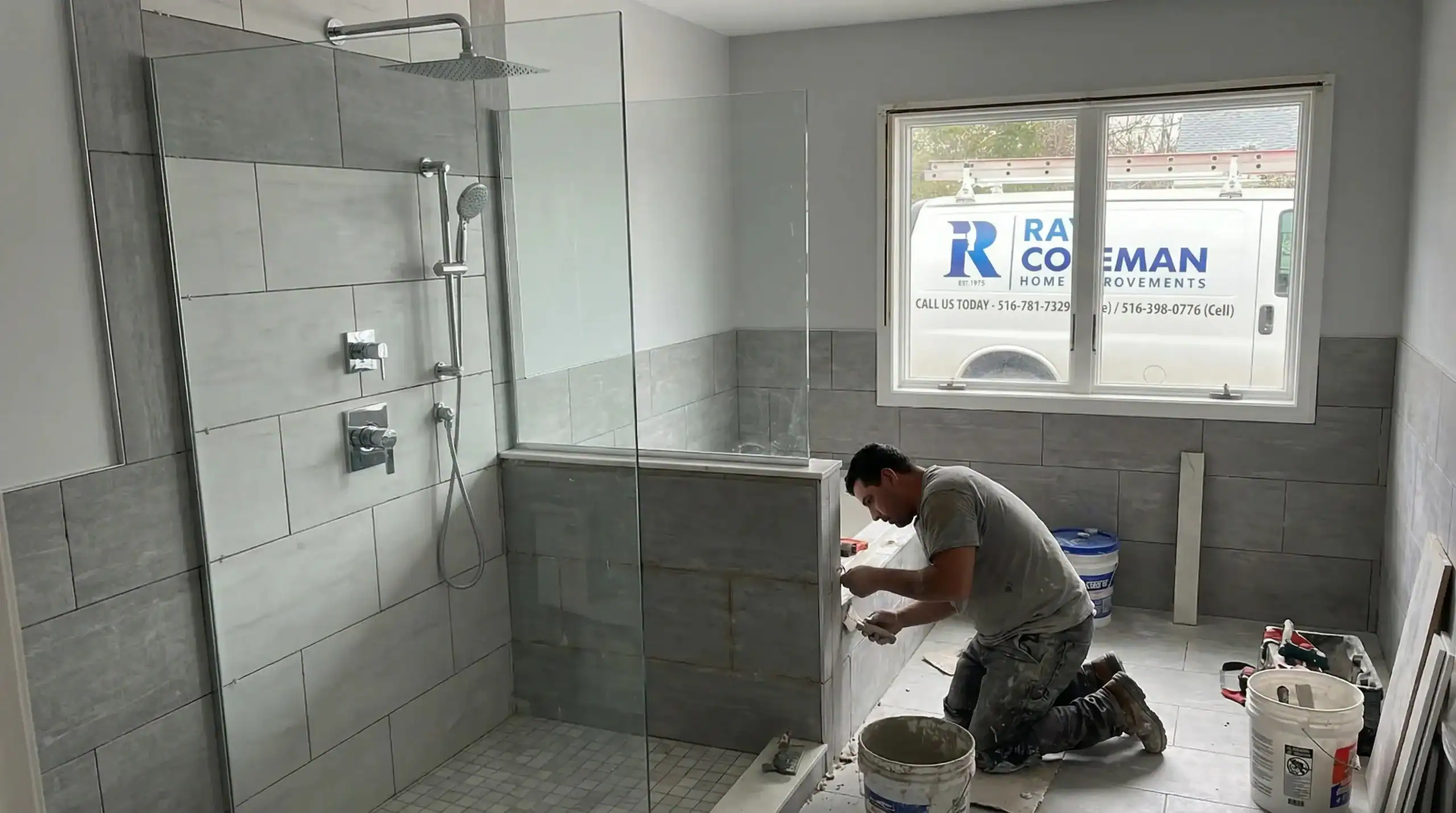
Nassau County homeowners face a unique combination of factors that make water-saving bathroom technology especially valuable. Your water bills reflect Long Island’s higher-than-average utility costs. Your home value depends on features that appeal to increasingly eco-conscious buyers in a competitive market. And your bathroom needs to handle everything from humid summers to winters cold enough to freeze pipes.
Water-efficient fixtures address all of these concerns while delivering measurable returns from day one. A family of four using WaterSense-certified fixtures can save nearly 13,000 gallons of water annually—enough to fill a backyard pool. That translates to $100 to $200 in direct water bill savings each year, plus another $50 to $100 in reduced energy costs since you’re heating less water.
These aren’t projections or best-case scenarios. These are the documented savings that Nassau County families are experiencing right now with properly installed water-saving technology. When you factor in the 60-70% ROI that bathroom remodels typically deliver in this area’s real estate market, sustainable fixtures become one of the smartest investments you can make in your home.
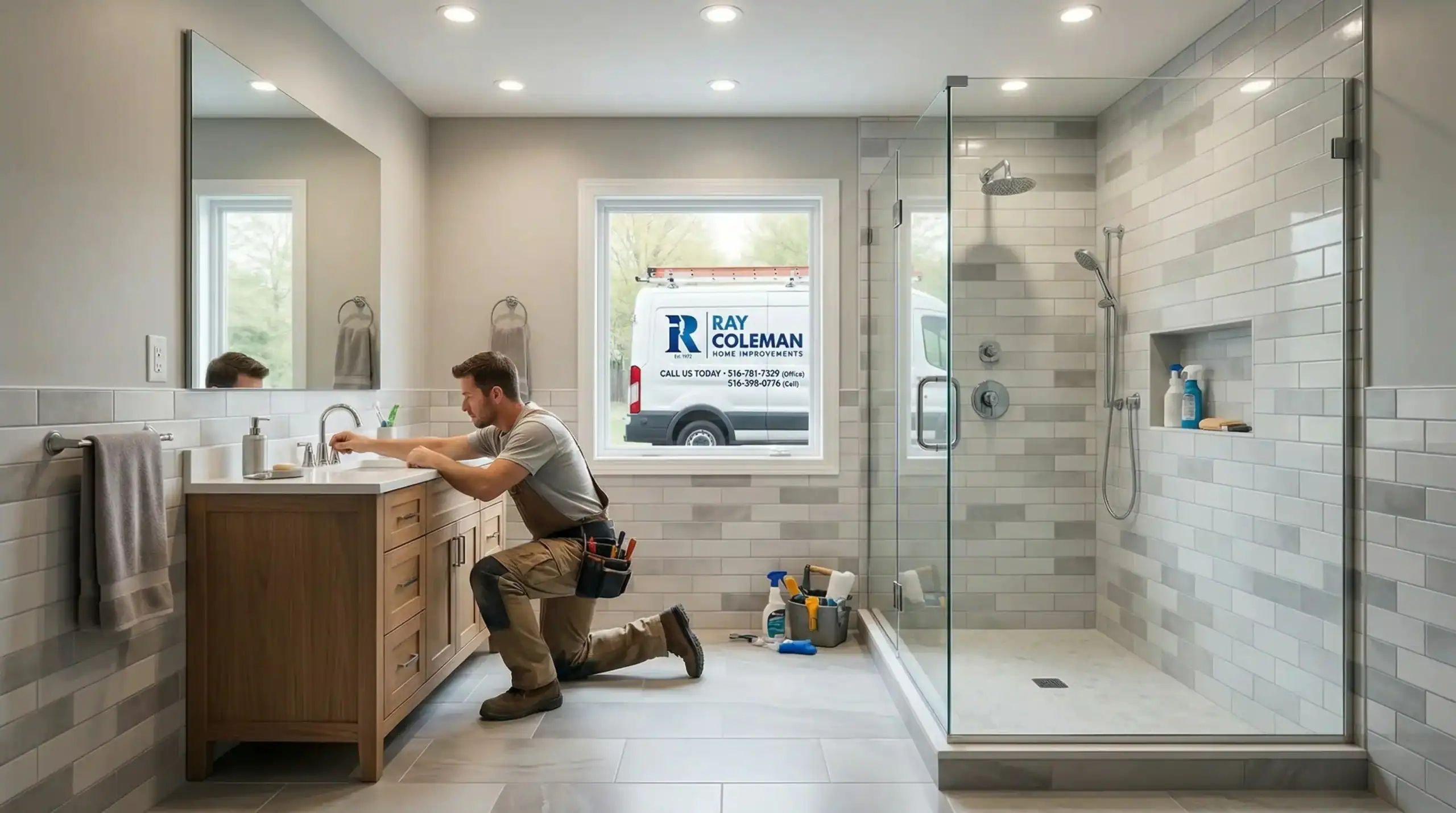
Let’s address the elephant in the room: low-flow toilets used to be terrible. Early models from the 1990s gave water-efficient fixtures a bad reputation that some homeowners still remember. Weak flushes. Multiple attempts. Clogs. Those problems are ancient history.
Modern low-flow toilets use 1.28 to 1.6 gallons per flush compared to the 3.5 to 7 gallons that older models waste. That’s not a small difference—it’s the single biggest water-saving upgrade most bathrooms can make. The technology behind today’s efficient toilets has evolved dramatically. Pressure-assisted systems use compressed air to create powerful flushes. Gravity-fed models employ redesigned trapways and bowl geometries that clear waste more effectively with less water. Dual-flush options let you choose 0.8 gallons for liquid waste or 1.6 for solid waste, optimizing water use for every flush.
Smart toilets take efficiency even further. Yes, they include features like heated seats and bidet functions that make them more comfortable. But from a sustainability standpoint, what matters is how they prevent waste. Many models include sensors that detect when someone approaches, automatically opening the lid and preparing for use. They close automatically when you leave, preventing water evaporation and maintaining the seal that keeps sewer gases out. Some incorporate pre-mist functions that coat the bowl before use, preventing waste adhesion and reducing the water needed for cleaning.
The self-cleaning capabilities of smart toilets also matter for long-term water conservation. Electrolyzed water rinse cycles and UV sanitization reduce the need for harsh chemical cleaners and the extra water required to rinse them away. For Nassau County homeowners who want both luxury and efficiency, smart toilets deliver on both fronts without compromise.
When selecting a low-flow toilet for your bathroom remodel, look for the WaterSense label. This EPA certification guarantees the fixture meets strict efficiency and performance standards. Consumer Reports and other testing organizations now rate toilets on their ability to clear waste in a single flush while using minimal water, so you can verify performance before you buy.
Greywater recycling represents the next frontier in residential water conservation. The concept is straightforward: capture the relatively clean water from your shower, bath, and bathroom sinks, then reuse it for purposes that don’t require potable water—primarily toilet flushing.
A typical household produces 40 to 65 percent of its wastewater as greywater. That’s a substantial volume going down the drain that could serve a second purpose. Greywater recycling systems capture this water, filter out hair, soap residue, and particles, then store it for toilet flushing. Since toilets account for approximately 24% of household water use, recycling greywater for this purpose can reduce your indoor water consumption by 20 to 25%.
The technology has matured significantly. Systems like the Greyter HOME are roughly the size of a stacked washer and dryer, fitting in a basement or utility space. They use multi-stage filtration to screen out solids, remove microorganisms, and eliminate remaining soaps and foams. The filtered water gets stored in a tank until someone flushes a toilet, at which point it’s pumped to the fixture. If the system collects more greywater than you need, the excess goes down the drain as it normally would. If you don’t have enough greywater stored, the system automatically supplements with fresh water so your toilets always function properly.
For Nassau County homeowners planning new construction or major renovations, greywater systems are easier to install since the plumbing can be designed from the start to separate greywater from blackwater (toilet waste). Retrofitting existing homes is more complex and expensive since it requires running new plumbing lines, but it’s absolutely feasible for homes undergoing substantial bathroom remodels.
The financial equation makes sense for many families. A family of four flushing toilets 20 times daily uses approximately 11,600 gallons annually with standard low-flow toilets. Replacing that with recycled greywater eliminates the need to purchase and treat that volume of fresh water. At Nassau County’s utility rates, that’s meaningful savings that compound year after year.
There are considerations to keep in mind. Greywater systems require maintenance—filters need cleaning or replacement, and the system itself needs periodic inspection. You’ll want to use biodegradable, low-sodium soaps and detergents since the water you’re recycling will eventually go into your toilet and down to the sewer or septic system. Some municipalities have specific regulations about greywater systems, so verify local requirements before installation.
For homeowners committed to maximizing water efficiency, greywater recycling delivers the biggest impact. It’s not the right choice for every bathroom remodel, but for those who want to push sustainability as far as current technology allows, it’s worth serious consideration.
Want live answers?
Connect with a Ray Coleman expert for fast, friendly support.
How much water goes down your drain before your shower reaches the right temperature? For most people, it’s 30 seconds to a minute of perfectly good water wasted because our plumbing can’t deliver consistent temperature instantly. Over a year, that’s thousands of gallons per household.
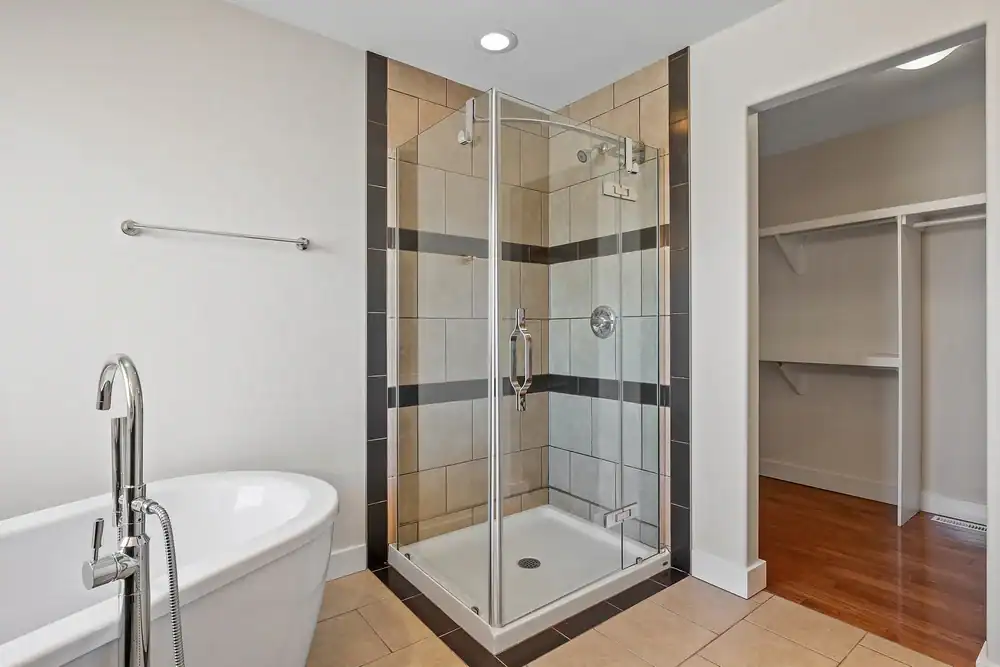
Digital thermostatic valves solve this problem while adding convenience that changes how you experience your shower. These systems let you preset your ideal water temperature with precision down to a single degree. When you start your shower, the valve mixes hot and cold water to hit your target temperature exactly, then maintains it regardless of what else happens in your home’s plumbing. Someone flushing a toilet or running the washing machine won’t cause sudden temperature swings that waste water while you adjust.
Many digital shower systems now include app connectivity. You can start your shower from your phone while you’re still in bed, and the system will warm up to your preset temperature, then pause the water flow until you actually step in. No more water circling the drain while you wait for it to be comfortable. For families where different people prefer different temperatures, you can save multiple user profiles so everyone gets their ideal shower without adjustment time.
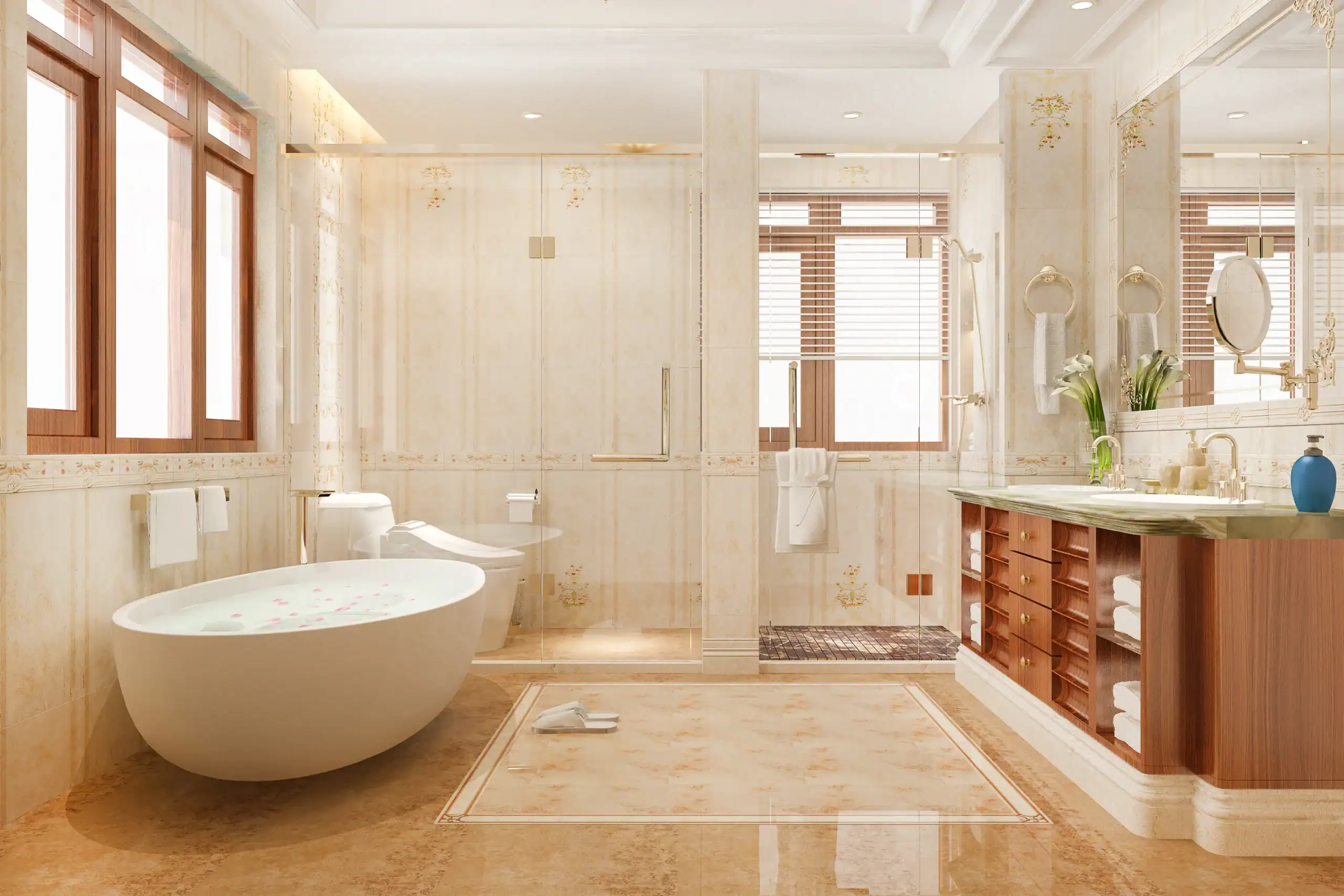
Sensor-activated and touchless fixtures made the jump from commercial restrooms to residential bathrooms over the past few years, and by 2026 they’ve become a mainstream choice for homeowners who prioritize both hygiene and efficiency. The appeal is practical: hands-free operation means fewer germs on handles and less water wasted from faucets left running.
Sensor-activated showers use infrared or motion detection to turn water on when you enter and off when you leave. Some systems include timeout features that automatically shut off water after a preset duration, helping families meet conservation goals without constant vigilance. For households with kids who lose track of time in the shower, this feature alone can save hundreds of gallons monthly.
Touchless bathroom faucets prevent the common scenario where someone turns on the water to wash their hands, then leaves it running while they soap up, scrub, and search for a towel. Sensor faucets only flow when hands are directly under the spout, eliminating that passive waste. The water savings add up quickly—studies show touchless faucets can reduce sink water consumption by 30% or more compared to manual fixtures.
There’s a practical benefit beyond conservation: touchless fixtures stay cleaner. Fewer fingerprints and water spots mean less scrubbing and a bathroom that looks better between deep cleans. For Nassau County’s humid climate where moisture can promote mildew, reducing the water that splashes around your sink area helps keep surfaces drier.
Installation considerations matter. Sensor fixtures require power, either through batteries or electrical connections. Battery-operated models are easier to retrofit but require periodic battery changes. Hardwired options need electrical work during your remodel but eliminate battery maintenance. Most systems include manual override options so you’re never stuck if the sensor malfunctions or batteries die.
The technology has improved significantly. Early sensor faucets were notorious for inconsistent activation—too sensitive or not sensitive enough. Modern systems use advanced sensors that reliably detect hand presence while ignoring false triggers. Adjustment settings let you fine-tune sensitivity and timeout duration to match your preferences.
For sustainable bathroom remodeling in 2026, sensor-activated fixtures represent the sweet spot between conservation and convenience. They prevent waste without requiring you to think about it, making water efficiency automatic rather than effortful.
The biggest objection to water-saving bathroom fixtures used to be performance. Homeowners worried that low-flow showerheads meant weak pressure, or that efficient faucets would take forever to fill a sink. Modern water-efficient fixtures have eliminated these trade-offs through better engineering.
Low-flow showerheads now use aerators that mix air into the water stream, maintaining the feeling of strong pressure while using 2.0 gallons per minute or less compared to the 2.5 gpm standard. Some models force water through precisely designed nozzles that create focused spray patterns, delivering satisfying pressure with less volume. The experience feels identical to or better than traditional showerheads while cutting water use by 20% or more.
WaterSense-certified faucets employ similar technology. Aerators reduce flow to 1.5 gpm or less while maintaining the pressure you need for effective hand washing and other tasks. For Nassau County homeowners concerned about Long Island’s occasionally variable water pressure, these fixtures actually help by optimizing whatever pressure your system delivers.
The key is selecting fixtures from reputable manufacturers who’ve invested in performance engineering. Brands like Moen, Kohler, Delta, and Hansgrohe have spent years refining their water-efficient products to ensure they don’t feel like compromises. Many now incorporate features like pause buttons on showerheads that let you temporarily stop water flow while you soap up or shampoo, then resume at the same temperature and pressure with a single click.
Digital faucets at bathroom sinks offer additional efficiency features. Small temperature displays show exact water temperature, while preset buttons let you tap for your preferred temperature instead of running water while you adjust handles. Some systems track water usage by fixture and send monthly reports, helping you identify patterns and opportunities to reduce consumption further.
For homeowners planning bathroom remodels in Nassau County, it’s worth visiting showrooms to test water-efficient fixtures in person. Feel the pressure from low-flow showerheads. Try the spray patterns. Operate the controls. When you experience how well modern efficient fixtures perform, any concerns about compromise disappear.
The technology keeps improving. Manufacturers continue innovating with features like LED temperature indicators that shift from blue to red as water warms, app-based shower timers that gently remind you when you’ve hit your target duration, and Bluetooth speakers built into showerheads so you can enjoy music without separate equipment. These aren’t just gadgets—they’re features that make sustainable choices more enjoyable, increasing the likelihood you’ll stick with water-conscious habits long-term.
Sustainable bathroom remodeling in Nassau County isn’t about sacrifice—it’s about investing in technology that delivers measurable value from day one. Low-flow smart toilets, greywater recycling systems, digital thermostatic valves, sensor-activated fixtures, and water-efficient showerheads all reduce your utility bills while increasing your home’s appeal in a competitive real estate market.
The homeowners seeing the biggest impact are those who approach water-saving technology strategically. Start with the fixtures that offer the largest savings—toilets and showers account for the majority of bathroom water use, so upgrading these first delivers maximum ROI. Add sensor-activated faucets and digital controls for convenience that makes efficiency automatic. Consider greywater recycling if you’re committed to pushing sustainability as far as current technology allows.
When you’re ready to transform your bathroom with water-saving technology that actually works, we bring over 50 years of experience helping Nassau County homeowners create spaces that combine comfort, efficiency, and lasting value. We understand Long Island’s climate, building codes, and what it takes to install sustainable fixtures that perform flawlessly for decades.
Summary:
Share: