Your family's outgrowing your home, but you're not ready to leave your neighborhood. Dormer additions offer a faster, more affordable way to expand.
Most people don’t wake up thinking about dormers. They wake up tripping over toys in the hallway or realizing their teenager can’t do homework anywhere quiet. The first instinct is usually “we need a bigger house” or “let’s add a whole second floor.”
But here’s what most contractors won’t tell you up front. A full second-story addition in Nassau County runs $200,000 to $300,000 or more. It takes four to eight months. Your foundation might need reinforcement. You’ll need engineering plans, multiple permits, and you might have to move out during construction.
A dormer addition? Different story. You’re working within your existing roofline, which means no foundation work, less structural complexity, and a timeline that’s measured in weeks instead of months. For homeowners across Long Island, that’s the difference between a project that happens this year and one that stays on the “someday” list forever.
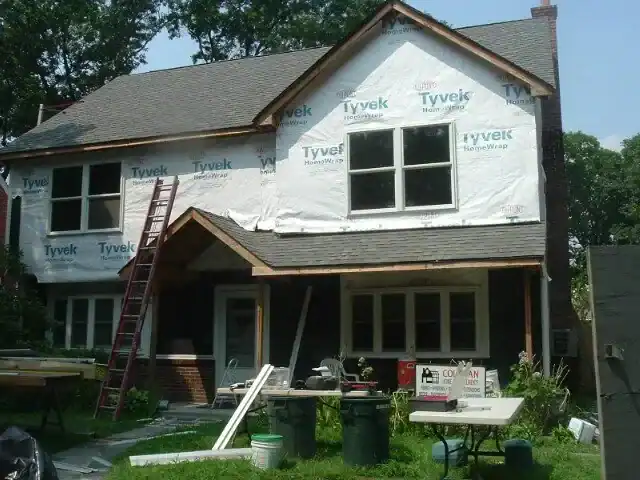
Let’s talk numbers, because that’s usually where the conversation either moves forward or stalls out. In Nassau County, a standard dormer addition typically runs between $12,000 and $50,000, depending on size and complexity. That’s for a dormer that adds real, usable space—somewhere between 100 and 250 square feet.
If you’re looking at a full dormer that spans a larger section of your roof, costs can climb to $120,000 to $150,000 for a half dormer, or $200,000 to $300,000 for a full dormer. Still less than a complete second story, and you’re getting functional square footage that counts toward your home’s appraisal.
Here’s the thing about Long Island pricing. It’s higher than the national average, and that’s not a surprise to anyone who lives here. Skilled labor costs more. Materials cost more. Permits aren’t cheap. But you’re also in a market where home values increased nearly 8% year-over-year in Nassau County, and every bit of added square footage has real resale impact.
The cost depends on what you’re building. A small gable dormer with a single window to brighten up an attic bedroom? Lower end of the range. A shed dormer that runs the length of your roofline and adds a full bathroom with proper ceiling height? Higher end. The best way to know what you’re looking at is to have someone who knows Nassau County construction actually look at your home and give you a real number, not a national average pulled from the internet.
One more thing—watch out for the “too good to be true” bids. If someone’s coming in way under market rate, they’re either cutting corners, not pulling permits, or planning to hit you with change orders halfway through. You don’t want to be the homeowner who saved $10,000 up front and spent $30,000 fixing it later.
A dormer isn’t just about adding a window to your attic. It’s about turning unusable space into a room your family can actually live in. That’s the difference between square footage on paper and square footage you can use.
Think about most attics. You’ve got floor space, sure. But the roof slopes down on both sides, and unless you’re standing dead center, you’re ducking your head. You can store Christmas decorations there, but you can’t put a bed there. You definitely can’t put a bathroom there, because building codes require 6’8″ of ceiling height at key spots—over the toilet, above the vanity, in the shower.
A dormer fixes that. By extending the roofline vertically, you’re creating headroom where the slope used to be. Suddenly, that attic space becomes a bedroom. Or a home office where you can actually stand up and walk around. Or a bathroom that meets code and adds serious value to your home.
And here’s something most people don’t realize until they’re halfway through the project—dormers don’t just add space. They completely change how the room feels. Natural light floods in through the dormer windows. The space feels bigger, brighter, less like an attic and more like an actual room. That’s not just aesthetic. It’s functional. It’s the difference between a space your family avoids and a space they actually want to spend time in.
The square footage you add with a dormer counts toward your home’s total square footage in most appraisals, assuming it’s finished space with proper ceiling height, heating, and egress. That matters when you go to sell. Buyers aren’t just paying for an extra room—they’re paying for square footage that shows up in the listing and justifies a higher price. In Nassau County’s competitive real estate market, that kind of functional space makes your home stand out.
Want live answers?
Connect with a Ray Coleman expert for fast, friendly support.
Now that you know what a dormer is and what it costs, let’s talk about why it might be the right move for your home. These aren’t generic benefits. These are the reasons real homeowners in Nassau County choose dormers over other options—and why they’re glad they did.
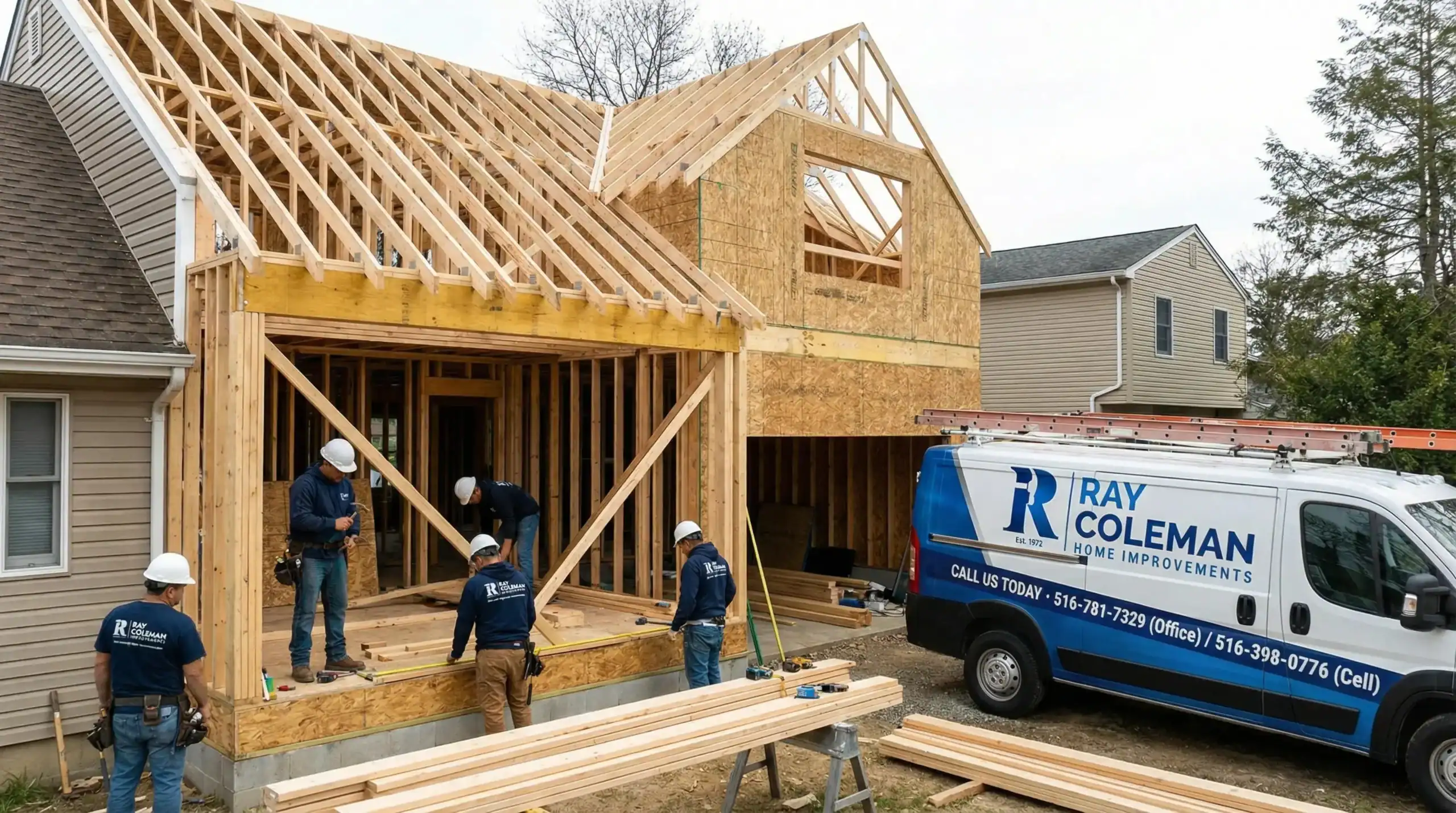
Nassau County lots aren’t huge. If you’re in Levittown, Hicksville, Wantagh, or most of the older neighborhoods, your lot size is probably somewhere between a quarter and a third of an acre. Maybe less. And your home is already close to the setback lines—the invisible boundaries that dictate how close your house can be to your property line.
When you build out, you run into setback restrictions. When you build up with a full second story, you’re dealing with height restrictions and zoning rules that vary by town and village. It’s not impossible, but it adds time, cost, and uncertainty to the project.
A dormer sidesteps most of that. You’re working within your existing roofline, not expanding your home’s footprint. That means fewer zoning headaches, fewer permit complications, and no need to sacrifice your backyard or side yard to gain space inside.
This is especially important if you’ve got a small lot or if you’re in a neighborhood with strict HOA rules or historic district regulations. Dormers tend to fly under the radar in a way that full additions don’t. They’re less invasive, less visible from the street (depending on placement), and generally easier to get approved.
And let’s be honest—nobody wants to give up their yard. If you’ve spent years getting your landscaping just right, or if your kids actually use the backyard, tearing it up for a ground-level addition isn’t appealing. A dormer lets you keep your outdoor space while gaining the indoor space you need. You’re growing up, not out, which makes sense when every square foot of your lot already has a purpose.
We touched on cost earlier, but it’s worth digging into the “why” behind the savings. A full second-story addition is a massive undertaking. You’re essentially building an entire new floor on top of your existing home. That means your foundation needs to be evaluated and possibly reinforced. Your existing walls might need shear wall upgrades to handle lateral loads. You’ll need new stairs, which eat up square footage on both floors. And the whole time, you’re exposing your home to the elements while the roof is off.
A dormer addition is a different animal. You’re cutting into the existing roof, yes, but you’re not removing the entire thing. You’re not adding load to the foundation in the same way. The structural work is more localized, more contained. That translates to lower labor costs, less material waste, and fewer surprises during construction.
Timeline matters too. A full second story can take six months or more. Some contractors will tell you it’ll take longer. A standard dormer? Ten to twelve weeks on average, assuming decent weather and no major surprises. That’s the difference between living in a construction zone through an entire summer and fall versus getting it done before the holidays.
Shorter timelines also mean less disruption to your life. If you’ve got kids in school, or if you’re working from home, living through months of construction is brutal. Noise, dust, strangers in your house every day—it wears on you. A dormer project is still construction, and it’s still disruptive, but it’s a sprint instead of a marathon.
And here’s something most people don’t think about until it’s too late—the longer a project drags on, the more likely something goes wrong. Weather delays. Permit issues. Subcontractors who don’t show up. The more weeks you add to a project, the more chances for things to go sideways. A shorter timeline reduces that risk. When you’re working with a contractor who’s been doing this for decades and knows how to keep a project moving, you’re not left wondering when your house will be finished.
So you’re sold on the idea. Now what? The process isn’t complicated, but it does require some planning. First, you need to know if your home can even support a dormer. Not every roof is a good candidate. If your attic doesn’t have enough height at the peak, or if your roof pitch is too shallow, a dormer might not give you the space you’re hoping for.
That’s where working with someone who knows Nassau County homes makes a difference. A contractor who’s done dozens of dormers on Cape Cods and ranches can walk into your attic and tell you in five minutes whether it’s feasible. We know the local building codes, the permit process, and what inspectors are looking for. You don’t want to be halfway through construction and find out something doesn’t meet code.
Once you’ve got a plan, the actual construction moves pretty quickly. The roof section gets opened up, the dormer framing goes in, and the new roofing ties into the existing roof. Inside, you’re adding insulation, drywall, flooring—whatever finishes you need to turn that attic into a real room. If you’re adding a bathroom, plumbing and electrical get roughed in before the walls close up. The key is making sure everything is done right the first time, because fixing roofing mistakes later is expensive and frustrating. Good contractors know how to flash the dormer properly, tie in the new roofing materials, and make sure water isn’t going to be a problem down the road. That’s not the place to cut corners or hire the lowest bidder. When we handle a project, the job site stays clean, the crew shows up when they say they will, and you’re not left wondering what’s happening. That kind of reliability matters when you’re living through construction.
Summary:
Share: