
You’re not just updating a kitchen or adding a bathroom. You’re taking a home that’s served you well and turning it into exactly what you need it to be—without moving, without settling, and without the nightmare stories you’ve heard from friends who hired the wrong contractor.
A full house renovation means your entire first floor flows the way you’ve always wanted. It means systems that work, finishes that last, and a home that feels brand new while still being yours. You get to stay in the neighborhood you love, keep the property size you need, and end up with a house that’s worth more than you put into it.
The difference between a successful whole house renovation and a disaster isn’t the size of the project. It’s whether your contractor shows up every day, answers the phone when you call, and actually does what they promised. That’s where most companies fall apart. That’s where we don’t.
We’ve been handling large-scale renovations in Flower Hill and across Nassau County for over 50 years. We’re a father-and-son operation, fully licensed and insured, and we rank in the top 1% of New York’s 77,888 licensed contractors according to BuildZoom.
We know Flower Hill. We know the homes here were mostly built in the late ’50s and early ’60s, which means we know what’s behind your walls before we open them. We know your home is likely worth well over a million dollars, and we treat it that way.
Ray is on every job site, every day. Not just managing—actually working. When you call, we answer. When something goes wrong at 3 AM, we show up. We’ve built our reputation on being the contractor who doesn’t disappear halfway through your project.
First, we walk through your home with you. You tell us what’s not working, what you want to change, and what you’re hoping to accomplish. We take measurements, ask questions, and give you a realistic picture of what’s possible—and what it’ll cost.
Then we handle the design and planning. If permits are needed, we pull them. If your project doesn’t require permits, even better—we can move faster. We map out a timeline and talk through every phase so you know what’s happening when.
During construction, Ray is there daily. Our crews show up on time, keep the site clean, and do the work right the first time. We don’t leave messes for you to deal with at the end of the day. We communicate constantly—no surprises, no disappearing acts, no excuses.
When we’re done, we walk you through everything. We make sure you’re completely satisfied before we consider the job finished. Then we stay available—because we know that questions come up, and you deserve answers even after the final invoice is paid.
Ready to get started?
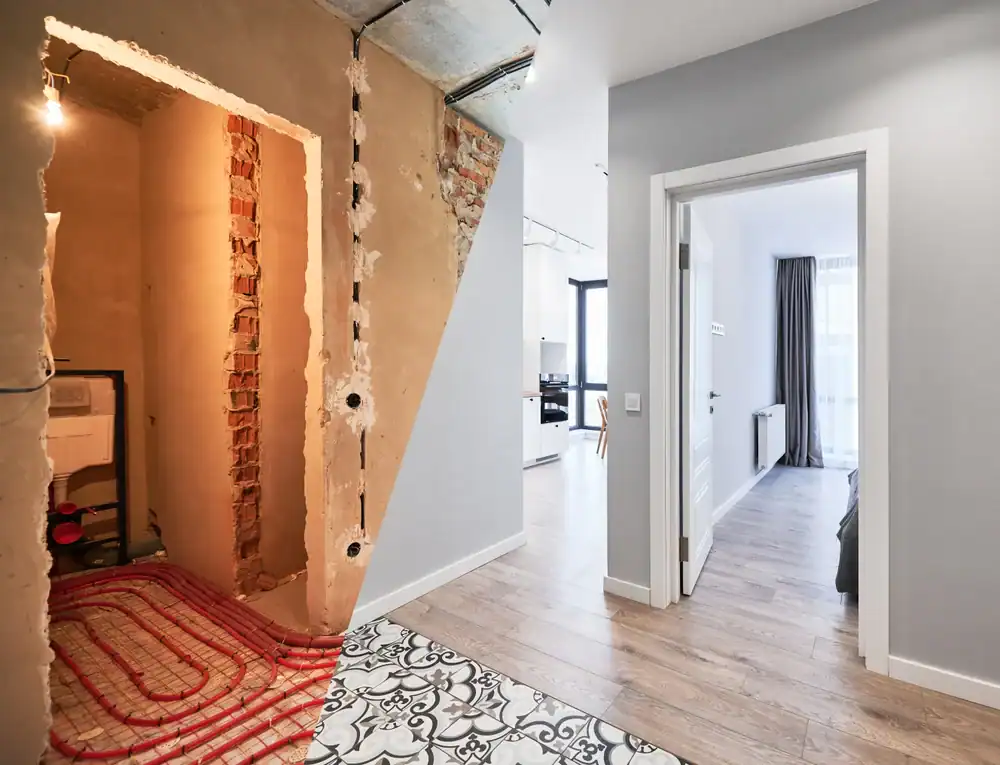
A whole house renovation typically includes your kitchen, bathrooms, and main living spaces. We’re talking new layouts, updated electrical and plumbing, modern HVAC systems, and finishes that match what you’d see in a brand-new luxury home. For homes in Flower Hill, this often means opening up compartmentalized floor plans from the ’50s and ’60s into the open-concept layouts that work better for how people actually live today.
We handle structural changes—removing walls, adding support beams, creating better flow between rooms. We update outdated systems that can’t handle modern demands. We deal with the hidden issues that come with older homes: old wiring that’s not up to code, plumbing that’s ready to fail, insulation that’s nonexistent.
In Flower Hill specifically, we see a lot of homeowners who want to add space without losing their yard. That might mean going up with a dormer or out with a first-floor extension. It might mean finishing a basement or converting unused space into something functional. Every home is different, but the goal is the same: maximize what you have without sacrificing the property features that made you buy here in the first place.
The investment makes sense when you look at the numbers. Homes in Flower Hill have a median value around $1.85 million. A well-executed renovation protects that value and often increases it significantly—especially when you’re updating a 60-year-old home to modern standards.
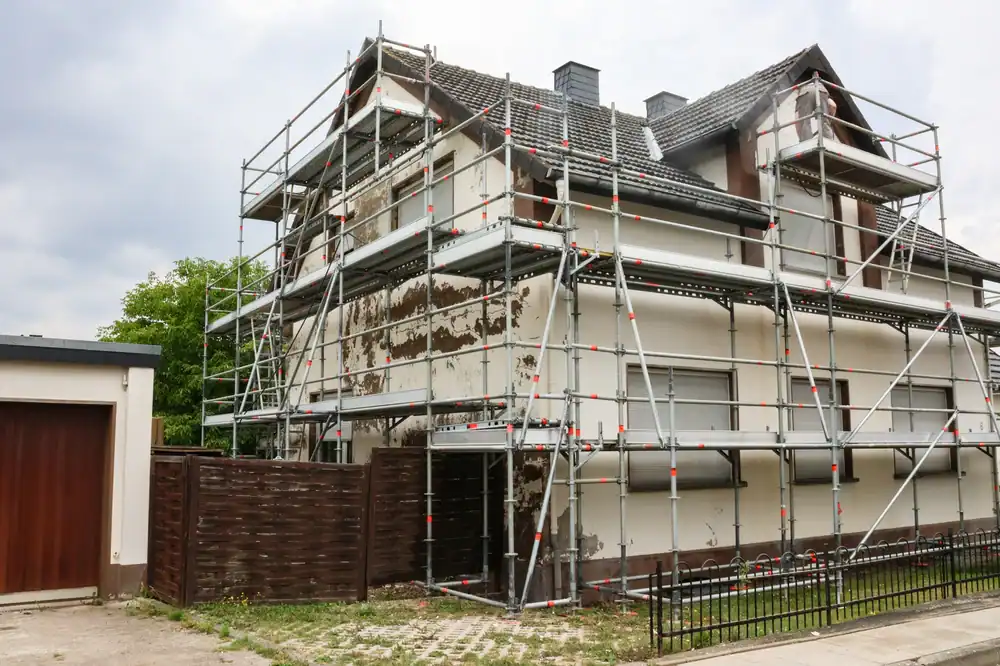
Most full house renovations take between six and twelve months, depending on the scope. If you’re doing a complete gut renovation—tearing everything down to the studs and rebuilding—you’re looking at closer to a year. If you’re doing a substantial remodel without moving walls or major structural work, it might be closer to six months.
The timeline depends on a few things. Permit approval can add weeks or even months if your project requires them. Material delays happen, especially with custom items or specialty finishes. And the reality is that older homes always have surprises—things we can’t see until we open up walls.
What we can control is our schedule. We don’t overbook jobs. We don’t leave your project to start someone else’s. Ray is on-site daily, keeping things moving and making decisions in real time instead of waiting days for callbacks. That alone keeps projects on track better than most contractors manage.
On Long Island, you’re looking at $150 to $250 per square foot for a quality whole house renovation. That’s significantly higher than the national average of $75 to $185, but it reflects the reality of working in this market—higher labor costs, stricter building codes, and the expectation of high-end finishes.
For a complete gut renovation of a typical Flower Hill home, most projects fall between $150,000 and $250,000. That includes everything: design, permits, demolition, structural work, new systems, and finishes. If you’re adding square footage or doing extensive custom work, costs go up from there.
The number that matters most isn’t the total—it’s whether you’re getting value for what you spend. Cheap contractors cut corners. They use subpar materials, rush the work, and disappear when problems show up. You end up paying twice: once for the bad job, and again to fix it. We price our work fairly for the quality we deliver, and we finish on budget because we estimate honestly from the start.
It depends on the scope, but most homeowners move out during a full house renovation. If we’re gutting your kitchen, bathrooms, and main living areas, you won’t have running water or a functioning kitchen for weeks. The dust, noise, and daily disruption make it pretty much impossible to live normally.
Some people stay if we’re working in phases—maybe we finish the first floor while you live upstairs, then switch. That can work, but it extends the timeline and adds complexity. It’s usually easier and faster to move out temporarily and let us work without worrying about your daily routine.
We keep job sites as clean as possible, but construction is messy. We’re not leaving debris everywhere or tracking mud through your house, but there will be dust and noise during work hours. If you do stay, expect your life to be disrupted. If you move out, expect to come back to a finished home without having lived through the chaos.
Homes built in the ’50s and ’60s almost always have outdated electrical systems. You’ll find old knob-and-tube wiring, insufficient amperage for modern appliances, and outlets that aren’t grounded. Updating electrical is usually non-negotiable—both for safety and for code compliance.
Plumbing is another common issue. Old galvanized pipes corrode from the inside out. You might have decent water pressure now, but those pipes are living on borrowed time. We also see a lot of cast iron drain lines that are ready to fail. It’s better to replace them during a renovation than to deal with a sewage backup six months after you finish.
Insulation is usually minimal or nonexistent in homes from this era. That means high energy bills and uncomfortable rooms. Asbestos can be present in old floor tiles, pipe insulation, or popcorn ceilings—it needs professional abatement if we find it. Foundation settling is common, which can mean cracks, uneven floors, or doors that don’t close right. None of this is catastrophic, but it’s real, and it affects your budget. We account for it upfront so you’re not blindsided.
It depends on what you’re doing. If you’re moving walls, changing your home’s footprint, or doing major electrical or plumbing work, you’ll need permits. If you’re updating finishes, replacing fixtures, or doing cosmetic work without structural changes, you might not.
Permits add time—sometimes weeks, sometimes months depending on the town’s workload and how backed up the building department is. They also add cost, both for the permit fees themselves and for the engineering and architectural plans required to get approval. But they’re not optional when they’re required, and skipping them can cause serious problems when you try to sell your home.
We handle the permit process if your project needs it. We know what Flower Hill requires, we know how to submit plans that get approved, and we schedule inspections at the right times so you don’t have delays. We also specialize in projects that don’t require permits when possible—it’s faster, simpler, and less expensive for you.
If your home is in Flower Hill and it’s worth $1.5 million or more, a renovation almost always makes financial sense compared to moving. You’d pay 5-6% in realtor commissions alone to sell—that’s $75,000 to $90,000 right there. Add in closing costs, moving expenses, and the reality that you’d probably pay even more for a newer home in the same neighborhood, and renovation starts looking pretty smart.
The other factor is whether your home has good bones. If the structure is solid, the lot is what you want, and the location works for your life, then updating the interior is a straightforward value play. You get a brand-new home without leaving the neighborhood, the school district, or the property size you need.
Renovation makes less sense if you’ve outgrown the home entirely—if you need way more space than you have, or if the lot can’t accommodate the additions you want. But for most Flower Hill homeowners, the issue isn’t size. It’s that the layout is outdated, the systems are failing, and the finishes haven’t been touched since 1985. All of that is fixable, and fixing it costs less than moving.
Other Services we provide in Flower Hill