
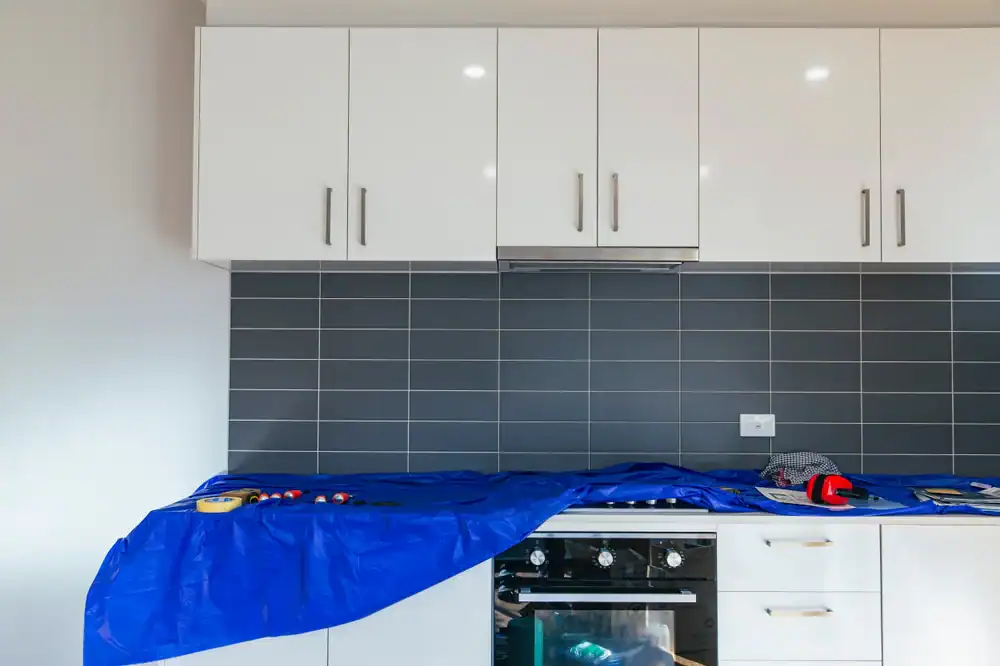
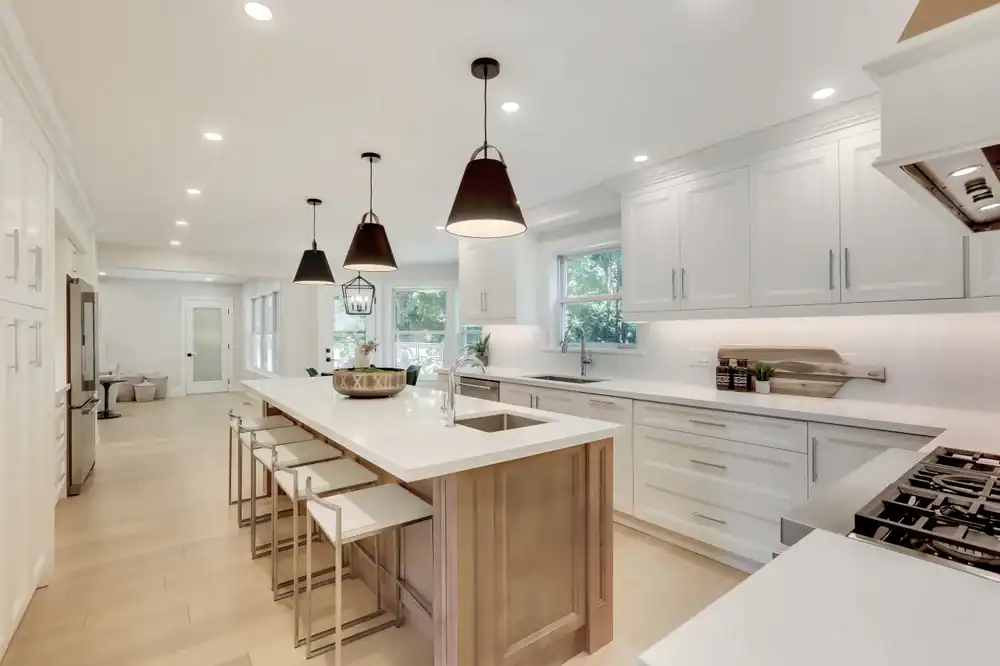
You’re not looking for cosmetic updates. You need a kitchen that stops fighting you every time you open a cabinet or try to prep dinner. That means rethinking the layout, fixing the lighting, adding storage where you actually need it, and building in the function that’s been missing since the house was built.
Most homes in Farmingdale were built in the 50s through 80s, back when kitchens were an afterthought. Small footprints. Bad lighting. Cabinets that don’t close. Layouts that make cooking feel like an obstacle course.
A real kitchen remodel fixes all of that. You get countertops that give you room to work. Cabinets designed around what you store, not what fit in the box. Lighting that makes the space usable morning and night. Appliances that don’t require an electrician every time you upgrade. And a layout that lets two people move through the space without bumping into each other.
We handle large-scale kitchen remodels across Farmingdale and Long Island. We’re the contractor you call when the project matters and you don’t want to deal with someone who disappears halfway through or leaves you to handle permits on your own.
We keep job sites clean. Our crews show up when they say they will. And if something goes wrong – frozen pipe, electrical issue, whatever – we respond. That’s not marketing talk. It’s how we’ve stayed busy in one of the most competitive home improvement markets in the country.
You’re hiring a general contractor who knows Long Island homes inside and out. We’ve seen the electrical that needs updating, the plumbing that can’t handle new appliances, and the layouts that stop making sense the second you try to use them. We know what it takes to bring a 60-year-old kitchen into 2025 without tearing down walls you don’t need to touch.

First, we walk the space with you. We’re looking at how you use the kitchen now, what’s not working, and what’s possible given the bones of your home. Most Long Island houses have quirks – tight corners, outdated electrical, plumbing that wasn’t designed for modern appliances. We map all of that before we talk design.
Then we build a plan that makes sense for your budget and your goals. That includes layout, materials, appliances, lighting, storage – the whole scope. If permits are required, we handle the applications and inspections. If they’re not, we move faster.
Once we start, the job site stays clean and the work stays on schedule. We’re not bouncing between five other projects. You’ll have a crew that shows up, does the work right, and keeps you in the loop. Demolition, framing, electrical, plumbing, cabinetry, countertops, flooring, paint – we manage all of it so you don’t have to coordinate six different contractors.
When we’re done, you’ve got a kitchen that works. Drawers that close. Lighting that makes sense. A layout built around how you actually cook. And a space you don’t want to avoid anymore.

Ready to get started?
A complete kitchen renovation means handling every layer of the job. You’re not just swapping cabinets and calling it done. You’re updating electrical to handle modern appliances. Running new plumbing if you’re moving the sink or adding a dishwasher. Installing proper ventilation so your range hood actually works. Framing out new layouts if walls need to move. And finishing with cabinetry, countertops, backsplash, flooring, and paint that all work together.
In Farmingdale, most kitchens we work on are 150 to 250 square feet. Tight spaces that need smart design. That could mean opening up a wall to create better flow into the dining room, adding an island for prep space and seating, or reconfiguring the layout so the fridge isn’t blocking the doorway. It also means choosing materials that make sense for Long Island – durable countertops that handle daily use, cabinets built to last, and finishes that don’t show every fingerprint.
Labor costs here are higher than most of the country, and for good reason. You’re paying for quality workmanship, knowledge of local building codes, and contractors who understand how these homes are built. A mid-range kitchen remodel in this area typically runs between $36,000 and $75,000 depending on size and materials. That’s not inflated – it’s what it costs to do the job right and make sure it lasts.
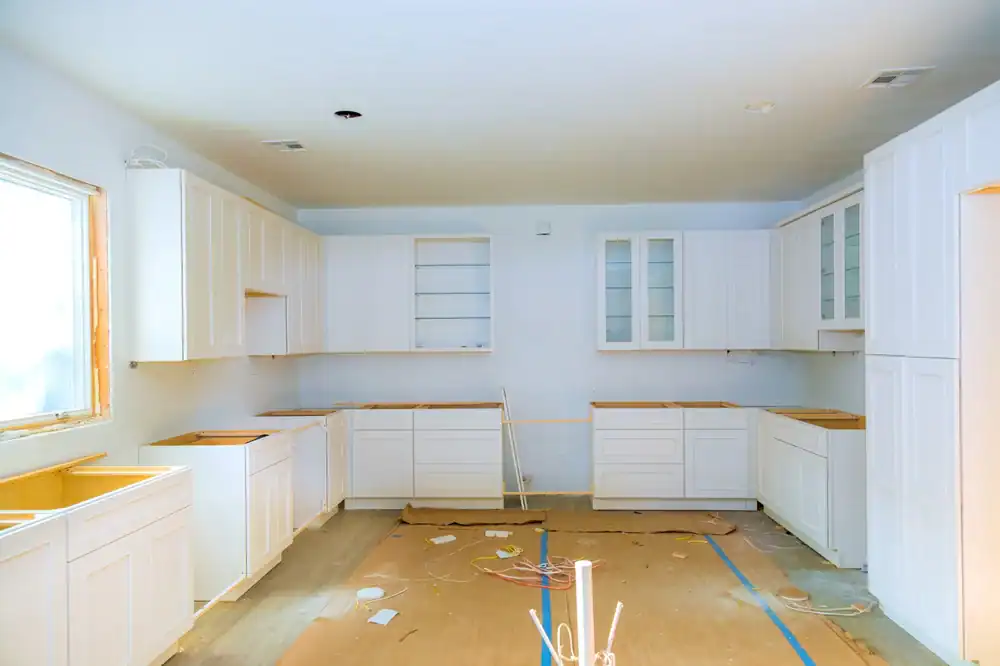
Most kitchen remodels take between eight and twelve weeks from demo to final walkthrough. That timeline depends on the scope of the work, whether you’re moving plumbing or electrical, and how long it takes to get cabinets and countertops delivered.
The first week is demolition and framing. Then we rough in electrical and plumbing, which usually takes another week or two depending on what needs updating. Drywall, mudding, and paint come next. After that, we install cabinets, countertops, backsplash, and flooring. Appliances and fixtures go in last.
If permits are required, add a couple of weeks to the front end for approvals and inspections. If your project doesn’t need permits, we can move faster. Either way, we’re not dragging the job out or leaving it half-finished while we bounce to other work. You’ll have a working kitchen again in under three months, and it’ll actually be done right.
It depends on what you’re changing. If you’re moving walls, relocating plumbing, or doing major electrical work, you’ll need permits. If you’re replacing cabinets, countertops, and appliances without touching the structure or mechanicals, you usually don’t.
Permit requirements in Nassau County can be strict, and every municipality has its own rules. Fees typically run between $300 and $1,500 depending on the scope of work. Inspections are required at different stages – rough-in, insulation, final. Miss one and the job stops until you reschedule.
We handle all of that if permits are part of your project. You shouldn’t have to become an expert in building codes just to remodel your kitchen. We submit the applications, schedule the inspections, and make sure everything passes the first time. If your job doesn’t require permits, we let you know up front so you’re not paying for approvals you don’t need.
Choosing a layout based on what looks good instead of what works. You can have the most beautiful kitchen on Long Island, but if the fridge blocks the doorway or you can’t open the dishwasher without hitting the island, you’re going to hate using it.
The other big one is underestimating how much the job actually costs. A lot of homeowners see a $25,000 estimate online and assume that’s what they’ll pay. But that number doesn’t include electrical updates for older homes, plumbing for new appliances, or the cost of quality materials that won’t need replacing in five years. In this area, a real kitchen remodel that handles everything – not just the cosmetic stuff – starts closer to $36,000 for a mid-grade job.
We walk you through all of that before you commit to anything. You’ll know what the job costs, what’s included, and what corners you can cut if budget is tight. No surprises halfway through when you realize the estimate didn’t cover half the work.
Yes, and in a lot of cases, you don’t need to. Moving walls adds cost, requires permits, and extends the timeline. If your kitchen is small but functional, you can usually get more out of the space by rethinking the layout, upgrading storage, and improving lighting.
That might mean swapping a bulky cabinet setup for custom cabinetry that uses every inch of vertical space. Or replacing a cramped peninsula with a smaller island that gives you prep room without blocking traffic. Or adding undercabinet lighting and recessed fixtures so the space doesn’t feel like a cave anymore.
If the layout genuinely doesn’t work – say, the stove is on the opposite side of the room from the sink and fridge – then moving a wall might make sense. But we don’t push that unless it’s actually going to improve how you use the kitchen. You’re paying for function, not just a bigger footprint.
If the cabinet boxes are solid and the layout works, refacing can save you money. You’re keeping the structure and replacing the doors, drawer fronts, and hardware. It’s a good option if you like where everything is but hate how it looks.
If the cabinets are falling apart, the layout doesn’t make sense, or you need more storage than you currently have, replacement is the better move. Refacing won’t fix doors that don’t close, shelves that sag, or a design that wastes space. And if you’re already gutting the kitchen to move plumbing or electrical, it usually makes sense to start fresh with cabinets that actually fit the new layout.
We’ll tell you which route makes sense after we see the space. If refacing works and saves you a few thousand dollars, we’ll say so. If the cabinets are shot and you’re better off replacing them, we’ll explain why. You’ll know what you’re paying for either way.
For a mid-range remodel in a typical Farmingdale kitchen – 150 to 250 square feet – expect to spend between $36,000 and $75,000. That includes new cabinets, countertops, appliances, flooring, lighting, and all the labor to demo, rebuild, and finish the space. If you’re moving walls, upgrading electrical and plumbing, or using high-end materials, the number goes up.
Budget remodels start around $23,500, but you’re making compromises on materials and scope. High-end jobs with custom cabinetry, premium countertops, and luxury appliances can push past $100,000. Most homeowners land somewhere in the middle – good quality materials, a layout that works, and a finished kitchen that doesn’t need major updates for the next 15 years.
Labor costs on Long Island are higher than most of the country because of local building codes, cost of living, and the level of work required to bring older homes up to code. You’re not overpaying – you’re paying for contractors who know what they’re doing and won’t leave you with a half-finished job or code violations that come back to bite you when you sell.
Other Services we provide in Farmingdale