Cramped bathroom driving you crazy? These space-saving remodeling hacks help Nassau County homeowners maximize every inch without breaking the bank.
Most small bathroom problems start with layout, not size. That bathtub you never use? It’s eating up 15 square feet. The vanity blocking the door swing? Poor planning from day one. The toilet placed where it makes everything else awkward? Someone wasn’t thinking about flow.
Before you pick tile or fixtures, map out how you actually use the space. Walk through your morning routine mentally. Where do bottlenecks happen? What’s in your way? A small bathroom remodeling project in Nassau County starts with honest assessment, not Pinterest boards.
Consider how a walk-in shower instead of that tub could free up room for a larger vanity or better storage. Think about whether a pocket door or sliding barn door would eliminate the swing space a traditional door wastes. Question whether your toilet could move to a corner, opening up the center of the room. Layout changes cost more upfront but solve problems that new paint and fixtures never will.
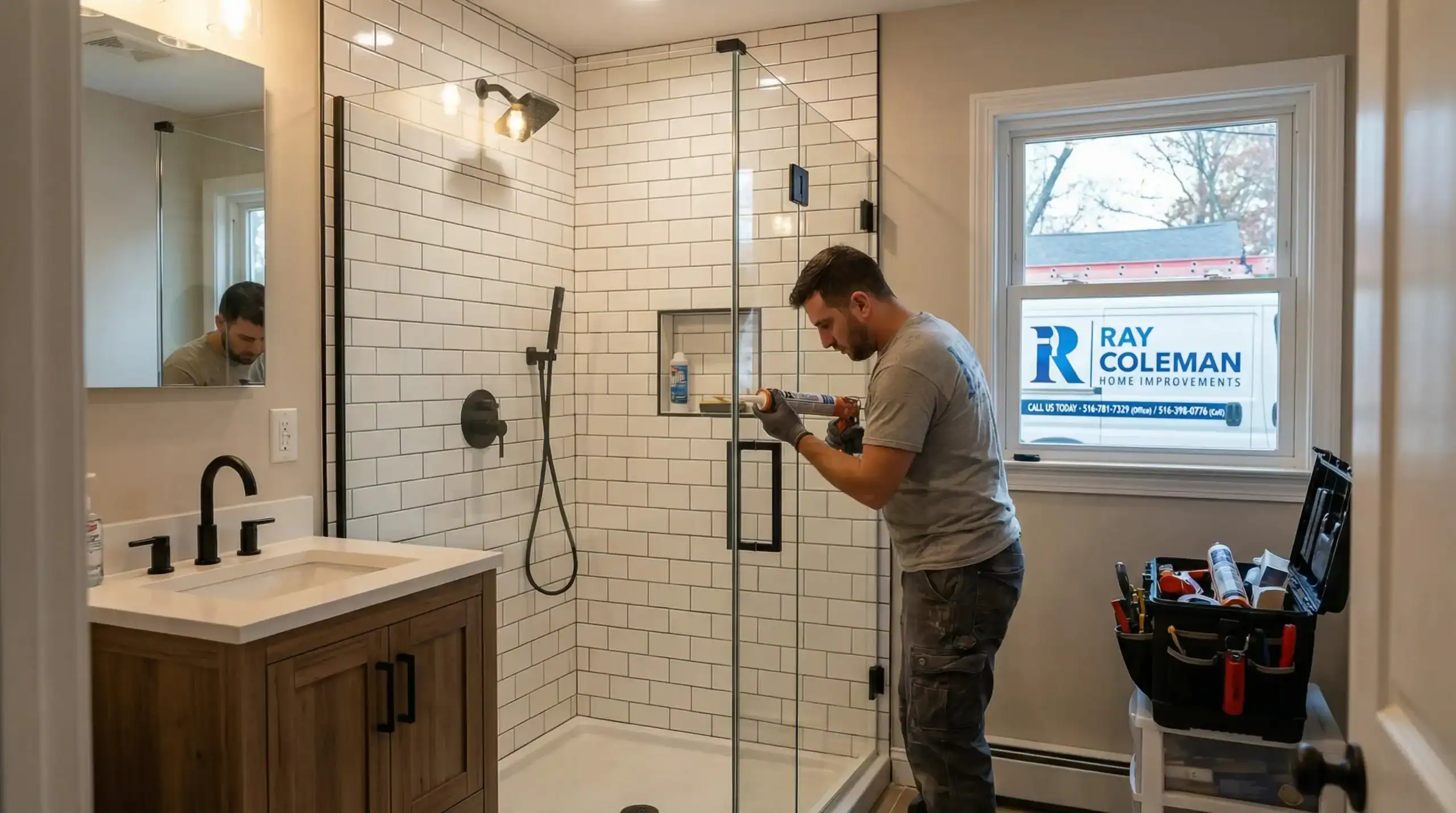
If you’re not taking baths, that tub is just expensive, space-hogging storage for shampoo bottles. Walk-in showers designed for small bathrooms do more than save square footage—they change how the entire room feels.
A curbless or low-threshold shower with a frameless glass panel keeps sightlines open. Your eye travels across the whole room instead of stopping at a bulky tub surround. That visual continuity makes even a 40-square-foot bathroom feel less claustrophobic. You’re not breaking the space into tiny compartments.
Modern walk-in shower ideas for small bathrooms focus on smart use of every inch. Built-in corner benches give you a place to sit while shaving your legs without taking up floor space. Recessed niches carved into the wall hold toiletries without jutting out into the shower area. Rain shower heads mounted on the ceiling direct water straight down instead of spraying it everywhere, so you can get away with a smaller footprint and a single glass panel instead of a full enclosure.
The typical walk-in shower for a small bathroom runs about 36 inches by 36 inches minimum, though 42 inches by 36 inches feels more comfortable. Compare that to a standard tub-shower combo at 60 inches by 30 inches. You’re not just saving space—you’re gaining flexibility in how you use what’s left. That extra two feet can mean the difference between a cramped vanity and one with actual storage.
Installation matters too. A curbless shower requires proper floor slope and drainage, which means you need someone who knows what they’re doing. Done wrong, you’ve got water all over your bathroom floor. Done right, you’ve got a seamless, modern shower that makes your small bathroom feel twice its size. It’s one of those modern small bathroom designs that looks good in photos and actually works in real life.
Let’s talk money because layout changes aren’t cheap. Moving plumbing and electrical in Nassau County typically adds $2,000 to $5,000 to your bathroom remodeling project, depending on how far things need to shift and what’s hiding behind your walls. Older homes—and Long Island has plenty of those—sometimes surprise you with outdated plumbing or electrical that needs updating anyway.
Permits are required for any work involving plumbing, electrical, or structural changes in Nassau County. That’s not a suggestion. Skipping permits might save you a few hundred dollars now, but it’ll cost you thousands when you try to sell and the inspector flags unpermitted work. Permits also ensure whoever’s doing your work follows code, which matters when you’re dealing with water, electricity, and structural loads.
The timeline extends too. A cosmetic refresh—new tile, paint, fixtures—might take two weeks. A layout change that involves moving your shower, toilet, or vanity? Plan on four to six weeks. You’re opening walls, rerouting pipes, updating electrical, possibly dealing with surprises like water damage or outdated wiring. That’s just reality.
But here’s why people do it anyway: layout changes solve problems that surface fixes can’t. If your bathroom doesn’t work because the toilet’s in the wrong spot or the vanity blocks the door, new tile won’t fix that. You’ll spend $10,000 on a bathroom that looks better but still functions poorly. Sometimes the right move is spending $15,000 to $20,000 on a remodel that actually addresses why the space doesn’t work.
Think of it this way: you use your bathroom twice a day minimum for the next 10, 15, 20 years. That’s thousands of times you’ll either appreciate a layout that works or curse one that doesn’t. The math starts making sense when you look at it like that.
Want live answers?
Connect with a Ray Coleman expert for fast, friendly support.
Small bathrooms fail when they lack storage. Toiletries pile up on counters. Towels hang on door hooks because there’s nowhere else to put them. Cleaning supplies live under the sink in a chaotic jumble. The problem isn’t that you own too much—it’s that your bathroom has nowhere to put it.
The solution is thinking vertically and using space you’re currently wasting. Walls, the area above your toilet, the inside of cabinet doors, the space between studs—all of it can work harder. Bathroom storage hacks for small spaces focus on finding these hidden opportunities and making them functional without cluttering up your limited floor area.
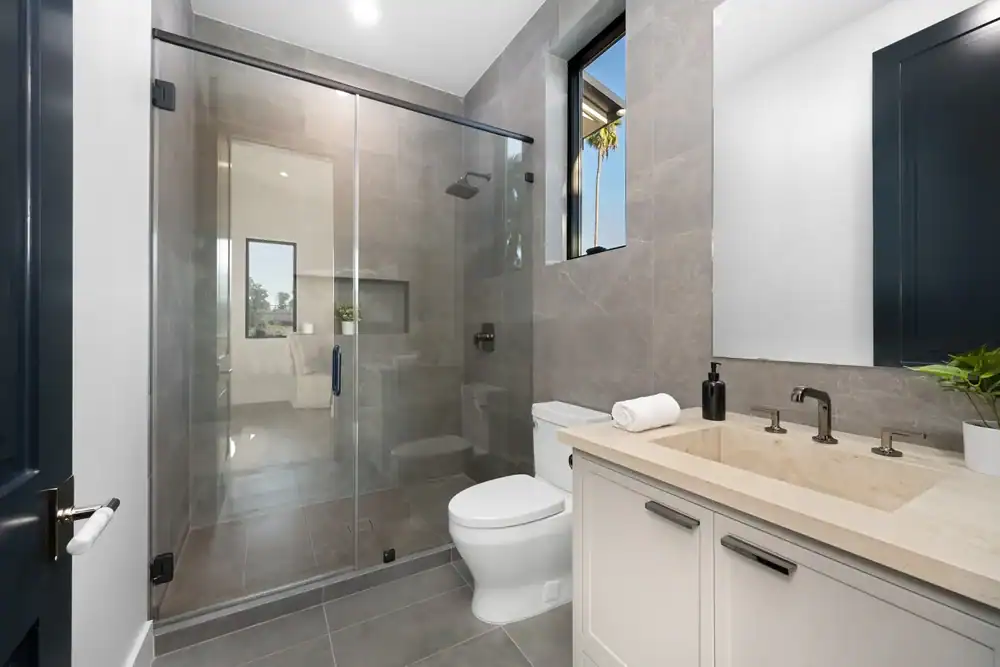
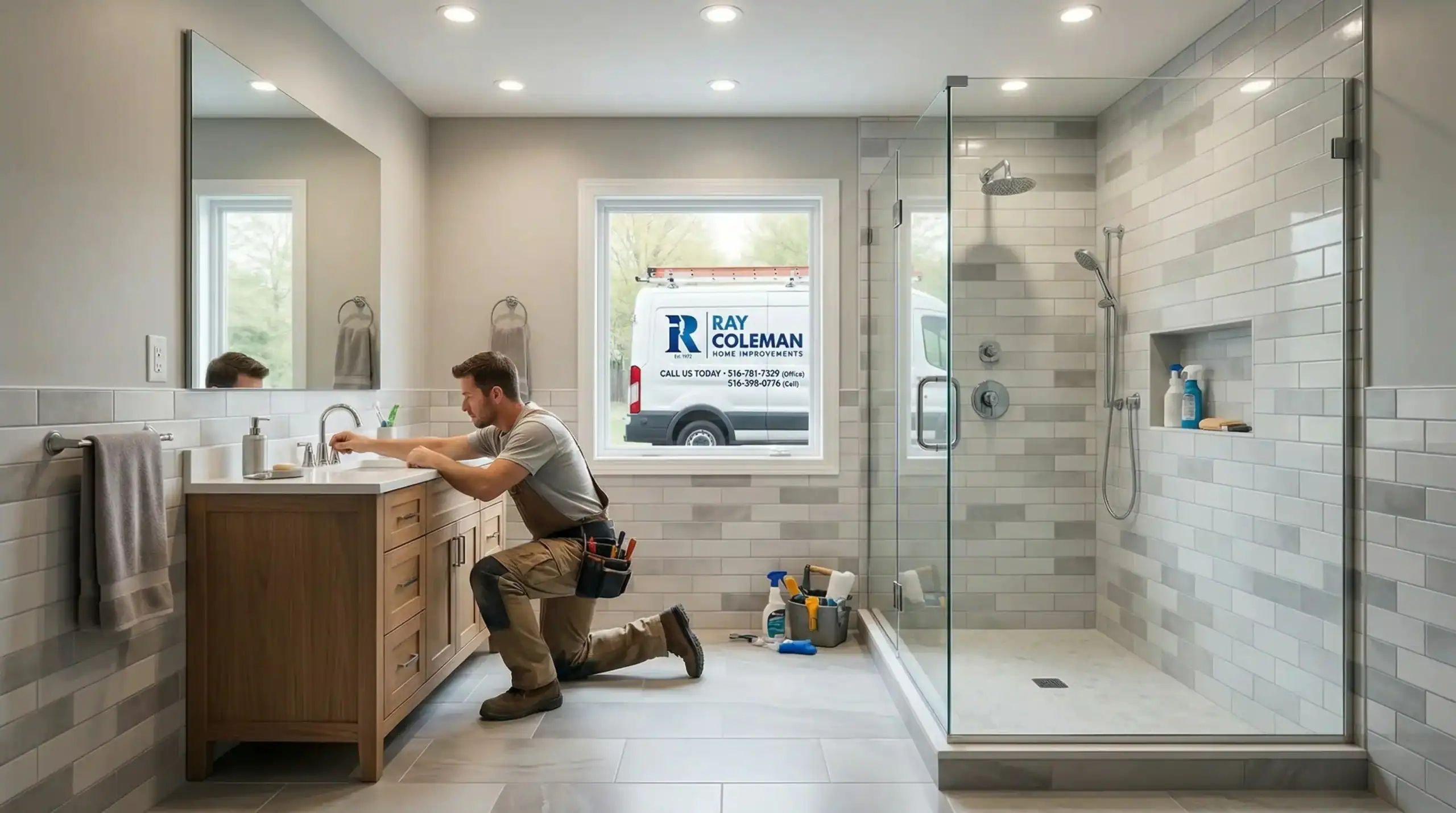
Your vanity is prime real estate in a small bathroom. A floating vanity mounted to the wall instead of sitting on the floor creates visual breathing room—you can see the floor underneath, which tricks your brain into thinking the space is larger than it is. But the real win is what happens inside and around that vanity.
Drawer organizers and pull-out systems turn chaotic cabinet space into organized storage. Instead of digging through a pile of hair products to find your toothbrush, everything has a designated spot. Shallow drawer dividers keep makeup and small items from rolling around. Deeper drawers with adjustable organizers handle larger items like hair dryers and straighteners.
Consider a vanity with open shelving on one side and closed storage on the other. The open section displays rolled towels or decorative baskets, adding style while keeping daily essentials within reach. The closed section hides the less photogenic stuff—cleaning supplies, extra toilet paper, the random collection of half-used lotions we all accumulate.
Medicine cabinets with built-in lighting and adjustable shelves maximize wall space above your sink. Modern versions recess into the wall between studs instead of sticking out, giving you storage without eating into your already-tight clearances. Some include outlets inside for electric toothbrushes or razors, eliminating counter clutter.
Wall-mounted faucets free up even more vanity space. Instead of the faucet sitting on your countertop, it mounts directly to the wall, giving you a few extra inches of usable counter. In a small bathroom, those inches matter. That’s the difference between cramped and functional.
The key is choosing a vanity sized for your space—typically 24 to 30 inches wide for a small bathroom—but maximizing every cubic inch inside it. Cheap vanities waste space with poor interior design. Quality compact vanity solutions use every bit of available volume with smart organizational features that make your morning routine smoother.
Some of the best bathroom storage hacks hide in plain sight. That wall above your toilet? Wasted space unless you put shelves or a cabinet there. Floating shelves hold extra towels, decorative items, or baskets filled with toiletries. A shallow cabinet mounted above the toilet provides enclosed storage without sticking out into the room.
Recessed shelving built into the wall between studs gives you storage that doesn’t take up any floor space or protrude into the room. These built-in niches work great in showers for holding shampoo and soap, but they’re equally useful in the main bathroom area. A recessed shelf next to the toilet holds your phone and reading material. One next to the sink keeps daily skincare products within reach without cluttering the counter.
The back of your bathroom door is another opportunity. Over-the-door organizers with pockets hold hair styling tools, cleaning supplies, or extra toiletries. Hooks mounted on the door provide spots for robes, towels, or clothes. Just make sure whatever you hang doesn’t interfere with the door closing or hit the toilet when it swings open.
Corner spaces often go unused in small bathrooms. A corner shelf unit or a triangular vanity tucks into that awkward spot, giving you storage or counter space in an area that was previously dead. Corner showers do the same thing—they fit where a standard rectangular shower won’t, opening up the rest of your floor plan.
Under-sink storage gets overlooked because exposed plumbing makes it awkward. But stackable drawers, pull-out organizers, or even a tension rod to hang spray bottles all work around those pipes. Measure carefully and buy organizers designed for under-sink use. You’ll turn a frustrating space into functional storage.
Even your shower can work harder. A corner caddy or wall-mounted dispenser system keeps bottles organized instead of cluttering your tub edge or shower floor. Built-in corner benches in walk-in showers provide seating and storage in one—hollow benches can hold extra supplies inside.
The pattern here is simple: look at every surface and ask if it could do more. Small bathroom remodeling in Nassau County succeeds when you stop accepting wasted space and start making every inch count. It’s not about cramming more stuff in. It’s about organizing what you have so it doesn’t feel cramped.
Small bathrooms don’t have to feel small. Smart layout decisions, walk-in showers that open up sightlines, and storage solutions that use vertical space instead of floor space—these changes transform how your bathroom functions and feels. You’re not adding square footage. You’re making better use of what you already have.
The difference between a cramped bathroom and a functional one often comes down to planning and execution. Choosing the right fixtures, understanding where to invest in layout changes, and maximizing storage in ways that don’t clutter your space—that’s what separates a mediocre remodel from one that actually solves your problems.
If you’re ready to tackle a small bathroom remodeling project in Nassau County, start with the layout and work from there. Talk to someone who understands how older Long Island homes are built, knows local code requirements, and has solved these space challenges before. We’ve spent 50 years helping Nassau County homeowners make the most of tight spaces. When you’re ready to move forward, reach out. Your bathroom can work better than it does now.
Summary:
Share: