Everything Nassau County homeowners need to know before starting a first floor renovation — from layout planning to contractor vetting.

Most Nassau County homes were built for a different era. Separate dining rooms nobody uses. Galley kitchens cut off from the rest of the house. Living rooms that feel disconnected from everything. If your first floor doesn’t match how your family actually lives, you’re not alone — and you’re not imagining it.
A first floor renovation is one of the most impactful projects a homeowner can take on. It changes how you move through your home every single day. But it’s also a significant investment of time, money, and trust — which is why getting it right matters. Here’s what you need to know before you start.
A lot of people assume a first floor renovation is just a kitchen remodel with a fresh coat of paint. It’s usually much more than that. A complete first floor renovation typically covers the kitchen, dining area, living room, entryway, and often a powder room — all treated as a connected system rather than separate rooms.
That’s where the real work happens. Walls come down. Layouts get reimagined. Flooring gets unified across spaces that used to feel like they belonged to different homes. Lighting, electrical, and plumbing get updated along the way. Done well, it turns a collection of disconnected rooms into a space that actually makes sense for how you live.

Nassau County’s housing stock tells a specific story. The county expanded rapidly after World War II, and communities like Levittown — one of the first planned suburban developments in the country — filled up with ranch homes, Cape Cods, and split-levels built in the 1950s and 1960s. Those homes were designed for a different way of living: formal dining rooms, closed kitchens, and clearly separated spaces for clearly separated activities.
That made sense in 1958. It doesn’t make as much sense when you’re trying to keep an eye on kids while cooking, host friends without everyone crowding into one room, or carve out a functional workspace somewhere on the main floor. The layout itself becomes the problem.
What makes this especially relevant right now is the housing market. With Nassau County homes selling at $735,000 and above — often with multiple offers — moving isn’t a realistic option for most families. The cost of selling, buying, and uprooting from a school district you chose deliberately is simply too high. So instead of moving, people renovate. And the first floor, which is where families spend most of their time, is usually where that renovation starts.
There’s also the age factor. Homes that are 60 to 70 years old often have outdated electrical panels, older plumbing, and insulation that doesn’t meet modern standards. A first floor renovation gives you the opportunity to address all of that while you’re already opening up walls — so you’re not just improving the aesthetics, you’re improving the bones of the house at the same time.
Understanding the process before it starts is one of the best things you can do as a homeowner. The uncertainty of not knowing what comes next is a big part of what makes renovation stressful — and it doesn’t have to be.
It typically begins with a walkthrough and planning phase. A contractor who knows what they’re doing will spend time understanding how you use your space before suggesting what to change. That means asking about your daily routines, your storage needs, how you entertain, whether you work from home, and what you’ve always wished was different about the layout. The design decisions that follow should come out of that conversation, not out of a catalog.
From there, the project moves into permitting and prep. For structural changes — removing load-bearing walls, relocating plumbing, updating electrical — permits are typically required in Nassau County. A licensed contractor handles that process. It adds a step, but it also protects you: permitted work is inspected, which means there’s a record that it was done correctly.
Then comes demolition and rough work. This is when the house looks its worst and the progress feels the slowest. Walls come down, subfloors get addressed, trades come through for electrical and plumbing rough-ins. We keep the job site clean at the end of every single workday — not because it’s easy, but because you still live there and you deserve to come home to something that looks like progress, not a disaster.
Finish work is the phase where the project starts looking like what you imagined: flooring going in, cabinets being set, trim and hardware and fixtures coming together. It’s also when the details matter most, and when the quality of the crew becomes obvious. The final walkthrough happens before anything is signed off — every item gets checked, every punch list item gets addressed.
Want live answers?
Connect with a Ray Coleman expert for fast, friendly support.
This is the part that trips people up. Nassau County has a lot of contractors. Finding one who will actually show up, communicate, and deliver what they promised is a different challenge entirely.
New York does not have a statewide general contractor license. Licensing happens at the county level, which means a contractor working in Nassau County needs to be specifically licensed through the Nassau County Department of Consumer Affairs. That license requires a minimum of five years of construction experience under a licensed contractor before a person can even qualify. It’s not a formality — it’s a meaningful bar.
Before you hire anyone, verify their Nassau County license is active. It takes a few minutes and tells you a lot.
The questions you ask before signing a contract matter more than most people realize. A contractor who gets defensive, vague, or evasive during the conversation before work begins will be even harder to deal with once the project is underway.
Start with the basics: Are you licensed in Nassau County? Can I verify your license and insurance? Who will actually be on my job site every day — you, a foreman, a rotating crew? These aren’t rude questions. They’re reasonable ones, and a contractor with nothing to hide will answer them without hesitation.
Ask about the budget process. How do you handle change orders? If something unexpected comes up once the walls are open — old wiring, water damage, something structural — how does that get communicated and priced? In Nassau County, where a significant portion of the housing stock is 60 to 80 years old, surprises behind the walls are not unusual. You want to know the process before you’re standing in the middle of it.
Ask about timeline. Not just the start date — the full schedule. When do the different phases happen? What’s the realistic completion window? A contractor who gives you a vague answer about “a few months” without a real breakdown either doesn’t know yet or doesn’t want to commit. Either way, that’s worth knowing upfront.
Finally, ask about communication. Who do you call if you have a question mid-project? Will you get a response the same day? This sounds minor until you’re three weeks into a renovation and you can’t reach anyone. The contractors who answer their phones before you hire them are the ones who answer their phones after.
The honest answer is that the difference usually shows up in the details — the ones that seem small until they aren’t.
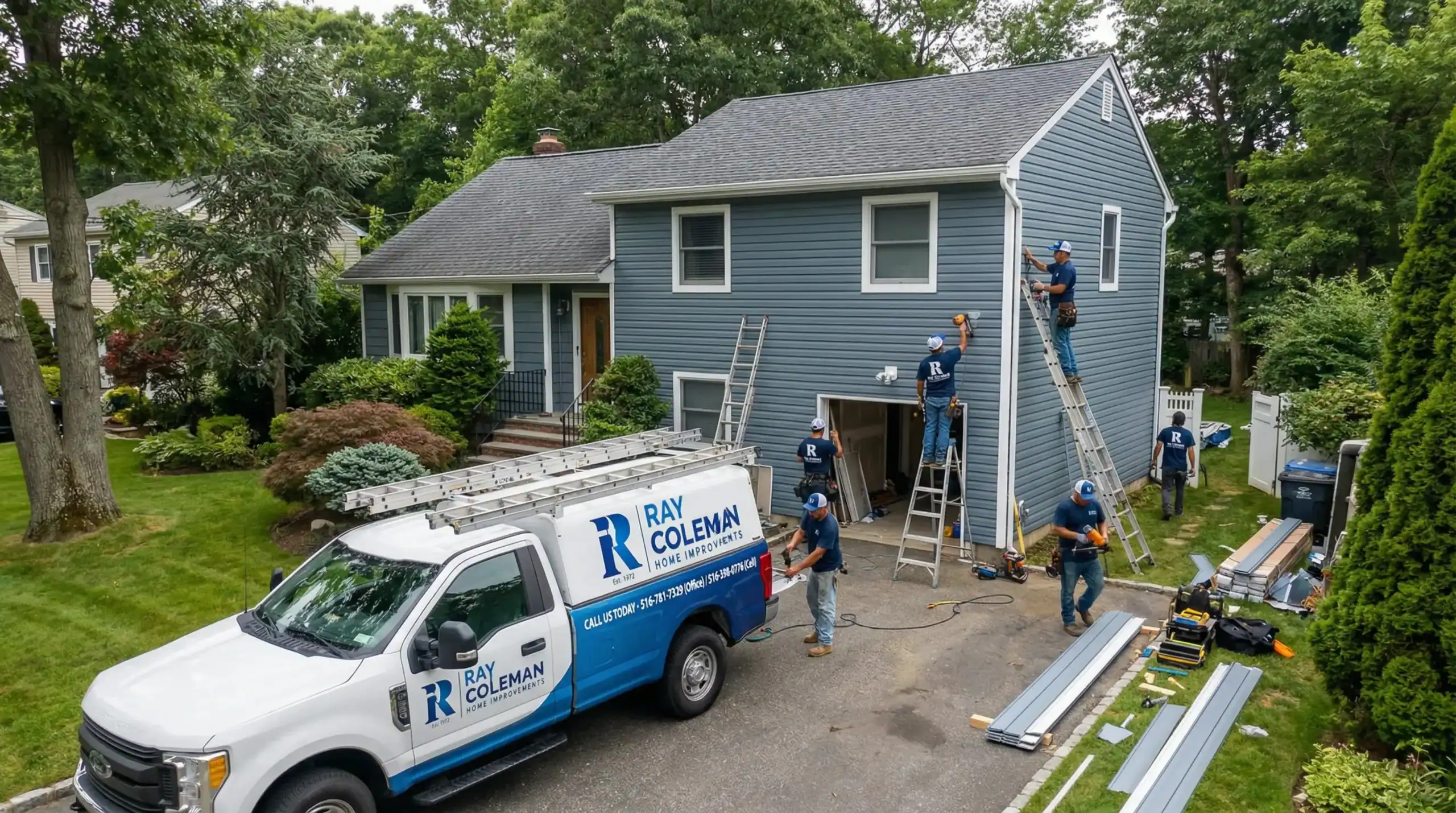
We clean up the job site every evening before the crew leaves. That’s not standard practice across the industry, which is exactly why it stands out when it happens. You’re still living in your home during this project. A crew that respects that shows it through how they treat your space.
We’re reachable. Not just during the sales phase, but throughout the entire project. If you call with a question on a Thursday evening, you get a response. If something urgent comes up — a frozen pipe during a Nassau County winter, a question about a design decision that needs an answer before the crew arrives in the morning — you’re not left waiting.
We’re transparent about money. The budget you agree to before work begins should be the budget the project is completed within. Change orders happen when the scope genuinely changes — not as a mechanism to inflate the final number after demo reveals what’s behind the walls. Everything gets documented in writing, not handled with a verbal “we’ll figure it out.”
And we have a track record you can actually verify. Not just reviews on a website we control, but a referral rate that reflects real client satisfaction. When more than half of our new work comes from people who’ve worked with us before or who were recommended by someone who has, that’s not marketing — that’s evidence.
The Long Island market is competitive, and there’s no shortage of contractors willing to take your call. The question is who you’ll be able to reach once the project starts, who will be accountable when something needs to be addressed, and who has been doing this work in Nassau County long enough to know what they’re walking into when they open your walls.
A first floor renovation is one of the most meaningful changes you can make to your home. It affects how you cook, how you gather, how you work, and how the house feels every single day. When it’s done right, it’s the kind of project that makes you wonder why you waited.
Getting there means starting with the right contractor — someone licensed in Nassau County, transparent about cost and timeline, present on the job site, and reachable when you have questions. Those things aren’t a high bar. They’re the minimum. But they’re also rarer than they should be.
If you’re thinking about a first floor renovation and want to talk through what it would actually involve for your home, Ray Coleman Home Improvement has been doing this work in Nassau County since 1972. Give us a call — we answer.
Summary:
Share: