National cost guides will tell you one number. Nassau County contractors will quote you another. Here's what's actually driving that gap — and what to expect.

You’ve been staring at the same search results for a while now. One site says $15,000. Another says $80,000. A neighbor paid $60,000. And you’re still not sure what your house, your neighborhood, and your specific project would actually cost.
That confusion is normal — and it’s not your fault. Most cost guides are written for a national audience, which means they’re not written for Nassau County, NY. The permit rules here are different. The housing stock is different. The labor market is different. And the math changes pretty significantly once you factor all of that in.
Here’s what you actually need to know before making any decisions.
The national average for a dormer addition sits around $15,000. That number reflects smaller, sometimes decorative dormers in lower-cost markets — not full structural additions in Nassau County, NY. When you’re talking about a turnkey dormer here on Long Island, the real range is considerably higher, and knowing that upfront is the difference between a realistic budget and a frustrating surprise.
What you pay depends on the type of dormer, the size of the project, the condition of your existing framing, and how much interior finishing is included. A basic structural addition with windows, roofing, and insulation is one thing. A fully finished bedroom or bathroom with drywall, flooring, and electrical is another. Both are “a dormer” — but they’re not the same project.
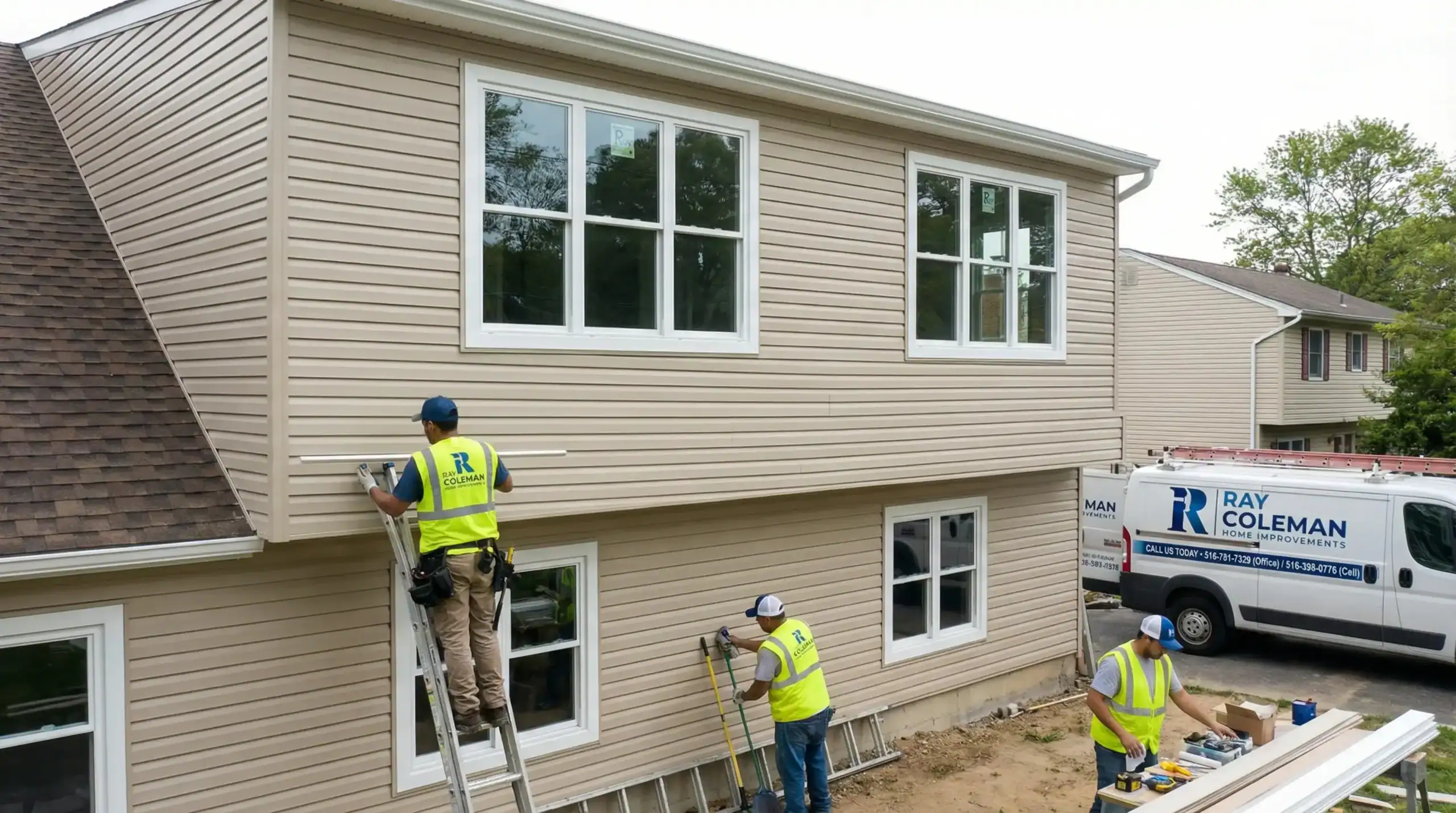
The type of dormer you add is the single biggest driver of cost. Shed dormers — the flat-roofed, full-width style that runs across the back of the house — are the most common choice on Long Island, accounting for roughly 70% of projects. They add the most usable square footage and tend to be the most efficient to build because the framing is straightforward. In Nassau County, NY, a full turnkey shed dormer typically runs between $40,000 and $75,000 depending on size and finish level.
Gable dormers are the smaller, triangular-roofed style you often see on the front of older Cape Cods. They’re more architectural than functional — great for adding light and curb appeal, but they don’t deliver the same square footage as a shed dormer. Expect turnkey costs in the range of $35,000 to $65,000 for a gable dormer in Nassau County, NY.
Hip dormers sit somewhere between the two in both cost and complexity, typically running $50,000 to $90,000 on Long Island. And if you’re looking at a full Cape Cod conversion — where the entire roofline is restructured to create a proper second floor — you’re looking at $80,000 to $150,000 for a complete turnkey project.
These numbers assume everything is included: structural framing, roofing matched to your existing shingles, energy-efficient windows, insulation, interior finishing, flashing, waterproofing, permits, and inspections. If a quote you receive is significantly lower than these ranges, it’s worth asking exactly what’s not included — because something usually is.
If your home is in Garden City or a similar village with an Architectural Review Board, expect to add 10 to 20% to your overall budget. The ARB approval process adds time and requires additional documentation that not all contractors are experienced with.
A lot of homeowners get their first real quote and immediately wonder if they’re being overcharged. It’s a fair reaction — especially if you’ve been seeing national figures that are a fraction of what you just heard. But the gap between a $15,000 national average and a $40,000-plus Long Island quote isn’t a markup. It reflects real differences in what the project requires here.
First, there’s the permit cost. Every structural dormer in Nassau County, NY requires a building permit, and that permit requires architectural plans and structural engineering drawings stamped by a licensed professional engineer. That’s not optional, and it’s not cheap. Permit fees in Nassau County typically run between $1,200 and $4,000 depending on the assessed value of the improvement. Add the cost of the engineering drawings and architectural plans, and your pre-construction costs alone can reach several thousand dollars before a single nail is driven.
Then there’s the labor market. Nassau County, NY is one of the most expensive labor markets in New York State. Skilled framing crews, roofers, and finish carpenters here are paid accordingly — and that cost is reflected in every legitimate quote you receive.
There’s also the structural reality of Nassau County’s housing stock. Most of the Cape Cods in Levittown, Wantagh, Merrick, Baldwin, Massapequa, and Oceanside were built between the late 1940s and early 1960s. They were designed with the expectation that the half-story would eventually be expanded — which is genuinely good news, because it means most of them are solid candidates for a dormer addition. But every project still starts with a structural assessment to check rafter condition, attic headroom, and existing framing before a scope of work can be finalized. That assessment is part of doing the job right.
Finally, there’s the permit complexity specific to Nassau County, NY. The county has more than 95 incorporated villages, each with its own building department and its own process. A contractor who’s been working in Nassau County for decades has navigated those systems many times over. One who hasn’t can run into delays that cost you time and money.
Want live answers?
Connect with a Ray Coleman expert for fast, friendly support.
Cost is important. But the contractor you hire matters just as much as the number they quote you — maybe more. A dormer addition involves opening up the roof of your home. The structural work, the waterproofing, the permit compliance, the roofing integration — all of it has to be done correctly, or you’re dealing with leaks, code violations, and complications when you go to sell.
The lowest quote is rarely the best deal. What you want is a contractor who gives you a real number upfront, explains exactly what’s included, handles the permit process without you having to manage it, and is reachable throughout the project.

Before you commit to any contractor, there are a few things worth getting clear answers on. First: does the quote include permits and engineering? Some contractors quote the construction cost only and treat permits and engineering as a separate line item that shows up later. A turnkey quote should include everything — plans, engineering, permit fees, construction, and interior finish to the agreed scope.
Second: who pulls the permit, and how familiar are they with your specific town or village? Nassau County’s permit process varies depending on where you live. A contractor working in Merrick under the Town of Hempstead is navigating a different process than one working in a village with its own building department. Experience with your specific jurisdiction matters.
Third: who is actually going to be on your job site? This is worth asking directly. Some contractors win the job and then hand it off entirely to a crew you’ve never met. Others have the owner or a senior member of the team present on-site consistently throughout the project. When something unexpected comes up — and on a project this size, something usually does — you want someone accountable and experienced making the call on-site, not someone checking in remotely.
Fourth: what does the contract say about change orders? Ask specifically. A contractor who builds a realistic scope upfront and sticks to it is worth more than one who quotes low and adjusts the price as the project moves forward. Get the scope in writing and understand what would trigger an additional charge before you sign.
Finally, check their permit history. BuildZoom is a free tool that shows completed permitted projects for licensed contractors in New York. It’s one of the most honest ways to see whether a contractor has actually done the kind of work they’re telling you about — and how recently.
There’s a version of this conversation that ends with someone telling you to skip the permit and save the money. Don’t. Unpermitted dormer work in Nassau County, NY creates real problems — not theoretical ones. Title companies flag it. Buyers’ inspectors find it. And when it surfaces during a sale, you’re either pulling the permit retroactively (which is expensive and complicated) or negotiating a price reduction.
Every structural dormer in Nassau County requires a building permit. That permit requires full architectural plans, structural engineering drawings stamped by a licensed PE, and review by the relevant building department — whether that’s the Town of Hempstead, the Town of North Hempstead, the Town of Oyster Bay, or one of the county’s many incorporated village building departments. The review process takes time. Depending on the municipality and the complexity of the project, permit approval can take several weeks to a few months.
If you’re hoping to have a finished dormer before the school year starts, the permit process needs to begin well before construction does. The construction phase itself, once permits are in hand, typically runs four to twelve weeks depending on the size and scope of the project. A smaller shed dormer with a straightforward finish might come in at the lower end. A full Cape Cod conversion with a complete interior buildout will take longer.
A contractor who gives you a realistic timeline — and explains what affects it — is being straight with you. If your home is in a village with an Architectural Review Board, like Garden City, you’ll need ARB approval before the building permit is issued. That’s an additional step with its own timeline and documentation requirements.
For most Nassau County homeowners, the answer is yes — and the math is pretty clear. When a larger home in the same neighborhood costs $700,000 to $1.3 million or more, and moving means transaction costs, a new mortgage, and leaving behind schools and community you’ve built your life around, a $50,000 to $75,000 dormer looks very different. You’re adding 100 to 250 square feet of real, livable space to a home you already own, in a neighborhood you already know.
The key is going in with accurate expectations — about cost, about timeline, and about who you hire. National averages don’t apply here. Nassau County, NY has its own permit requirements, its own labor market, and its own housing stock, and the contractor you choose needs to understand all of it.
We’ve been doing this work in Nassau County since 1972. If you’re ready to get a real number for your specific home and project, call or text — you’ll hear back the same day.
Summary:
Share: