Not every contractor who says they do dormers actually specializes in them. Here's how to tell the difference before you sign anything.
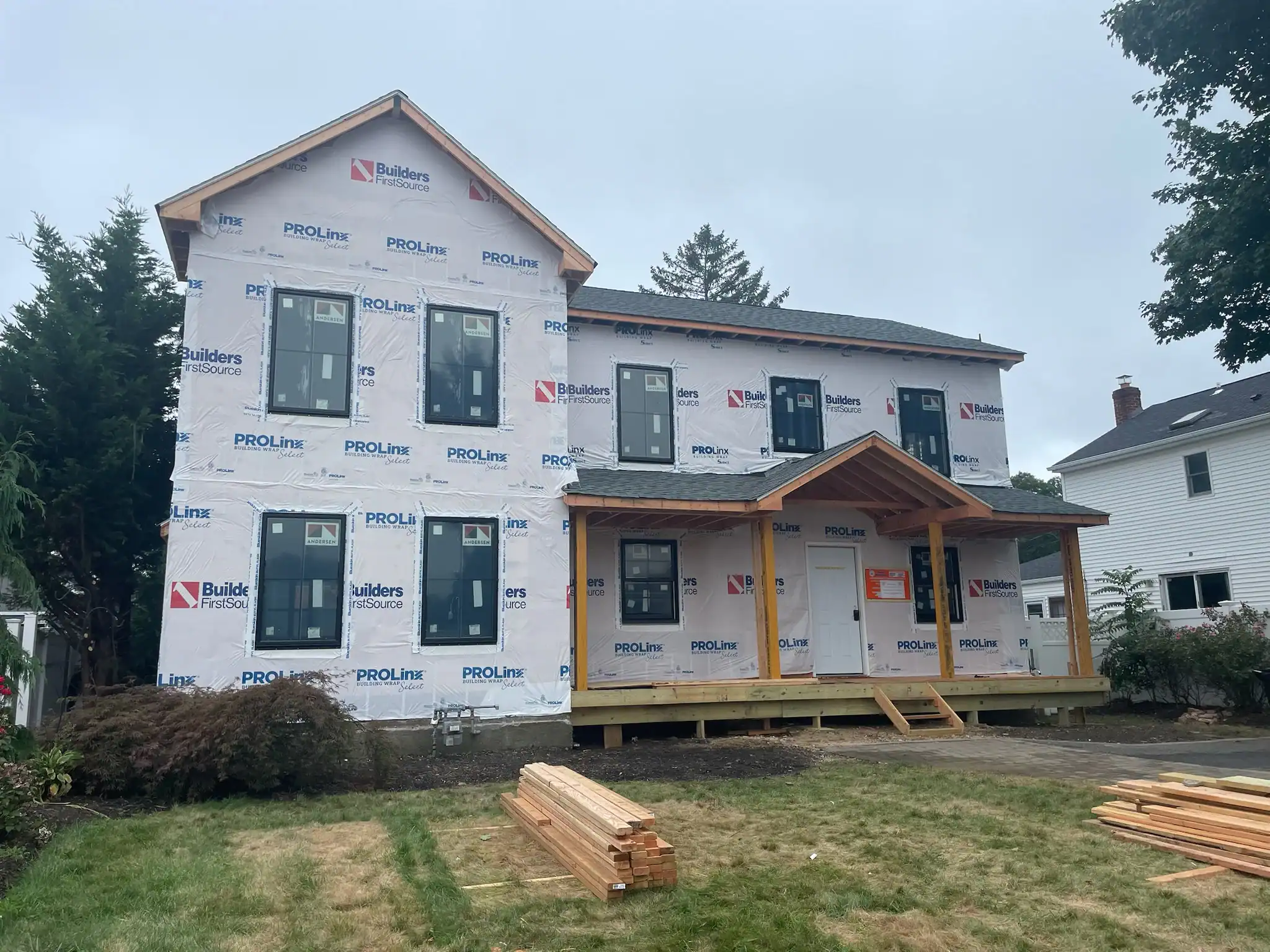
Most Nassau County, NY homeowners searching for dormer contractors already know what they want — more space, more light, a proper second floor instead of a cramped attic. What they don’t always know is how to evaluate the contractors showing up in their search results. The price differences can be staggering. The promises all sound the same. And once you’ve signed a contract and handed over a deposit, your options narrow considerably.
These five questions won’t guarantee a perfect project, but they’ll help you filter out the contractors who shouldn’t be anywhere near a structural roofline — and identify the ones who actually know what they’re doing.
There’s a real difference between a contractor who builds dormers and one who has done a few. A dormer isn’t a cosmetic update — it involves modifying your roofline, redistributing structural loads, coordinating framing, roofing, insulation, windows, and interior finishing, and doing all of it in the right sequence. If any one of those pieces is handed off to someone who isn’t communicating with the rest of the crew, you feel it in the timeline, the budget, and sometimes the finished product.
We manage all of that as a single coordinated scope. We don’t finish the framing and then disappear while you find a roofer. We’re running the whole job from start to finish, and we’ve done it enough times to know where things go wrong before they do.
The honest answer is: you ask them to show you. Not a stock photo gallery on their website — actual completed projects in Nassau County, NY neighborhoods, on homes that look like yours. The Cape Cods in Levittown, the colonials in Merrick, the split-levels scattered across Hicksville and Wantagh — these homes each have their own structural quirks, and a contractor who has worked on dozens of them in Nassau County is not the same as one who did two jobs in Suffolk and is now expanding their territory.
Ask for specific addresses or communities where they’ve completed full dormer additions. Ask whether they managed the entire scope — structural, roofing, and interior — or whether portions were handed off. Ask how many dormers they’ve completed in the last three years. A contractor with genuine depth in this work will answer those questions without hesitation. One who’s been saying yes to jobs outside their wheelhouse will get vague.
It’s also worth understanding what kind of dormer you’re dealing with. A shed dormer — the kind that runs the full width of the rear roofline and dramatically expands usable floor space — is a very different project from a smaller gable dormer over a single window. Both require permits, structural engineering documentation, and coordination across multiple trades. But the scope, cost, and complexity differ significantly. A contractor who can’t walk you through those differences clearly probably hasn’t done enough of them to know.
One more thing worth checking: the Nassau County, NY Home Improvement Contractor license. All home improvement contractors working in Nassau County must be registered with the county’s Office of Consumer Affairs. This is a county-specific requirement — not a generic New York State credential — and it requires documented supervisory construction experience, proof of liability insurance, and bonding. Ask for the license number and verify it. It takes two minutes and it tells you immediately whether you’re dealing with a legitimate operation.
This question doesn’t get asked nearly enough, and the answer matters more than most homeowners realize. There’s a version of contracting where the person who gives you the estimate and the person who shows up on day one are the only familiar faces you’ll see. After that, it’s a rotating cast of subcontractors — different people each week, none of whom have context on what was decided before they arrived, and none of whom are accountable to you directly.
That model isn’t inherently wrong for every type of project. But for a dormer addition — where structural decisions made on day three affect what’s possible on day fifteen — continuity matters. You want a crew that knows your job, knows your home, and is coordinated by someone who’s actually on-site rather than managing from a distance.
Ask specifically: who will be on-site daily? Is it the owner, a dedicated project manager, or whoever is available that week? Will the same subcontractors be used throughout, and how long have they worked with your contractor? These aren’t trick questions — a contractor running a tight, professional operation will have clear answers. One who’s patching together crews job by job will either get defensive or give you a non-answer.
In Nassau County, NY, where the contractor market is genuinely competitive and homeowners have plenty of options, the ones who earn the most referrals tend to be the ones who treat your home like it matters every single day — not just when you’re watching. That means the site is left clean at the end of each day. It means someone is reachable when a question comes up. It means the person who made you a promise is the same person making sure it’s kept.
Want live answers?
Connect with a Ray Coleman expert for fast, friendly support.
Price and timeline get most of the attention during the estimate process. Those matter — but they’re also the easiest things for a contractor to say the right things about. The questions that actually reveal how a contractor operates tend to be the ones that feel almost too simple to ask.
Ask how we handle communication during a project. Ask what happens if something unexpected comes up mid-job. Ask who pulls the permits and who manages the inspection process. The answers will tell you more about what working with us actually feels like than any number on an estimate sheet.
This is the question no one thinks to ask — and the one that matters most once the job is underway. The Nassau County, NY contractor market has a well-earned reputation for responsiveness problems. Contractors who are attentive during the estimate phase sometimes become surprisingly hard to reach after the deposit clears. Calls go to voicemail. Texts get answered two days later. Questions that need an answer on Tuesday don’t get one until Friday.
For a dormer project, that communication gap has real consequences. If a structural decision needs to be made, if weather is threatening an open roofline, if a delivery is delayed and the crew needs to pivot — those situations require a contractor who picks up the phone. Not one who gets back to you when it’s convenient.
Before you hire anyone, find out exactly how they communicate during a live project. Do they answer calls directly? Do they respond to texts the same day? Is there a project manager you can reach, or does everything go through a general office line? Ask what happens if you call at an unusual hour because something urgent has come up. A contractor who’s genuinely committed to their clients will have a real answer — not a policy statement.
Long Island winters add another layer to this. Nassau County homeowners know what a cold snap can do to a home that’s mid-renovation. Frozen pipes, unexpected weather delays, a roofline that’s temporarily exposed — these aren’t hypothetical scenarios. They happen. And when they do, you need a contractor who’s reachable, not one you’re chasing down.
Any structural change to a roofline in Nassau County requires a building permit. That means zoning approval, architectural plans, structural engineering documentation, and multiple inspections before the project is signed off. It’s not optional, and it’s not something you want to navigate on your own while also managing a major renovation.
We handle this completely. We pull the permits, coordinate with the engineers, schedule the inspections, and keep the project moving within the approved scope. Some contractors hand the homeowner a list of things to figure out and show up ready to build once the paperwork is done. That distinction is worth knowing upfront.
Unpermitted work creates real problems — not just during the project, but years later when you go to sell. Title searches surface permit records. Buyers’ attorneys ask questions. Insurance adjusters ask questions. A dormer that was built without proper permits can complicate a sale, affect your coverage, and in some cases require remediation at your expense. It’s not a risk worth taking on a project of this scale.
The cost reality in Nassau County, NY is also worth understanding before you start making calls. Local dormer projects run significantly higher than the national averages you’ll find on home improvement websites. A half dormer here can run $120,000 to $150,000 or more; a full dormer often falls in the $200,000 to $300,000 range. That’s not a contractor padding their margins — it reflects Long Island labor costs, the structural complexity of working on homes built in the 1940s and 1950s, and the full scope of what a legitimate dormer project actually involves. A contractor who quotes dramatically below that range is either missing something from the scope or planning to add it back in through change orders.
The five questions above aren’t complicated, but most homeowners never ask them. They compare prices, check a few reviews, and go with their gut. Sometimes that works out. More often, the problems that surface mid-project — communication breakdowns, rotating crews, permit surprises, budget creep — were visible in the estimate phase if you knew what to look for.
A contractor who answers these questions clearly, specifically, and without getting defensive is telling you something important about how they operate. One who gets vague or redirects to their portfolio photos is also telling you something.
If you’re planning a dormer addition in Nassau County, NY and want to talk through the scope with a contractor who’s been doing this work here for over 50 years, we’re worth a call. We answer the phone.
Summary:
Share: