Not sure whether to renovate your first floor or add on? Here's how Nassau County homeowners are thinking through the decision — and what it actually costs either way.
You know the feeling. The kitchen is cut off from everything. The formal dining room sits empty ten months out of the year. The first floor was designed for a different era, and it shows every time your family tries to actually use it together. So you start wondering — do we renovate what we have, or do we add on?
In Nassau County, where homes run $810,000 at the median and inventory barely clears three months, that question carries real financial weight. This piece lays out the honest comparison — what each approach costs, what each one solves, and how to decide which one fits your home.
A home addition means building new square footage — expanding the footprint of your house, adding a room, or bumping out a wall to create space that doesn’t currently exist. A first-floor renovation works with what you already have. You’re reconfiguring, opening up, updating, and modernizing the existing layout rather than adding to it.
Both can dramatically change how a home feels and functions. But they’re fundamentally different projects in terms of cost, timeline, permit requirements, and disruption. Understanding that difference is the starting point for making the right call.
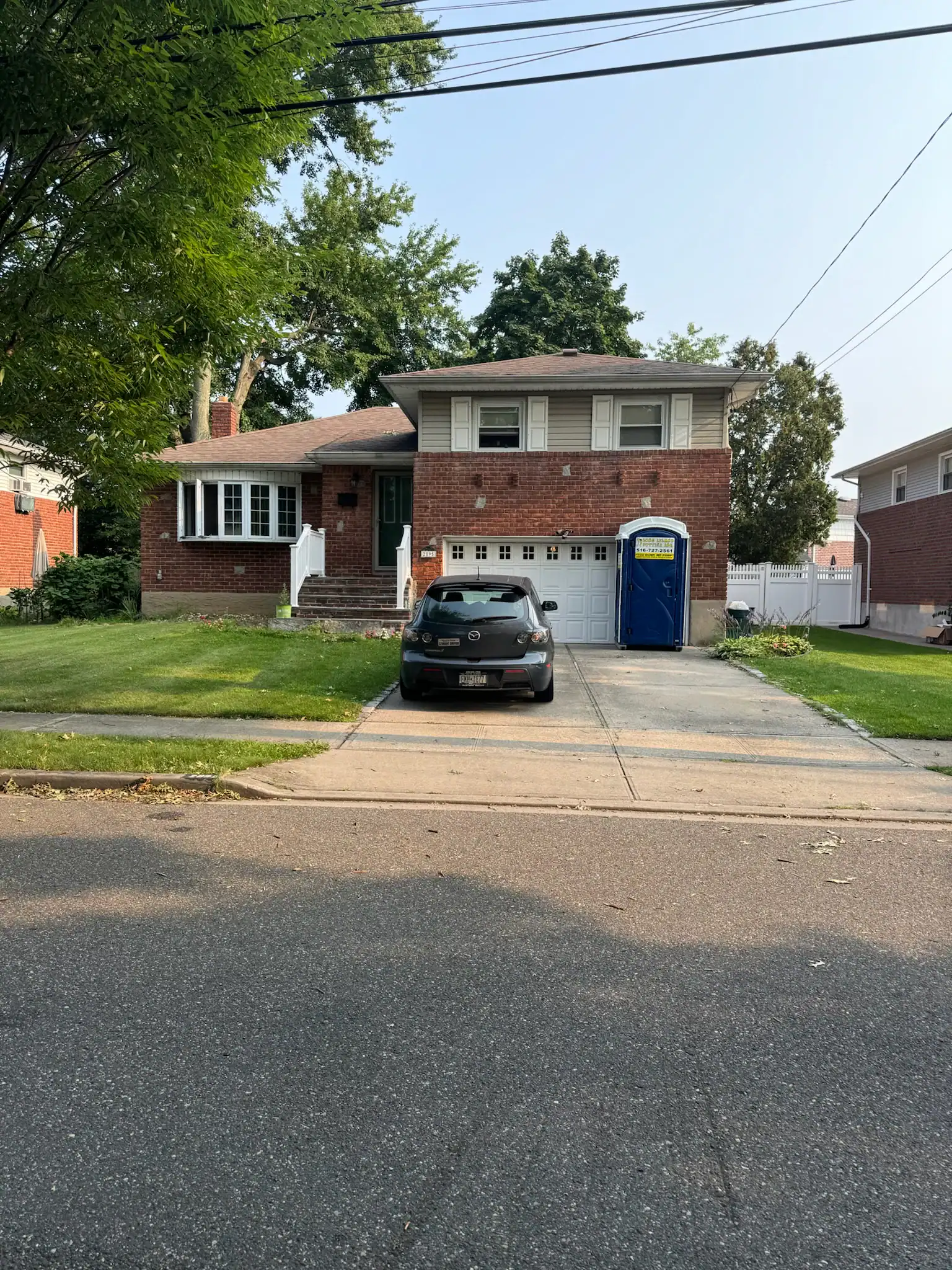
Most post-WWII homes on Long Island weren’t built for the way families live today. The Cape Cods in Wantagh, the split-levels in Syosset, the ranches throughout Merrick and Jericho — they were designed with formal dining rooms, closed-off kitchens, and segmented living spaces that made sense in the 1950s and 1960s. They don’t match how most families actually want to use their homes now.
What that means practically is that a lot of Nassau County homeowners who feel like they’re short on space are actually short on usable space. The square footage is there — it’s just in the wrong configuration. A formal dining room that seats twelve but gets used twice a year. A kitchen separated from the living room by a wall that makes the cook feel like they’re working in a separate apartment. A dark entry foyer that makes the whole first floor feel smaller than it is.
When the problem is layout rather than size, renovation is usually the smarter move — and often a significantly cheaper one. Reconfiguring a first floor by removing a non-structural wall, opening the kitchen to the living area, and absorbing that unused dining room into a larger, more functional great room can transform how a home lives without adding a single square foot.
On Long Island, that kind of open floor plan renovation typically runs $20,000 to $50,000 depending on whether structural changes are involved. A non-structural wall removal alone runs $5,000 to $10,000. Load-bearing wall removal — which requires a structural engineer and more involved framing work — pushes into the $20,000 to $30,000 range and up.
Compare that to a home addition, which starts at roughly $51,000 nationally and runs considerably higher on Long Island given regional labor costs and material prices. And that’s before you factor in permitting, which in Nassau County can add weeks or months to a project depending on which municipality you’re in — the county has dozens of incorporated villages and towns, each running its own building department. An interior-only first-floor renovation that doesn’t involve structural changes often sidesteps that process entirely, which means your family gets their home back faster.
None of this is to say additions are the wrong call — they’re the right call in specific situations. If your home genuinely doesn’t have enough square footage to reconfigure into what you need, if you’re adding a bedroom for a growing family, or if you need a primary suite that simply cannot be carved out of existing space, then an addition is the logical answer.
The financial picture is worth understanding clearly. Long Island renovation costs average around $237 per square foot — well above the national average of $75 to $185 per square foot. A full first-floor replacement renovation on a home with roughly 875 square feet of first-floor space runs $40,000 to $45,000. A gut renovation of the same space pushes past $70,000. These are real Nassau County numbers, not national averages that undercount what labor and materials actually cost here.
A home addition on Long Island runs higher still — and carries a different return on investment. The data on this is fairly consistent: minor kitchen remodels and renovation work that improves flow and function return 96% to 113% of their cost. Major home additions — primary suites, large room additions — return somewhere between 24% and 36%. In a market where your home is already worth $800,000 or more, the math tends to favor renovation for most situations.
That said, if you’ve genuinely exhausted the layout options and your family needs space that doesn’t exist, the addition conversation is the right one to have. We handle both — dormers, extensions, full home additions — so we’re not pushing you toward one answer. We’re pushing you toward the right one for your specific house.
Want live answers?
Connect with a Ray Coleman expert for fast, friendly support.
The most common first-floor renovation request we hear in Nassau County is some version of: “I want to open this up.” Open the kitchen to the living room. Knock out the wall between the dining room and the family room. Create a flow where there isn’t one now. It’s the single most impactful change you can make to how a Long Island home feels — and it’s what most families mean when they say the first floor isn’t working.
The cost depends heavily on one factor: whether the wall you want to remove is load-bearing or not. That single variable can move the price significantly.
A non-structural wall removal — one that isn’t carrying any load from above — is relatively straightforward. The wall comes down, the floor gets patched, electrical gets rerouted if needed, and the ceiling is repaired and finished. On Long Island, that work typically runs $5,000 to $10,000 depending on what’s inside the wall and how much finish work is involved.
A load-bearing wall is a different project. Before anything comes down, a structural engineer needs to assess the situation and specify how the load will be transferred — usually through a beam and new posts or columns. That engineering work costs roughly $350 to $900 on its own. The construction work — removing the wall, installing the beam, transferring the load properly, patching everything back — pushes the total into the $20,000 to $30,000 range and sometimes beyond, depending on the span and the complexity of what’s above.
Most Nassau County homes have at least one load-bearing wall running through the first floor, often separating the kitchen from the living area. It’s the wall that’s been making the house feel closed off for decades. Removing it is absolutely doable — we’ve done it in Cape Cods in Wantagh, ranches in Merrick, split-levels throughout the county — but it needs to be done right. The structural piece isn’t something to cut corners on.
Beyond wall removal, a full open floor plan renovation typically includes floor work to unify what were previously separate rooms (since flooring materials and heights often differ), updated lighting to account for the new layout, and often a kitchen update that takes advantage of the newly opened space. When you add those elements together, a complete first-floor renovation in Nassau County that opens the layout, updates the kitchen, and modernizes the finishes runs $40,000 to $80,000 depending on scope and material choices.
In most markets, this question has a nuanced answer. In Nassau County, it’s fairly straightforward. When the median sale price is $810,000 and homes are selling in around 31 to 36 days in a market with less than three months of inventory, a renovated home stands out. Buyers in this market are paying a significant premium — $499 per square foot at the median — and they’re paying more for homes that are updated, open, and move-in ready.
A first-floor renovation that opens the layout, modernizes the kitchen, and brings the finishes into the current decade does two things simultaneously: it improves your daily quality of life starting the day the crew leaves, and it positions your home better in a market where buyers have limited options and strong preferences.
The return on investment data backs this up. Minor kitchen remodels — the kind that refresh rather than gut — return 96% to 113% of their cost according to recent Cost vs. Value reporting. A full kitchen renovation as part of a broader first-floor project returns less on paper but contributes to faster sales and higher buyer interest in a competitive market. Compare that to major home additions, which return 24% to 36% of their cost — a significantly lower figure that reflects both the high construction cost and the fact that buyers don’t always value square footage additions as highly as sellers expect.
Most of the Nassau County homeowners we talk to aren’t planning to sell anytime soon — they’re planning to stay and want to actually enjoy the house they’re in. The return on investment in that case is measured in daily quality of life: a kitchen that feels connected to the rest of the house, a first floor that works for how your family actually lives, a home that doesn’t make you feel like you need to move when what you really need is a better layout.
The honest answer is that most Nassau County homeowners benefit from renovation before they consider addition. The housing stock here — predominantly post-WWII homes with layouts that don’t match modern life — is full of underutilized square footage waiting to be reconfigured. Before you commit to the cost, the permits, and the timeline of building more, it’s worth finding out whether what you already have can be made to work.
Every house is different. A ranch in Merrick with a wide-open footprint solves differently than a Cape Cod in Wantagh where the first floor is genuinely cramped. The right answer depends on your specific home, your family’s needs, and what the space is actually capable of becoming.
If you’re working through this decision and want a straight answer from someone who has been doing this in Nassau County since 1972, we’re a call or text away. We handle first-floor renovations and home additions — and we’ll tell you honestly which one fits your situation.
Summary:
Share: