Nassau County homes have specific renovation needs most contractors gloss over. Here's what kitchens and bathrooms in older Long Island homes actually require.

If you’ve spent any time researching kitchen and bathroom renovations on Long Island, you’ve probably noticed that most of the information out there doesn’t quite match what you’re dealing with. Generic cost guides, national averages, before-and-after photos from newer homes in other states — none of it accounts for the fact that most Nassau County homes were built decades ago and carry all the surprises that come with that age.
This isn’t a sales pitch. It’s a practical look at what kitchen and bathroom renovations actually involve in this market, what questions you should be asking, and what to watch out for before you commit to anything.
The phrase “kitchen and bathroom renovations” covers a lot of ground. For some homeowners, it means new countertops and cabinet faces. For others, it means gutting the room entirely and starting fresh. The scope depends on your goals, your budget, and — more than most people expect — what your home reveals once the demo begins.
Nassau County’s housing stock is predominantly post-World War II construction. Cape Cods, split-levels, and colonials built between the 1940s and 1970s are the norm, not the exception. These homes have character, good bones, and decades of accumulated wear on their plumbing, electrical systems, and structural elements. A renovation in one of these homes almost always involves more than the surface.

This is the part contractors don’t always lead with, but it’s the part that matters most for your budget and timeline. When you open up a kitchen or bathroom in a home that’s 50 to 80 years old, you’re likely to find plumbing that was never designed for modern fixtures, electrical panels that predate today’s load requirements, and insulation — if there’s any — that’s done its job for a long time and is ready to be replaced.
Galvanized steel pipes were standard in Nassau County homes built through the mid-1960s. They corrode from the inside out over decades, which means they can look fine on the outside while restricting water flow and quietly rusting through. A bathroom renovation that includes a new shower system or a kitchen remodel with an upgraded sink and dishwasher setup will often expose this. The right contractor doesn’t treat it as a problem — we treat it as an opportunity to fix something that needed fixing anyway.
The electrical side is similar. Older homes were wired for a fraction of the load that a modern kitchen demands. Refrigerators, dishwashers, microwaves, under-cabinet lighting, and outlets on every counter — that’s a different world from what a 1955 Cape Cod was designed to handle. If your kitchen renovation includes new appliances, expect an electrical conversation.
None of this is meant to scare you off. It’s meant to help you plan honestly. The homeowners who run into trouble are usually the ones who received a quote that didn’t account for any of this — and then got hit with change orders once the walls came down. A realistic scope discussion upfront, including a contingency buffer for what might be found, is worth more than a low number that falls apart two weeks into the job.
Timeline is one of the most common questions homeowners ask, and one of the most commonly misrepresented answers they get. The honest answer is: it depends, and any contractor who gives you a firm date without understanding your specific home and scope is guessing.
A bathroom renovation — gut and rebuild, new tile, new fixtures, plumbing and electrical addressed — typically runs several weeks for a single bathroom. A full kitchen remodel with layout changes, new cabinetry, countertops, and appliance integration takes longer, often running into two months or more depending on material lead times and the complexity of the work. If your Nassau County home is revealing surprises — and in this market, it often does — add time accordingly.
What affects the timeline more than anything else is the contractor’s availability and organization. A crew that shows up every day, keeps the job moving, and communicates clearly about what’s happening and what’s next will finish faster than one that disappears between visits. This is the single most common complaint homeowners on Long Island have about renovation experiences: not the quality of the work, but the pace and the silence.
Living through a renovation is genuinely disruptive. A functional kitchen or bathroom gets taken offline, dust travels further than you expect, and the daily rhythm of your home changes. We manage this by cleaning up before we leave each evening, keeping work areas contained, and giving you a clear picture of what tomorrow looks like. It makes a real difference.
Want live answers?
Connect with a Ray Coleman expert for fast, friendly support.
Nassau County is one of the most competitive home improvement markets in New York. There’s no shortage of contractors, which makes the selection process harder, not easier. The challenge isn’t finding someone — it’s finding someone who will actually show up, do the work they promised, and not disappear when things get complicated.
The first thing worth verifying is licensing. Nassau County requires home improvement contractors to hold a current license through the Nassau County Department of Consumer Affairs. This isn’t a formality — it’s a public record you can check. A licensed contractor has met baseline requirements and can be held accountable through the county if something goes wrong.

Beyond licensing, the questions that reveal the most about a contractor are the ones about how we operate day to day. Ask who will be on your job site each day. Ask how we handle unexpected discoveries — a rotten subfloor, outdated wiring, pipes that need to be rerouted. Ask what our change order process looks like, and whether scope changes get documented in writing before work proceeds. Ask how we communicate: phone, text, email, and how quickly you can expect a response.
These questions are more revealing than any portfolio photo. A contractor who answers them clearly and specifically — without getting defensive or vague — is one who has thought about how they run their business. One who stumbles or deflects is showing you something important before you’ve signed anything.
Our 60% referral rate isn’t something we advertise as a boast. It’s the most honest metric we have for whether the work holds up and whether clients would send a neighbor our way. When the majority of new jobs come from someone who already hired us, the feedback loop is direct. Ask any contractor you’re considering: what percentage of your work comes from referrals? The answer tells you a lot.
Kitchen and bathroom renovations rarely happen in a vacuum. Once you’re in a project mindset — and once a general contractor is already on your property — it’s worth thinking about what else might benefit from attention. This is especially true for Nassau County homeowners whose homes are carrying decades of deferred maintenance across multiple systems.
Siding is a good example. Long Island’s winters are hard on exterior materials, and the salt air that reaches South Shore and North Shore communities accelerates wear further. If you’re already coordinating a major interior renovation, working with a contractor who also handles siding means one point of contact, one schedule, and a crew that already knows your home. The same logic applies to roofing, windows, and decking.
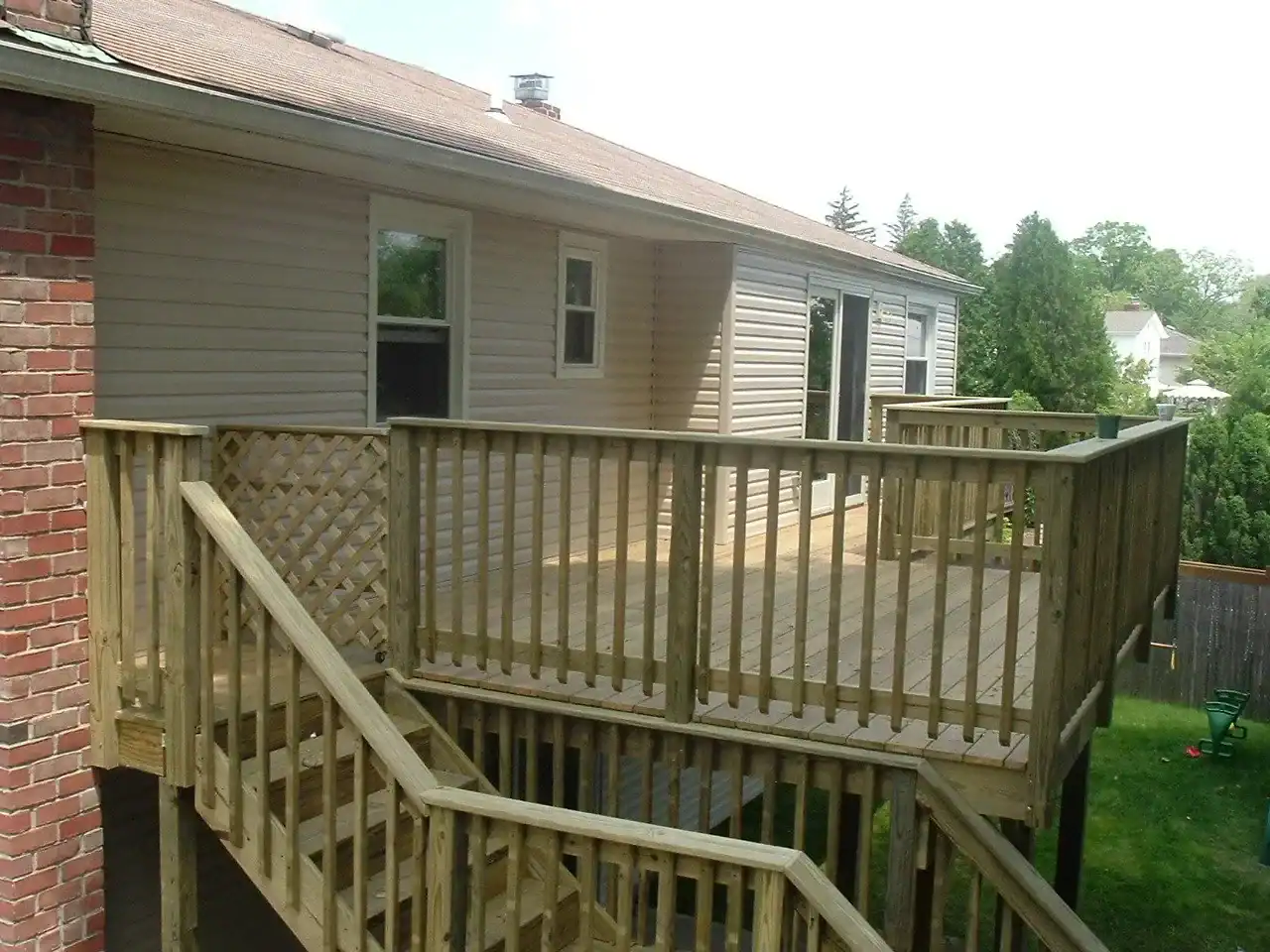
The outdoor living side of things is worth mentioning too. Homeowners who invest in a kitchen renovation often start thinking about how that space connects to the rest of the house — including the backyard. Outdoor entertaining areas, decks, and even outdoor grill installations have become a natural extension of what a kitchen renovation sets in motion. If you’re already thinking about how your family uses the space, it makes sense to consider how the interior and exterior work together.
We handle all of this as part of larger general contracting projects. It’s not that we push clients toward more scope — it’s that we’re equipped to manage it when it makes sense, so you’re not coordinating between three different contractors for work that could move together.
Emergency response is also worth knowing about before you need it. Long Island winters bring frozen pipes, and they don’t wait for business hours. We’ve taken calls at 3 AM from Nassau County homeowners dealing with exactly that situation. Being available when something goes wrong — and being the contractor who already knows your home — is a different kind of value than any finish or fixture.
The most important thing you can do before starting a kitchen or bathroom renovation in Nassau County is go in with clear eyes. Understand that older homes carry surprises. Budget with a realistic contingency. Verify licensing before you commit to anyone. And pay attention to how a contractor communicates in the early conversations — because that’s exactly how they’ll communicate once your job is underway.
A renovation done right is one of the best investments you can make in a Nassau County home, both for how you live in it and what it’s worth when you eventually sell. The homes in this county hold their value, and updated kitchens and bathrooms are a significant part of why.
Ray Coleman Home Improvement has been doing this work in Nassau County since 1972. We answer when you call — give us a shot.
Summary:
Share: