Fall is the best time for interior renovations on Long Island — if you plan ahead. Here's what Nassau County homeowners should know before they start.
August feels early to think about fall renovations. But if you want a kitchen or bathroom remodel done before Thanksgiving — or even before the first hard frost — August is exactly when you need to start. Quality contractors in Nassau County book up fast once September hits. By October, the earliest available slot at a reputable company is often January or February.
This checklist is built for homeowners who want to get ahead of that curve: what to assess, what to prioritize, and what to demand from whoever you hire.
Most of the homes in Nassau County were built in the decades following World War II. The average single-family home here is approximately 73 years old — and that matters more than most homeowners realize when it comes to fall renovation planning.
These homes were built quickly and affordably for a different era. The plumbing wasn’t designed for today’s water pressure or usage patterns. The electrical panels were sized for a fraction of the appliances a modern household runs. And the insulation, if it’s original, is doing almost nothing.
Fall is when all of that becomes impossible to ignore. The heating season starts, and suddenly you can feel the drafts. The first cold snap arrives, and pipes that seemed fine all summer are now at risk. Planning a renovation in August gives you time to address these issues before they become emergencies — and before every contractor in Nassau County is already booked.
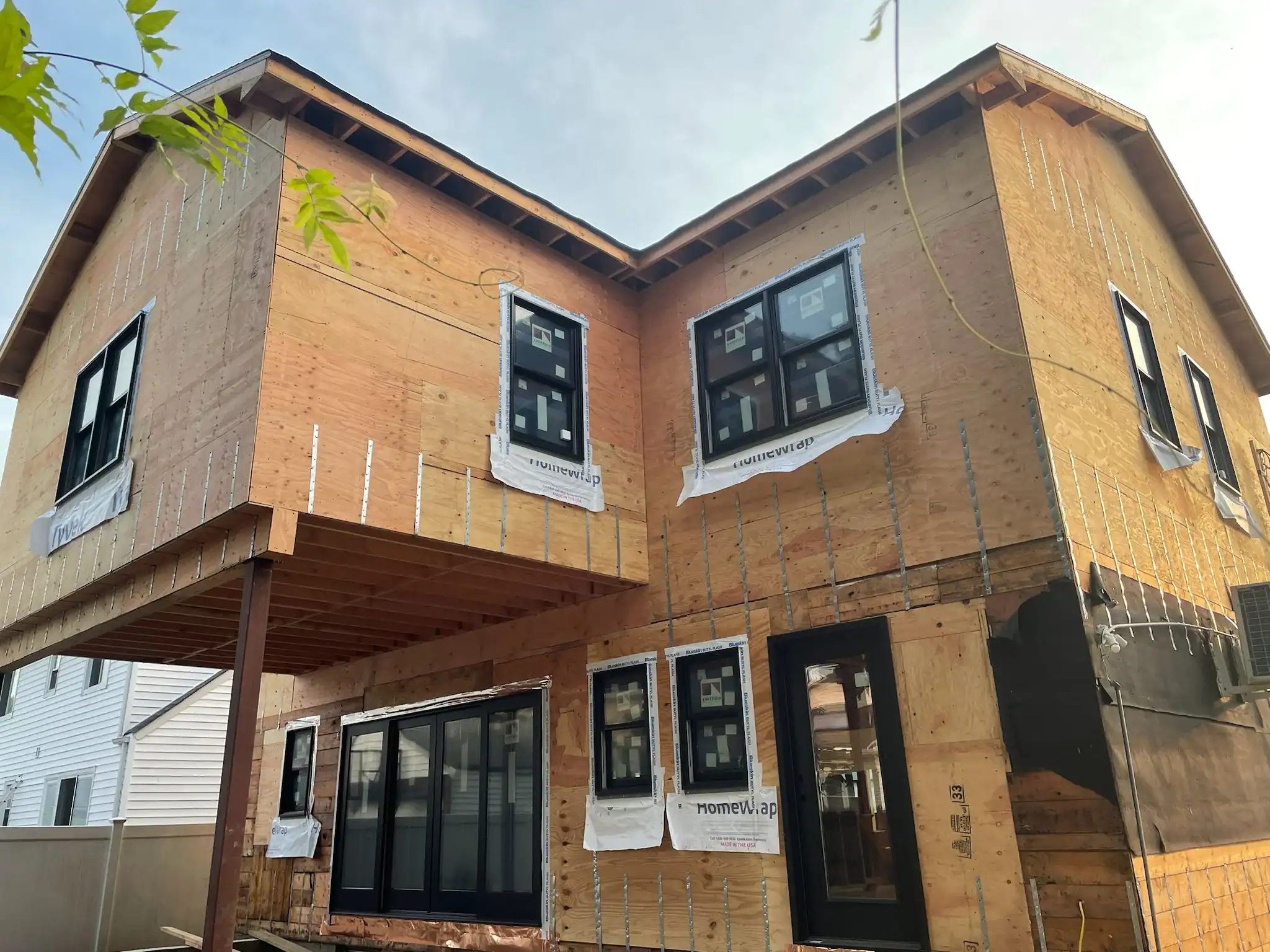
Good renovation planning starts with an honest look at what you’re working with. Before you call anyone or start pulling inspiration photos, walk through your home with fresh eyes and ask yourself what’s actually bothering you about the space — not just aesthetically, but functionally.
A kitchen that feels cramped might need a layout change, not just new cabinets. A bathroom that feels outdated might have a plumbing situation underneath that needs to be addressed first.
In Nassau County homes, there are a few specific things worth examining before fall sets in. Start with your pipes. Older homes — especially those within a few miles of the water — deal with salt air corrosion. The chloride particles that drift in from the Atlantic and Long Island Sound settle on exposed pipe joints and metal fittings year-round. By the time winter arrives, pipes that look fine from the outside may already be weakened.
A pipe that would survive a cold snap in central New York can burst in Nassau County under the same conditions, simply because it’s been compromised by months of salt exposure. If your home is older and you haven’t had the plumbing looked at recently, fall is the right time to do it — ideally as part of a broader renovation rather than after an emergency.
Next, think about your electrical system. Homes built in the 1950s and 1960s often have panels that were sized for a fraction of what a modern household demands. If you’re planning a kitchen remodel, and you haven’t upgraded your panel, that conversation needs to happen early. It affects the scope, the timeline, and in some cases the permit requirements.
Finally, think about layout. One of the most common things we hear from homeowners in Nassau County is that the house feels too small — but they don’t want to move. The median home value here is over $800,000, inventory is tight, and competing in this market as a buyer is genuinely painful. Staying put and investing in your current home is often the smarter financial move. Roughly 63% of homeowners say they’d rather renovate their existing home than move into one that’s already been updated. If that sounds like you, fall is a good time to start thinking seriously about what a first-floor reconfiguration, a dormer addition, or a full kitchen and bathroom renovation would actually look like.
Homeowners spend roughly twice as much time planning a renovation as they do actually building it. Kitchen renovations, on average, take about 9.6 months of planning and 5.1 months of construction. That’s not a reason to feel overwhelmed — it’s a reason to start earlier than you think you need to.
The timeline question matters especially in Nassau County because of how the fall season works for contractors. Interior renovations — kitchens, bathrooms, basements, first-floor reconfigurations — are in peak demand from September through November. Homeowners who want their projects done before the holidays are all calling the same contractors at the same time. If you’re reading this in August, you’re in the right window. If you wait until September to start making calls, you may find that the contractors you actually want aren’t available until after the new year.
There’s also the permit question. Nassau County’s permit environment is genuinely complex. The county has dozens of municipalities — the Town of Hempstead, Town of North Hempstead, Town of Oyster Bay, the City of Long Beach — each with its own building department and its own review process. Simple permits in the Town of Hempstead can take one to two weeks. More complex projects that require full plan review take significantly longer.
If your project needs a permit, that timeline has to be factored in before you schedule anything else. An experienced contractor who has been working in Nassau County for decades will know what triggers a permit requirement and what doesn’t — and that knowledge alone can save you weeks of delay.
When you’re setting your timeline, build in buffer. Not because something will necessarily go wrong, but because older homes have a way of revealing surprises once walls open up. A contractor who has worked on Long Island homes for 50 years has seen what’s behind the drywall in a post-war split level. That experience means fewer surprises — but it doesn’t mean zero surprises. A realistic timeline accounts for that.
Want live answers?
Connect with a Ray Coleman expert for fast, friendly support.
This is the part of any home renovation checklist that almost nobody talks about — and it’s the most important part. The checklist items don’t matter if you hire the wrong person to execute them.
In Nassau County, that risk is real. The FTC received over 83,000 reports of home repair and improvement scams in 2023 alone, and roughly 1 in 10 Americans has been victimized by a contractor at some point.
Nassau County requires home improvement contractors to be licensed through the Nassau County Department of Consumer Affairs. That’s a local requirement — not a state one — and it’s verifiable. Before you sign anything, ask for the contractor’s DCA license number and look it up. It takes five minutes and tells you whether you’re dealing with someone who has met the county’s legal requirements or someone who hasn’t.

The questions you ask before hiring a contractor will tell you more than any review site. Start with the basics: Are you licensed and insured in Nassau County? Can you provide that documentation before we sign anything? What does your timeline look like for a project starting in September or October?
Those three questions alone will filter out a significant number of contractors who aren’t worth your time.
From there, ask about communication. This sounds minor until you’re three weeks into a renovation and can’t get a callback. Ask specifically: How do you handle questions during the project? Do you respond to texts? Who is the point of contact if something comes up? A contractor who hedges on this — or who gives a vague answer about “the office” being in touch — is telling you something important about what the experience will actually be like.
Ask about job site cleanliness. If you’re living in the house during the renovation, this matters enormously. A good contractor cleans up before the crew leaves each evening. That means no piles of debris sitting in your kitchen overnight, no layers of dust settling on every surface in the house. Ask directly: what does end-of-day cleanup look like on your job sites? If the answer is anything other than a clear, specific commitment to daily cleanup, that’s a flag.
Ask about change orders. Nearly 40% of homeowners exceed their renovation budget, and the most common reason is unexpected change orders that weren’t discussed upfront. A contractor who commits to transparent, fixed pricing — where the budget discussed at the start is the budget the project is built within — is offering you something genuinely valuable in a market where that’s not the norm. Get it in writing.
Finally, ask how long they’ve been working in Nassau County specifically. Local experience matters here more than it does in most markets. Knowing what’s typically behind the walls of a 1950s Levittown-era home, understanding which municipalities have stricter permit review processes, knowing how the coastal climate affects materials and timelines — these are things you learn from decades of working in one place, not from a general contractor license.
There’s a quick test you can run before you ever meet a contractor in person: call them. Not to schedule an appointment — just to see what happens. Do they answer? Do they call back the same day? Do they respond to a text?
In Nassau County’s contractor market, this is genuinely telling. Homeowners here describe finding a responsive contractor as “winning the lottery.” That’s not an exaggeration — it’s a direct quote from people who have tried.
The reason responsiveness matters so much isn’t just convenience. It’s a preview of the entire experience. A contractor who doesn’t call back during the sales process is not going to suddenly become communicative once you’ve signed a contract and paid a deposit. The way a contractor handles communication before the project starts is the most reliable indicator of how they’ll handle it during.
We built our business around same-day response to calls and texts, seven days a week. We also offer emergency response around the clock — because Long Island winters mean frozen pipes happen, and they don’t wait for business hours. A 3 AM call about a burst pipe in a Wantagh home is something we’ve handled before, and it’s something we’re set up to handle again. That kind of availability isn’t common. It’s worth asking about specifically when you’re vetting contractors for fall work.
Beyond responsiveness, look at how long the company has been operating. A contractor who has been in business since 1972 — more than 50 years — has survived economic downturns, material shortages, shifting building codes, and the full range of what Nassau County’s housing stock can throw at you. That kind of longevity isn’t an accident. It reflects a level of consistency and quality that new operations simply can’t replicate. When more than 60% of your work comes from referrals — from homeowners who called back and sent their neighbors — that’s the strongest possible signal that the experience lives up to the promise.
The window for getting fall interior work scheduled in Nassau County is open right now — and it won’t stay open long. If you want a kitchen remodel, bathroom renovation, or larger project completed before winter sets in, the time to make calls and finalize plans is August, not September.
Use this checklist as a starting point: assess your home honestly, set a realistic timeline that accounts for Nassau County’s permit process, and vet your contractor before you sign anything. Ask about licensing, communication, job site cleanliness, and pricing transparency. Those questions will tell you more than any glossy website.
If you’re looking for a contractor who has been doing this work in Nassau County since 1972, answers the phone, and shows up on your job site every single day — Ray Coleman Home Improvement is worth a call.
Summary:
Share: