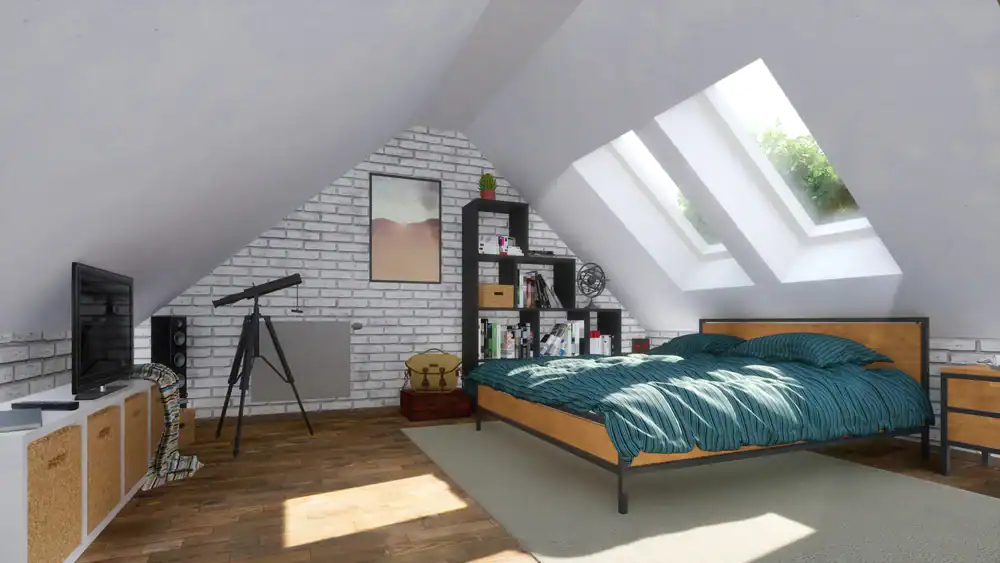
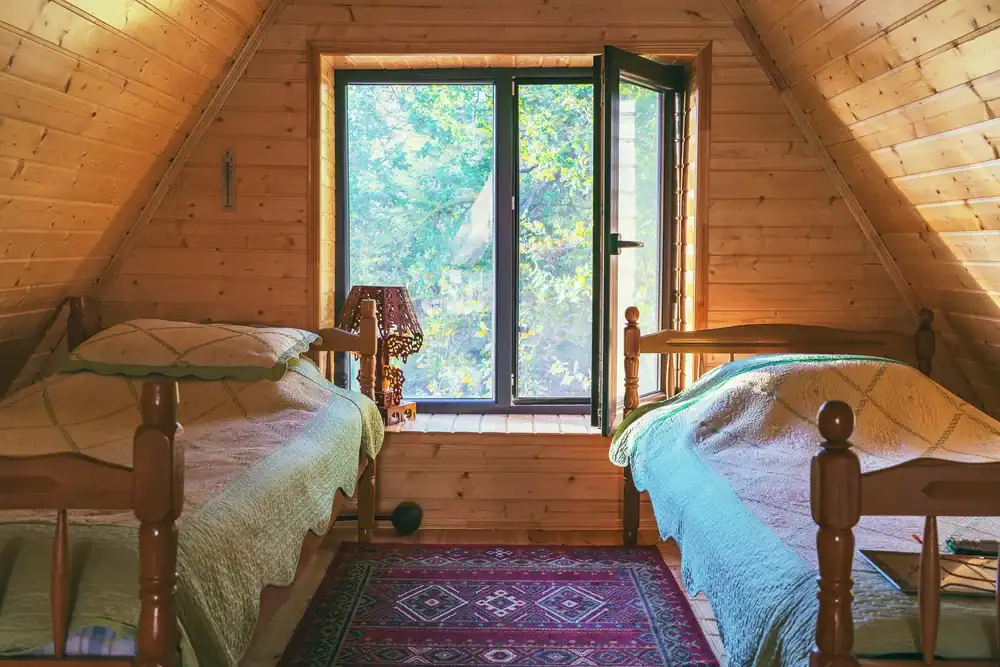
Your attic sits there. Dark, hot in summer, freezing in winter, full of boxes you forgot about. Meanwhile, you’re tripping over each other downstairs because there’s nowhere for the kids to do homework, no home office that actually works, no guest room that doesn’t double as storage.
A dormer changes that. It opens up your roofline, brings in natural light, and converts dead space into a bedroom, office, or whatever you actually need. You’re not just adding square footage—you’re making your home work the way your life does now.
And you’re doing it without the nightmare of moving. No realtor fees. No packing up fifteen years of your life. No competing with other buyers in a market where everything decent gets multiple offers. You stay in the neighborhood you know, keep the schools your kids are in, and actually get the space you need.
The difference between a dormer that adds value and one that causes problems comes down to how it’s built. Proper flashing. Structural reinforcement. Ventilation that actually works so you’re not dealing with mold or ice dams two winters from now. That’s not optional—it’s the whole point.
We’ve been handling dormer installations and large-scale renovations across Nassau County since 1972. That’s over 50 years of working on homes just like yours—Cape Cods, ranches, colonials—in neighborhoods where every house has its quirks and every project needs to be done right the first time.
We’re not a crew that shows up, makes a mess, and disappears. The owner is on-site. The phone gets answered. If something comes up—and it always does—you’re not left wondering what’s happening or when someone will call you back.
Most of our work comes from referrals. People who had us do their kitchen five years ago call when they’re ready for a dormer. Their neighbors see the work and reach out. That’s how this business runs, and it’s why we don’t cut corners or leave problems for later.
Bethpage homeowners know what good work looks like. They also know what it’s like to deal with contractors who don’t show up or don’t clean up. We’re the opposite of that.
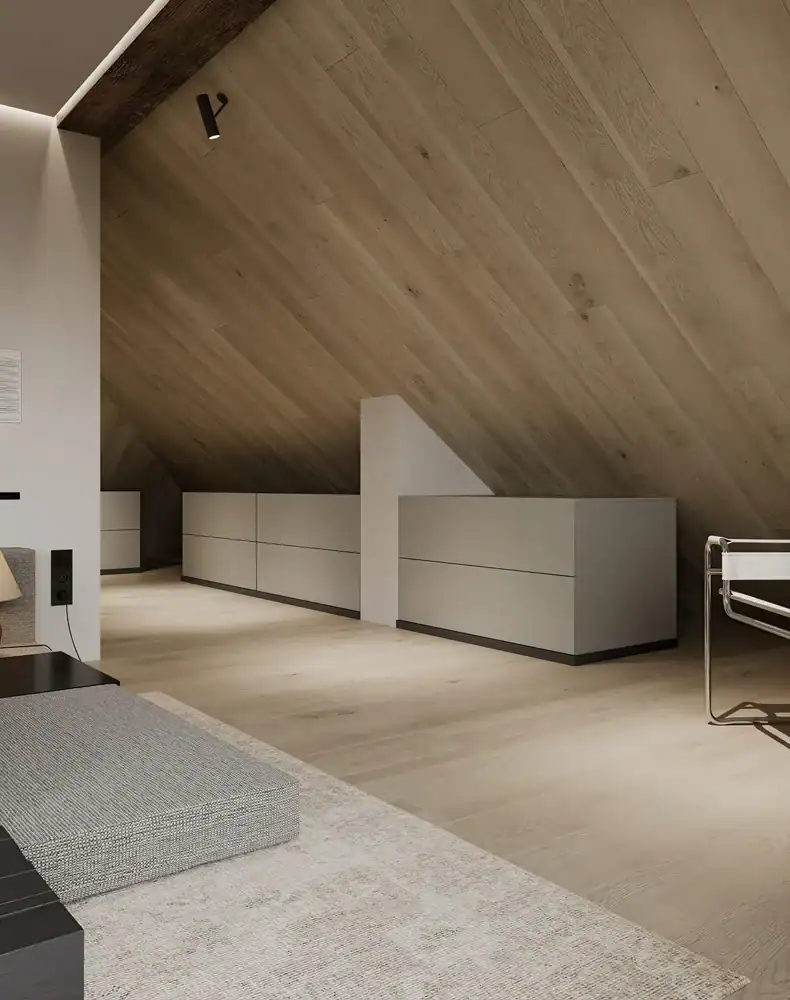
First, we come out and look at your attic. Not every roof can support a dormer, and not every dormer makes sense for what you’re trying to do. We’ll tell you what’s possible, what’s not, and what it’s actually going to take to get you the space you want.
Once we’re aligned on the design, we handle permits and approvals. Bethpage has specific codes, and Nassau County doesn’t mess around when it comes to structural work. We know what the inspectors are looking for, and we make sure everything is up to standard before we even start framing.
The build itself starts with opening up the roof. We reinforce the structure, frame out the dormer, and make sure the tie-in is watertight. Then comes insulation, drywall, windows, and finish work. If you’re adding HVAC or electric, that gets roughed in before we close up the walls.
Throughout the job, the site stays clean. We’re not leaving debris all over your driveway or making your house unlivable for weeks. You’ll know what’s happening, when it’s happening, and what to expect next.
When it’s done, you’ve got a finished space that feels like it was always part of the house. No sagging rooflines. No leaks. No shortcuts.
Ready to get started?
A dormer project isn’t just cutting a hole in your roof and calling it done. You’re getting structural framing that ties into your existing roof system without compromising integrity. You’re getting proper flashing and waterproofing so you don’t end up with leaks every time it rains. You’re getting insulation and ventilation designed for Long Island’s climate—hot, humid summers and cold winters that’ll find every weak spot in your build.
Windows go in that actually open and close. Drywall gets finished smooth. Floors get leveled and prepped for whatever you’re putting down. If you need electric or HVAC run up there, that gets coordinated and roughed in at the right time so you’re not tearing into finished walls later.
In Bethpage and across Nassau County, homes built in the ’50s through the ’80s weren’t designed with attic conversions in mind. That means we’re often dealing with low ceiling heights, limited headroom, and roof pitches that need creative solutions. A shed dormer is common here because it maximizes usable space. Gable dormers work when you want more light and a traditional look that matches the rest of the house.
The goal is a finished space that doesn’t feel like an add-on. It should look like it belongs, function like the rest of your home, and hold up for decades without constant maintenance or repairs.
Dormer costs vary based on size, type, and what you’re trying to accomplish. A small gable dormer that adds light and a little headroom runs less than a full shed dormer that opens up your entire attic into a master suite.
You’re looking at structural work, roofing, siding to match your existing home, windows, insulation, drywall, and finish carpentry at minimum. If you’re adding a bathroom or upgrading electric and HVAC, that adds to the scope. Most dormer projects in Nassau County fall somewhere in the range of a significant investment, but still far less than moving or adding a ground-level addition.
The real question isn’t just cost—it’s value. A well-built dormer increases your home’s square footage, improves curb appeal, and makes your house more functional. It also adds resale value if you ever do decide to sell. Cheap work doesn’t do any of that. It just creates problems you’ll pay to fix later.
Yes. Any structural work that involves cutting into your roof and changing the roofline requires permits in Bethpage and throughout Nassau County. The town wants to make sure the work meets building codes, especially when it comes to structural integrity, fire safety, and energy efficiency.
Pulling permits isn’t optional, and it’s not something you want to skip. If you ever sell your home, unpermitted work can kill a deal or force you to rip everything out and start over. Inspectors will also catch issues during the build that could save you from major problems down the road—things like improper framing, inadequate support, or ventilation that doesn’t meet code.
We handle the permit process. We know what the town requires, what the inspectors look for, and how to schedule inspections so the job keeps moving. You don’t have to deal with any of it, and you end up with work that’s documented, legal, and done right.
Most dormer projects take several weeks from start to finish, depending on size and complexity. A straightforward shed dormer with no interior finish work might take three to four weeks. A full attic conversion with a bathroom, closets, and HVAC can stretch closer to six or eight weeks.
Weather plays a role. We’re opening up your roof, and we’re not doing that in a downpour or when there’s ice everywhere. We also coordinate inspections, material deliveries, and subcontractors, all of which affect timing.
The goal is to move efficiently without rushing and creating problems. You’ll know the timeline upfront, and if something changes, we’ll tell you why and what it means for the schedule. We’re not the crew that disappears for days at a time or leaves your house open to the elements while we’re off on another job.
Not if it’s insulated and ventilated correctly. Attics in Long Island homes get brutally hot in summer and freezing in winter because they weren’t designed as living space. Adding a dormer without addressing insulation and airflow just gives you a bigger uncomfortable room.
Proper insulation in the roof deck and walls keeps conditioned air inside where it belongs. Ventilation—whether through soffit and ridge vents or a combination of other strategies—prevents moisture buildup and keeps temperatures manageable. If you’re tying the space into your existing HVAC system, that needs to be sized correctly so you’re not overworking your furnace or AC.
We’ve been doing this long enough to know what works in Nassau County’s climate. You’re not going to end up with a space that’s unbearable in July or costs a fortune to heat in January. The space gets built to be comfortable year-round, or it’s not worth doing.
A shed dormer runs along the length of your roof and has a single sloped plane. It maximizes headroom and usable floor space, which is why it’s popular for attic conversions where you’re trying to create a full bedroom or office. The roofline is simple, and it’s usually the most cost-effective way to add significant square footage.
A gable dormer projects out from the roof and has its own peaked roof, usually with a window in the front. It adds light, ventilation, and architectural interest, but it doesn’t open up as much interior space as a shed dormer. Gable dormers work well when you want to improve a specific area—like adding a window seat or brightening up a dark corner—without a full attic renovation.
Which one makes sense depends on your goals, your home’s existing architecture, and what your roof can structurally support. Some homes look better with gable dormers. Others need the space a shed dormer provides. We’ll walk through your options and show you what works for your house and your budget.
Yes. The dormer should look like it’s always been part of your house, not something that got tacked on later. That means matching your existing siding—whether it’s vinyl, cedar, fiber cement, or something else—and using roofing shingles that blend with what’s already up there.
Sometimes that’s straightforward. Other times, your siding or shingles have been discontinued, and we need to get creative. We’ll either source matching materials, replace a full section so everything looks uniform, or find the closest alternative that doesn’t stand out.
The goal is a finished dormer that improves your home’s appearance, not one that looks like an obvious addition. We’ve worked on enough homes in Bethpage to know what fits the neighborhood and what doesn’t. Your house will look better when we’re done, not like a patchwork project.
Other Services we provide in Bethpage