
You’re not remodeling your kitchen because you’re bored. You’re doing it because the layout doesn’t work anymore, the cabinets are falling apart, or you’re tired of explaining to buyers why everything looks like 1987. Maybe you’re preparing to sell and need that ROI. Maybe you just want a space where your family actually wants to gather.
Here’s what changes after a proper kitchen remodel. You get a layout that makes sense for how you actually cook and move. You get storage that doesn’t require a Tetris degree to access. You get appliances your electrical system can handle without tripping breakers. And if you’re selling, you’re looking at adding anywhere from $13,500 to over $25,000 to your home’s value, depending on the scope.
The difference between a kitchen that adds value and one that just looks updated comes down to design that fits your space and execution that doesn’t cut corners. That’s where experience matters. Not just in picking finishes, but in knowing how Long Island homes are built, what your layout can handle, and how to navigate the permit process without your project sitting in limbo for months.
We’ve been handling kitchen remodels and home renovations across Nassau and Suffolk County for over 50 years. That’s not a marketing line—it’s just how long we’ve been doing this. Our owner is on-site daily, not because we don’t trust our crews, but because that’s how you catch problems early and keep projects moving.
You’ll get your calls answered. Texts too. Even at 3 a.m. when a pipe freezes in the middle of January, which happens more than you’d think on Long Island. We keep job sites clean, our crews professional, and our communication constant. No disappearing acts. No wondering when someone’s coming back.
We’re licensed, insured, and bonded across Nassau and Suffolk County. We’ve worked on enough Long Island homes to know what you’re dealing with—outdated electrical, tight layouts, permit headaches. We handle first-floor renovations, bathroom remodels, dormers, and extensions, but kitchens are where we spend most of our time. It’s what homeowners in New Hyde Park call us for, and it’s what we’ve gotten very good at.

First, we sit down and talk through what you actually need. Not what’s trendy—what works for your space, your budget, and how you use your kitchen. Our designers will show you layouts that make sense for your home’s footprint. Galley, L-shaped, U-shaped—it depends on your square footage and how traffic flows through your house.
Once the design is locked in, we handle permits if needed. Yes, it’s a pain. Yes, it slows things down. But it’s also not optional for most structural or electrical work, and doing it right means you won’t have issues when you go to sell. We manage inspections, coordinate subcontractors, and keep you in the loop at every stage.
During the build, you’ll see our owner on-site. Daily. We’re not dropping off a crew and disappearing for two weeks. We’re there making sure the work is done right, the site stays clean, and any issues get handled immediately. Most kitchen renovations wrap up in 6 to 10 weeks, depending on scope and material availability. We’ll give you a realistic timeline upfront—not an optimistic guess that falls apart by week three.
After the final walkthrough, we don’t vanish. You have our number. Something comes up six months later? Call. That’s part of the service.

Ready to get started?
A full kitchen remodel with us covers design, demolition, structural work, electrical, plumbing, cabinetry, countertops, flooring, and installation of appliances. We’re a general contractor, which means we manage the entire project—not just one piece of it. You’re not coordinating five different companies and hoping they all show up on time.
On Long Island, kitchen remodels typically run between $25,000 and $75,000, depending on size and finishes. Mid-grade renovations average around $350 per square foot. High-end projects with custom cabinetry, premium countertops, and top-tier appliances can hit $689 per square foot. Budget matters, but so does understanding what you’re actually getting for that budget. Cheap cabinets fail in three years. Cheap electrical work trips your breakers every time you run the dishwasher and microwave at once.
We’ll walk you through material options that fit your budget without compromising quality. Countertops, backsplash, cabinet styles, hardware, lighting—it all gets decided before we start tearing anything out. And because we’ve been doing this in Nassau County for decades, we know which suppliers deliver on time and which ones leave you waiting three extra weeks for a cabinet door.
You’ll also get a kitchen designed for how Long Island homes actually function. Many houses here were built in the 1950s with electrical systems that can’t handle modern appliances. We upgrade that. We make sure your layout isn’t fighting against your home’s bones. And we keep the job site clean every single day, because you still live here.
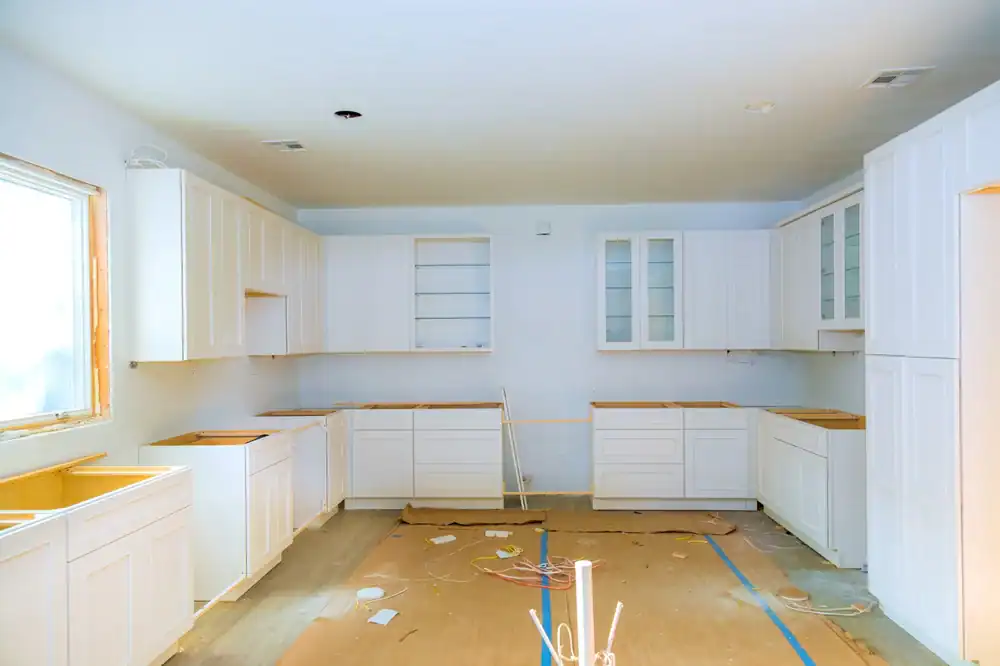
Most kitchen remodels take between 6 and 10 weeks from demolition to final walkthrough. That timeline depends on the scope of your project, whether you’re moving plumbing or gas lines, and how quickly materials arrive. If you’re doing a minor update—new cabinets, countertops, and paint—you’re looking at the shorter end. If you’re reconfiguring the layout, adding an island, or dealing with structural changes, expect closer to 10 weeks.
Permitting can add time on the front end, especially if your project involves electrical upgrades or structural work. In Nassau County, permit approval can take a few weeks depending on the scope and how backed up the building department is. We handle that process for you, but it’s worth knowing upfront that it’s part of the timeline.
Material delays are the wildcard. Custom cabinetry, specific appliances, or specialty countertops can push timelines if they’re backordered. We order everything early and keep you updated if anything’s delayed. The goal is to give you a realistic timeline from the start, not an optimistic guess that falls apart halfway through.
Kitchen remodels typically return between 50% and 96% of your investment, depending on the scope. A minor remodel—new cabinets, countertops, updated appliances, fresh paint—can return up to 96% when you sell. A major overhaul with custom everything will return closer to 50%, but it also transforms the space into something that makes your home significantly more competitive.
In terms of actual dollars, most kitchen remodels add between $13,500 and $25,920 to your home’s value. That range depends on the quality of materials, the functionality of the new layout, and how your kitchen compares to others in your neighborhood. If every other house on your block has been updated and yours hasn’t, you’re leaving money on the table.
But ROI isn’t just about resale. If you’re planning to stay in your home for years, the return is also in daily function. A kitchen that works better, looks better, and doesn’t make you want to eat out every night has value beyond the appraisal. That said, if you’re remodeling specifically to sell, focus on updates that appeal to the broadest range of buyers—neutral finishes, quality materials, and a layout that makes sense.
It depends on what you’re changing. If you’re swapping cabinets, updating countertops, or replacing appliances without moving plumbing or electrical, you probably don’t need a permit. But if you’re moving walls, relocating plumbing or gas lines, upgrading electrical panels, or doing anything structural, you need a permit. And yes, the building department will eventually find out if you skip it.
Permits aren’t just bureaucratic hassle. They ensure the work is done to code, which matters when you go to sell. Home inspectors flag unpermitted work, and buyers either walk away or demand price reductions to cover the cost of bringing everything up to code. It’s not worth the risk.
We handle the permit process if your project requires it. That includes submitting plans, coordinating inspections, and making sure everything passes the first time. It adds a few weeks to the front end of your timeline, but it protects your investment and keeps your project legal. Nassau County has specific codes, and we know them. That’s part of what you’re paying for.
Budget kitchen remodels in New Hyde Park start around $23,500. That’s new cabinets, laminate countertops, basic appliances, and fresh flooring. Mid-grade renovations—better cabinetry, quartz or granite countertops, upgraded appliances—run closer to $36,000. High-end remodels with custom cabinets, premium countertops, top-tier appliances, and specialty finishes can hit $72,500 or more.
Long Island pricing runs about 10 to 20% higher than the national average. That’s due to labor costs, permitting fees, and the cost of materials in this market. You’re also paying for contractors who know how to work in older homes with quirky layouts and outdated systems. Cheap bids usually mean shortcuts, and shortcuts in kitchens lead to callbacks, repairs, and appliances that don’t work right.
The biggest cost drivers are cabinetry, countertops, and appliances. Cabinets alone can eat up 30 to 40% of your budget. Countertops vary wildly—laminate is cheap, quartz is mid-range, and natural stone or custom slabs get expensive fast. Appliances depend on whether you’re going builder-grade or high-end. We’ll walk you through options at every price point so you know exactly what you’re getting and where your money’s going.
Most Long Island homes work best with galley, L-shaped, or U-shaped layouts. Galley kitchens are common in older homes where space is tight—they’re efficient if designed right, with everything within a few steps. L-shaped layouts open up the space and work well if you’re trying to create a more open-concept feel without major structural changes. U-shaped kitchens maximize counter and storage space, which is great if you have the square footage.
The layout you choose depends on your home’s footprint, where your plumbing and gas lines are, and how you actually use your kitchen. If you entertain, you’ll want a layout that doesn’t trap the cook in a corner. If you have kids, you’ll want clear sightlines and space for people to move without bumping into each other. If you’re working with a smaller kitchen, smart storage and a functional work triangle matter more than cramming in an island.
We’ll assess your space during the design phase and show you what’s realistic. Some homeowners want an island but don’t have the clearance for it without making the kitchen feel cramped. Others want to open up a wall, but that wall is load-bearing and requires a beam. We’ll tell you what works, what doesn’t, and what the trade-offs are before you commit to anything.
Yes, but it’s not comfortable. Most homeowners stay in their homes during a kitchen remodel, but you won’t have full use of your kitchen for several weeks. That means limited cooking, no dishwasher, and a lot of takeout or microwave meals. Some people set up a temporary kitchen in another room with a microwave, toaster oven, and mini fridge. It works, but it’s not ideal.
We do everything we can to minimize disruption. Job sites get cleaned up every day, not just at the end of the project. Dust and debris are contained as much as possible. We coordinate work so you’re not without water or power longer than necessary. And we keep you updated on what’s happening each day so there are no surprises when you get home.
If you have the option to stay somewhere else for a few weeks, it makes the process easier. But most of our clients stay put, and we make it work. The key is setting expectations upfront. You’ll have some inconvenience. But it’s temporary, and the result is a kitchen that actually functions the way you need it to.
Other Services we provide in New Hyde Park